Disclosure: This article contains affiliate links. If you purchase a product through one of these links, we may earn a commission at no additional cost to you.

9 Best Spray Sunscreens in 2026, Tested by Dermatologists

Spray sunscreen has quietly become the default way many of us reapply SPF-and honestly, it’s easy to see why. A good spray sunscreen turns a chore into a five-second habit: no rubbing, no sticky palms, and no awkward reaching for your back. For beach days, hikes, golf rounds, and midday touch-ups over makeup, sprays are simply faster than lotions and easier to work into your everyday skincare and sun-protection routine.
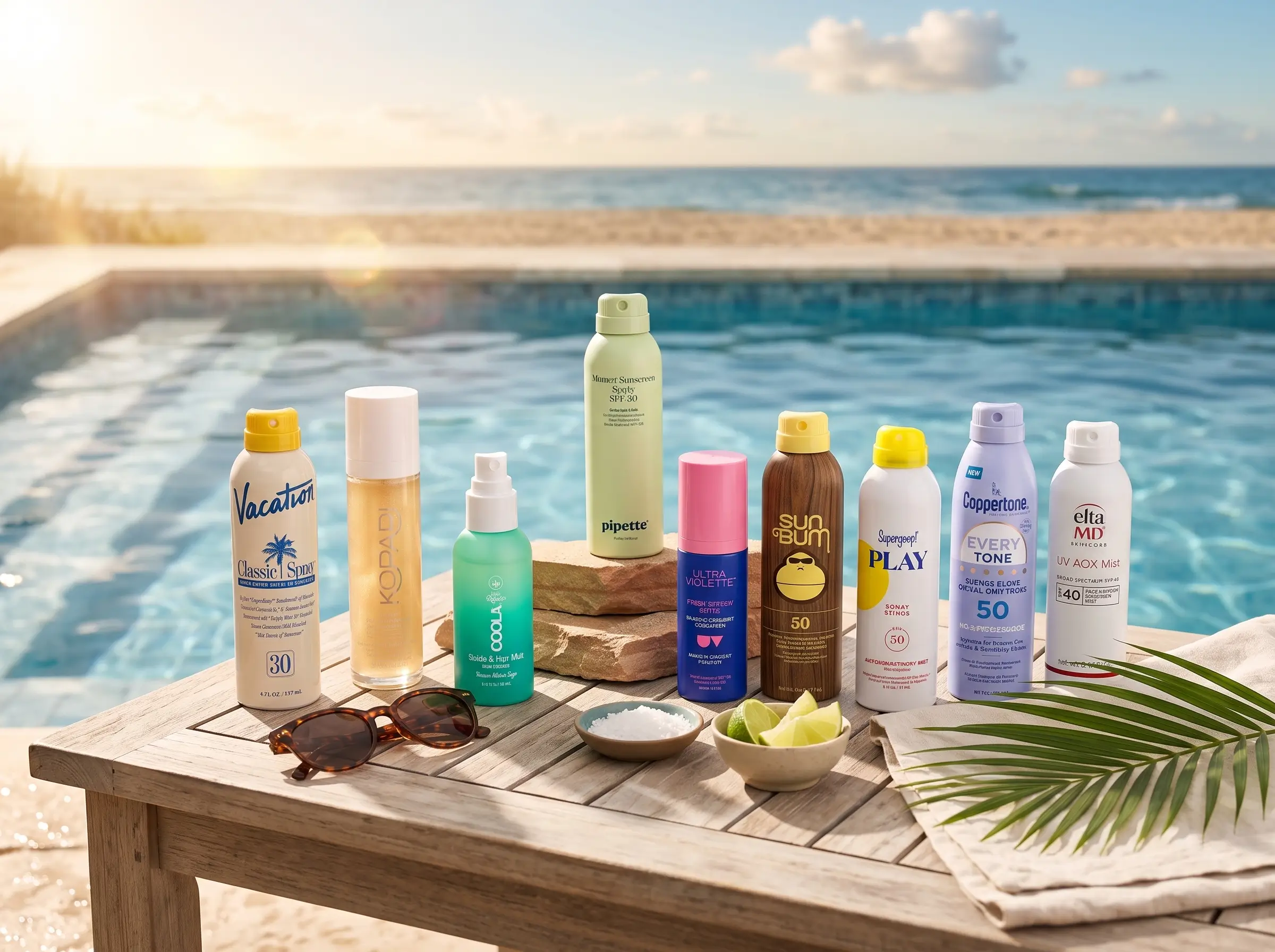
That said, spray sunscreen isn’t automatically “better” sunscreen. The best spray sunscreens still need to be applied generously and rubbed in where possible-coverage can become patchy fast if you simply mist and run. Dermatology guidance is consistent on the fundamentals: reach for a broad-spectrum formula with an SPF of 30 or higher, apply it liberally, and reapply every two hours, or more often if you’re swimming or sweating. As an essential part of a complete skincare routine, daily sun protection can help protect exposed skin from UV radiation. With that baseline in mind, we rounded up nine standout spray sunscreens for 2026-covering mineral and chemical formulas, budget and prestige options, and everything from face mists to scalp sprays—so you can find the best sunscreen spray for how you actually spend your summer.
Quick Comparison Table
| Product | SPF | Type | Best For | Finish |
|---|---|---|---|---|
| Supergoop! PLAY Antioxidant Body Mist | 50 | Chemical | Best Overall | Sheer, non-greasy |
| EltaMD UV AOX Mist | 40 | Mineral | Best Mineral Spray | Sheer, white-to-clear |
| Coppertone Every Tone Sunscreen Spray | 50 | Chemical | Best Budget Pick | Clear, no white cast |
| Pipette Mineral Sunscreen Spray | 30 | Mineral | Best for Sensitive Skin | Sheer with slight cast |
| Ultra Violette Preen Screen | 50 | Chemical | Best for Face | Semi-glowy |
| Sun Bum Moisturizing Sunscreen Spray | 50 | Chemical | Best for Body | Sheer, dry-touch |
| Vacation Classic Spray | 30 | Chemical | Best for Reapplication | Transparent |
| Coola Scalp & Hair Mist | 30 | Chemical | Best for Scalp and Hair | Non-greasy |
| Kopari Sunglaze Sheer Setting Mist | 50 | Chemical | Best Makeup-Friendly Mist | Dewy, glass-skin |
1 Best Overall: Supergoop! PLAY Antioxidant Body Mist SPF 50

Best For: Best Overall
SPF: 50
Type: Chemical (avobenzone, homosalate, octisalate, octocrylene)
Why We Like It: Supergoop! built its PLAY line for exactly the scenario spray sunscreen exists for: active, sweaty, water-adjacent days. This mist earns the Skin Cancer Foundation’s Seal of Recommendation, applies on wet or dry skin, and holds up to 80 minutes of water and sweat resistance — a genuinely useful spec if you’re reapplying poolside rather than toweling off first.
Key Features: Non-aerosol, bag-on-valve technology that sprays from any angle (including upside down); infused with vitamin C, green tea, and açaí extract; oxybenzone- and octinoxate-free.
Pros: Reapplies easily over wet skin; broad-spectrum SPF 50; sprays evenly from any angle; widely available.
Cons: Contains alcohol denat, which some very dry or sensitized skin types may find drying; scented (Sunny Citrus).
Best Skin Type: Normal, combination, or oily skin comfortable with a chemical formula.
How to Use It: Spray generously and evenly across the body 15 minutes before sun exposure; it can be reapplied directly over wet skin after swimming.
Who Should Consider It: Anyone who wants one reliable, well-reviewed spray sunscreen that performs at the beach, on the trail, or on the sidelines of a kid’s soccer game.
2 Best Mineral Spray: EltaMD UV AOX Mist Broad-Spectrum SPF 40
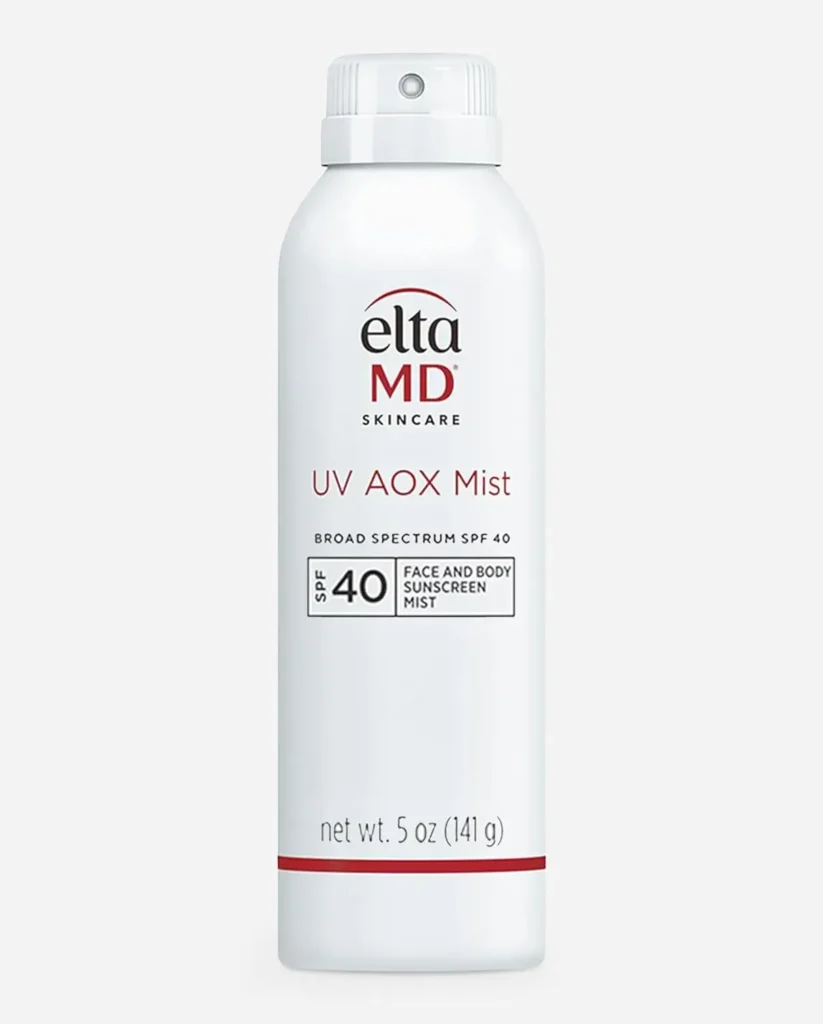
Best For: Best Mineral Spray
SPF: 40
Type: Mineral (100% zinc oxide, 14%)
Why We Like It: EltaMD is a brand dermatology offices stock and recommend often, and the UV AOX Mist brings that same mineral-only formulation to a spray format. It uses “white-to-clear” technology – the mist sprays on visibly white so you can track your coverage, then rubs in without a residue.
Key Features: Air-powered, non-aerosol spray (no chemical propellants); enriched with vitamin C, vitamin E, aloe vera, and coconut fruit extract; water resistant for up to 40 minutes; 360-degree spray angle for hard-to-reach spots.
Pros: 100% mineral active ingredient; sheer finish that’s genuinely low on white cast for a zinc formula; suitable for sensitive and post-procedure skin.
Cons: Premium price point; some reviewers note the “mist” is closer to a sprayable lotion than an ultra-fine mist, so it takes more rubbing in than a pure aerosol.
Best Skin Type: Sensitive, reactive, or acne-prone skin, and anyone who prefers to avoid chemical UV filters.
How to Use It: Hold 4–6 inches from skin, spray liberally, then rub in fully – do not spray directly onto the face; spray into palms first.
Who Should Consider It: Shoppers specifically looking for a mineral spray sunscreen with dermatologist-informed formulation credentials.
3 Best Budget Pick: Coppertone Every Tone Sunscreen Spray SPF 50
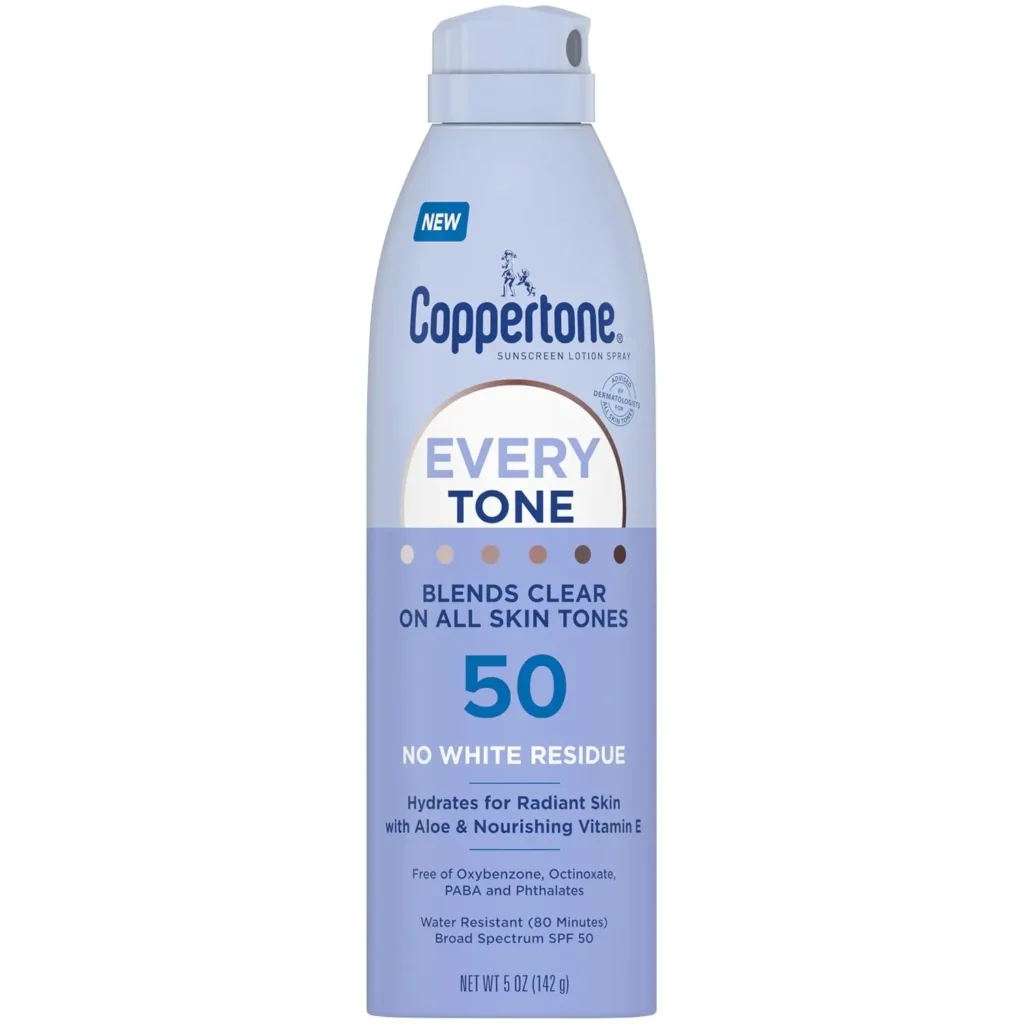
Best For: Best Budget Pick
SPF: 50
Type: Chemical (avobenzone 3%, homosalate 9%, octisalate 4.5%, octocrylene 9%)
Why We Like It: Coppertone has been a household sunscreen name for decades, and the Every Tone line was specifically engineered to blend in clear across all skin tones with no white residue — at a genuinely accessible drugstore price.
Key Features: Fragrance-free; formulated with vitamin E; water resistant for 80 minutes; free of oxybenzone, octinoxate, PABA, and phthalates.
Pros: Excellent value; blends invisibly on deeper skin tones, a category where sprays have historically struggled; widely available at mass retailers.
Cons: Not reef-safe by every regional standard (contains octocrylene and homosalate); scent is present, though marketed as fragrance-free of certain allergen-triggering fragrance compounds.
Best Skin Type: All skin tones and most skin types looking for everyday, budget-friendly body coverage.
How to Use It: Spray liberally 15 minutes before sun exposure; hold 4–6 inches from skin and spray onto hands before applying to the face.
Who Should Consider It: Families or frequent sunscreen users who want reliable SPF 50 coverage without a prestige price tag.
4 Best for Sensitive Skin: Pipette Mineral Sunscreen Spray SPF 30

Best For: Best for Sensitive Skin
SPF: 30
Type: Mineral (zinc oxide, 21%)
Why We Like It: Pipette was designed as a family-friendly, baby-safe brand, which means the formula was built with minimal, sensitive-skin-first ingredients from the start — a helpful signal if you’re shopping for reactive skin or a household with young kids.
Key Features: Non-nano zinc oxide; sugarcane-derived squalane and bisabolol for moisture and calming; fragrance-free; water resistant for 80 minutes; hypoallergenic and Leaping Bunny certified cruelty-free.
Pros: Gentle, minimal ingredient list; safe for the whole family, not just kids; continuous, easy spray application.
Cons: Some reviewers note a visible white cast that takes effort to rub in fully, which is common with higher-percentage zinc formulas.
Best Skin Type: Sensitive, eczema-prone, or reactive skin, including children’s skin.
How to Use It: Shake well, spray 4–6 inches from skin in a well-ventilated area, and rub in; spray into hands before applying to the face.
Who Should Consider It: Parents shopping for one sunscreen spray that works for the whole family, or anyone with sensitivity to chemical UV filters.
5 Best for Face: Ultra Violette Preen Screen SPF 50

Best For: Best for Face
SPF: 50
Type: Chemical
Why We Like It: Preen Screen was purpose-built as a facial reapplication mist – something to mist over (or under) makeup midday without disturbing it. The ultra-fine mist and semi-glowy finish make it feel more like a skincare step than a sunscreen chore.
Key Features: Formulated with niacinamide, vitamin C, vitamin E, aloe vera, and bisabolol; ultra-fine, fast-drying spray; leaves a soft, semi-glowy finish rather than a matte one.
Pros: Genuinely makeup-friendly; pleasant, lightweight texture; doubles as a midday refresh, not just SPF.
Cons: Higher price per ounce than most body sprays on this list, given its smaller, face-focused bottle size; some reviewers find the finish too dewy for oily skin.
Best Skin Type: Normal, combination, or dry skin that wants a hydrating reapplication mist.
How to Use It: Close eyes, hold about 8 inches (20 cm) from the face, and mist evenly in an “X” or “T” shape over skincare or makeup; allow to dry before opening eyes.
Who Should Consider It: Anyone who struggles to reapply SPF over makeup and wants a face-specific mist rather than a repurposed body spray.
6 Best for Body: Sun Bum Moisturizing Sunscreen Spray SPF 50
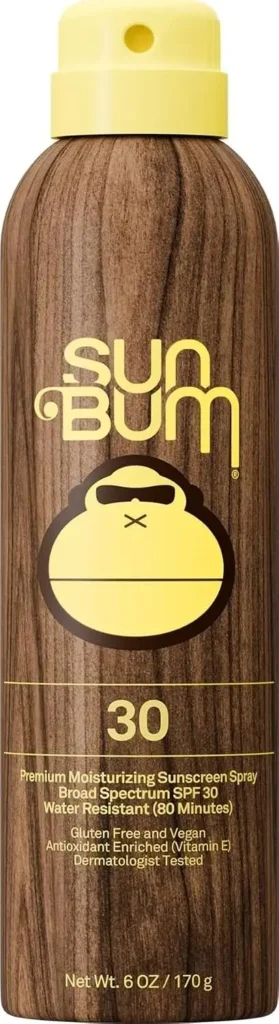
Best For: Best for Body
SPF: 50
Type: Chemical (avobenzone 3%, homosalate 15%, octisalate 5%, octocrylene 7%)
Why We Like It: Sun Bum built a beach-lifestyle brand around exactly this: an easy, sheer, dry-touch spray with a scent people genuinely like, made for covering a lot of skin fast.
Key Features: Vitamin E for added moisture; continuous, non-aerosol spray using compressed-air (bag-on-valve) technology rather than chemical propellants; water resistant for 80 minutes.
Pros: Sheer, dry-touch finish that doesn’t feel heavy on large areas like arms, legs, and torso; pleasant, well-liked scent; widely available.
Cons: Contains a relatively high concentration of homosalate and octocrylene, which some sensitive-skin users may want to avoid; fragranced.
Best Skin Type: Normal to oily skin covering large body surface areas.
How to Use It: Apply liberally 15 minutes before sun exposure; reapply after 80 minutes of swimming or sweating, or immediately after towel drying.
Who Should Consider It: Beach- and pool-day sunscreen shoppers who want fast, even body coverage without a heavy after-feel.
7 Best for Reapplication: Vacation Classic Spray SPF 30

Best For: Best for Reapplication
SPF: 30
Type: Chemical
Why We Like It: Vacation’s “Continuous-Spray” technology is designed specifically to make reapplication effortless – it sprays evenly from any angle, including sideways and upside down, so topping up your shoulders or the back of your neck doesn’t require contorting.
Key Features: Coconut oil, aloe vera, banana extract, shea oil, vitamin E, and niacinamide; non-aerosol, eco-friendly propellant; transparent application across skin tones; recognized in Allure’s Best of Beauty Awards in 2022.
Pros: Genuinely fun, nostalgic scent that makes reapplying feel less like a chore; rubs in fast and clear; Hawaii Reef Act 104 compliant formula.
Cons: SPF 30 is on the lower end of this list’s range; premium pricing for a chemical formula.
Best Skin Type: Most skin types looking for an easy, frequently-reapplied body spray.
How to Use It: Apply liberally 15 minutes before sun exposure; reapply after 80 minutes of swimming or sweating, immediately after towel drying, or at least every two hours.
Who Should Consider It: Anyone who wants reapplication to feel effortless enough that they’ll actually do it throughout the day.
8 Best for Scalp and Hair: Coola Scalp & Hair Mist Organic Sunscreen SPF 30

Best For: Best for Scalp and Hair
SPF: 30
Type: Chemical (avobenzone 2.5%, homosalate 6%, octisalate 5%, octocrylene 7%)
Why We Like It: The scalp and hair part line are among the most commonly missed spots when applying sunscreen, and this mist was designed specifically to fill that gap without leaving hair greasy, weighed down, or crunchy.
Key Features: Organic algae extract, centella asiatica (gotu kola), monoi (palm fruit) oil, and panthenol; targeted nozzle designed for precision along the part and hairline; water resistant for up to 80 minutes.
Pros: Purpose-built for a genuinely underserved need; lightweight enough not to disrupt styling; helps guard against UV-related hair-color fading.
Cons: Smaller 2 oz bottle at a premium price per ounce; brand notes recently bleached or color-treated hair should be spot-tested first, as sunscreen actives can occasionally interact with fresh color.
Best Skin Type: All scalp types, particularly those with a visible part, thinning hair, or fine hair where scalp sun exposure is a real concern.
How to Use It: Shake well, hold 4–6 inches from the scalp, and spray evenly along the part and hairline; distribute with fingers or a comb and allow to dry.
Who Should Consider It: Anyone who has ever gotten a sunburned scalp or is trying to protect color-treated hair from UV fading.
9 Best Makeup-Friendly Mist: Kopari Sunglaze Sheer Setting Mist Sunscreen SPF 50
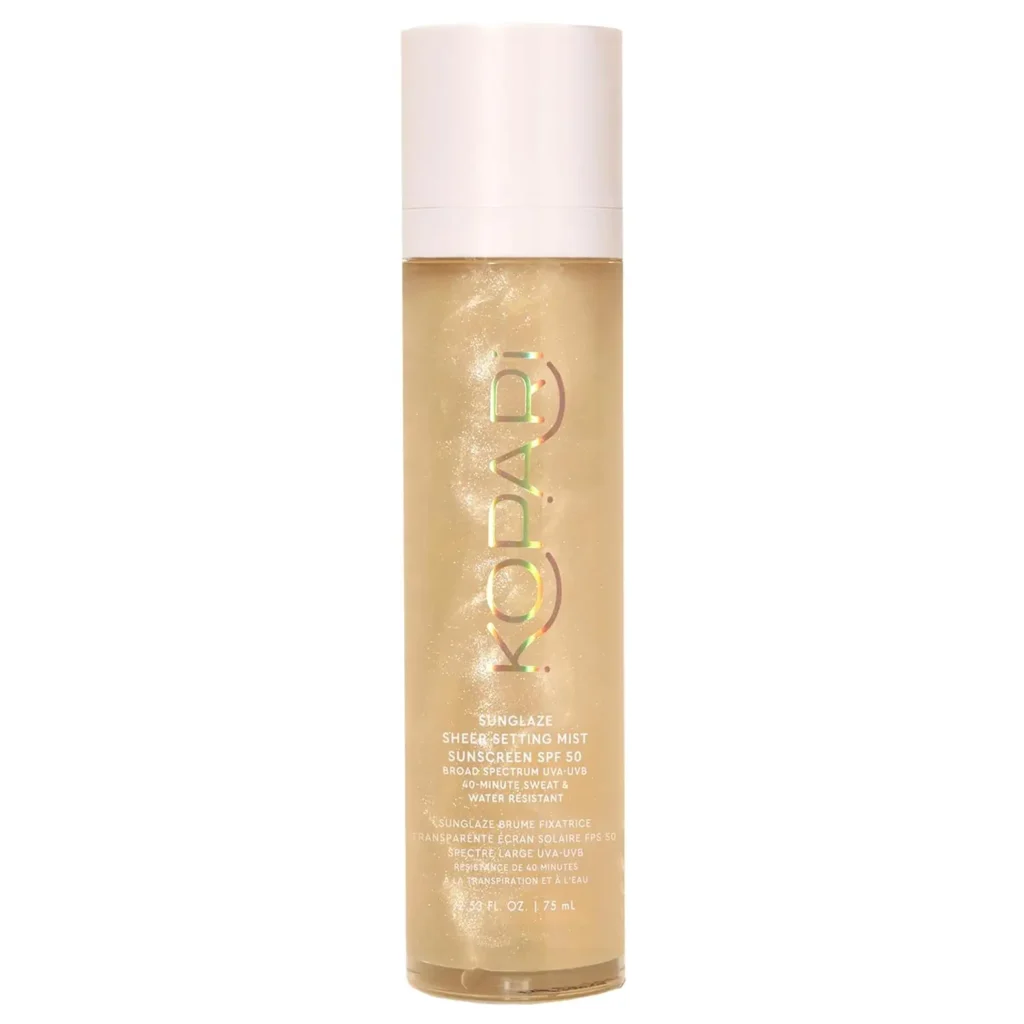
Best For: Best Makeup-Friendly Mist
SPF: 50
Type: Chemical (avobenzone 3%, homosalate 0.5%, octisalate 5%, octocrylene 10%)
Why We Like It: Kopari’s Sunglaze mist leans into the “glass skin” trend, doubling as a makeup-setting spray while delivering SPF 50. It’s designed to be sprayed directly over a full face of makeup without disturbing it.
Key Features: Hyaluronic acid and polyglutamic acid for hydration; vitamin C and vitamin E; ultra-fine, fast-drying mist; subtle melon scent; water and sweat resistant for up to 40 minutes.
Pros: Sets makeup while reapplying SPF, solving two steps in one; dewy, glowy finish that reads as skincare, not sunscreen; no visible white cast.
Cons: Shorter water resistance window (40 minutes) than most other picks on this list; premium price for a 2.53 oz bottle; some users with oily skin find the dewy finish too much without blotting.
Best Skin Type: Normal to dry skin that wants a hydrating, glowy reapplication mist over makeup.
How to Use It: With eyes closed, spray generously and evenly 8–10 inches from the face; apply 15 minutes before sun exposure and reapply every two hours.
Who Should Consider It: Makeup wearers who want a genuine setting-spray-and-SPF hybrid rather than a plain reapplication mist.
How We Chose the Best Spray Sunscreens
We evaluated each product using publicly available product information, ingredient disclosures, and manufacturer data, focusing on:
- Broad-spectrum protection and SPF level
- Mineral versus chemical formulation
- Application experience and spray distribution (continuous spray, aerosol, or pump)
- Ease of rubbing in and likelihood of white cast
- Finish (matte, dewy, glowy) and skin feel
- Water resistance, where applicable
- Suitability for different skin types, including sensitive skin
- Face and body compatibility
- Reapplication convenience
- Ingredient and formula considerations, including fragrance and known irritants
- Dermatology guidance from organizations like the American Academy of Dermatology and the FDA
This roundup reflects editorial research and publicly available product and ingredient data rather than in-house clinical or laboratory testing. We did not personally test every product, and no dermatologist independently verified performance for this specific article — where we reference “dermatologist-recommended” or “dermatologist-informed” details, that reflects brand-published dermatologist involvement in formulation or testing, which we’ve noted directly.
Mineral vs. Chemical Spray Sunscreen
Mineral (physical) sunscreens use zinc oxide, titanium dioxide, or both as their active ingredients. These sit on top of the skin and physically reflect and scatter UV rays. In this list, EltaMD UV AOX Mist and Pipette Mineral Sunscreen Spray are 100% mineral formulas. Mineral sunscreens tend to be gentler for sensitive or reactive skin and are a common recommendation for people prone to irritation, though they can leave more of a visible white cast, especially in spray form, since the zinc particles need to be rubbed in thoroughly for even coverage.
Chemical (organic) sunscreens use UV-filtering compounds like avobenzone, octisalate, octocrylene, and homosalate, which absorb UV radiation and convert it to heat. Most of the sprays on this list — including Supergoop! PLAY, Coppertone Every Tone, Sun Bum, Vacation, Coola, Ultra Violette, and Kopari — use this approach. Chemical formulas typically rub in more sheer and are less prone to white cast, which is part of why they dominate the spray sunscreen category, but some people with sensitive skin find certain chemical filters irritating.
Neither category is universally “better.” Broad-spectrum protection — meaning coverage against both UVA and UVB rays — matters more for day-to-day protection than whether the actives are mineral or chemical.
Are Spray Sunscreens as Effective as Lotion Sunscreens?
When applied correctly, a spray sunscreen can offer the same level of protection as a lotion with the same SPF and broad-spectrum rating. The format itself doesn’t make sunscreen less effective — the issue is usage. Because sprays go on so fast, it’s easy to under-apply, miss spots, or lose product to wind before it reaches the skin. Lotions, by comparison, make it more visually obvious when you’ve covered an area.
The practical takeaway: if you use a spray sunscreen, apply it generously, hold the bottle close to the skin, and rub it in fully rather than treating a light mist as sufficient coverage.
How to Apply Spray Sunscreen Correctly
- Apply generously to exposed skin. A light mist typically isn’t enough — most experts suggest applying enough that the skin has a visible, even sheen before rubbing in.
- Hold the bottle close to your skin, generally 4–6 inches away, to reduce product loss to wind.
- Spray until skin looks evenly covered, then check for missed spots, particularly ears, the back of the neck, and tops of feet.
- Rub the product in if the label recommends it, which helps even out coverage and reduce streaking.
- Do not inhale the spray. Apply in a well-ventilated, outdoor area and hold your breath briefly while spraying near your face or neck.
- Avoid spraying directly toward your face. Spray into your hands first, then apply to the face.
- Reapply according to the product label — generally every two hours, and immediately after swimming, sweating, or towel drying.
How Often Should You Reapply Spray Sunscreen?
The general guidance from dermatology organizations is to reapply sunscreen at least every two hours during sun exposure. If you’re swimming or sweating, follow the product’s water-resistance rating — most sprays on this list are rated for either 40 or 80 minutes — and reapply immediately afterward, especially if you’ve toweled off, since that removes product along with water.
Can You Use Spray Sunscreen on Your Face?
Not every body spray is formulated for facial use — some contain fragrance, alcohol concentrations, or propellants that can irritate the eyes or sensitive facial skin. If you want a spray specifically for your face, look for one labeled for facial use, like Ultra Violette Preen Screen or Kopari Sunglaze, both formulated as face mists. For all sprays, avoid spraying directly at the face; mist into your hands first and pat it on, or hold the bottle at the recommended distance with eyes closed.
Best Spray Sunscreen by Category
- Best Overall: Supergoop! PLAY Antioxidant Body Mist SPF 50
- Best Mineral: EltaMD UV AOX Mist SPF 40
- Best Budget: Coppertone Every Tone Sunscreen Spray SPF 50
- Best for Sensitive Skin: Pipette Mineral Sunscreen Spray SPF 30
- Best for Face: Ultra Violette Preen Screen SPF 50
- Best for Body: Sun Bum Moisturizing Sunscreen Spray SPF 50
- Best for Reapplication: Vacation Classic Spray SPF 30
- Best for Scalp: Coola Scalp & Hair Mist Organic Sunscreen SPF 30
- Best Makeup-Friendly Option: Kopari Sunglaze Sheer Setting Mist Sunscreen SPF 50

Frequently Asked Questions
Are spray sunscreens effective?
Yes, when applied generously and rubbed in fully. Broad-spectrum spray sunscreens with SPF 30 or higher can offer comparable protection to lotions; the main risk is under-application.
Is SPF 30 or SPF 50 better?
SPF 30 blocks about 97% of UVB rays, while SPF 50 blocks about 98%. The difference is small in percentage terms, but higher SPF can offer more of a margin for error if you tend to under-apply or stay in the sun for extended periods.
Can spray sunscreen be used on the face?
Some can, but not all body sprays are formulated for facial skin. Check the label, or choose a face-specific mist like the ones featured above.
How much spray sunscreen should I use?
Enough that the skin has a visible, even sheen before rubbing in – a light, quick mist typically under-delivers coverage.
How often should I reapply spray sunscreen?
At least every two hours, and immediately after swimming, sweating, or towel drying.
Is mineral spray sunscreen better for sensitive skin?
Mineral formulas (zinc oxide, titanium dioxide) are commonly recommended for sensitive or reactive skin because they’re less likely to cause irritation than some chemical UV filters, though individual tolerance varies.
Can spray sunscreen replace sunscreen lotion?
It can, as long as it’s applied thoroughly and reapplied as directed. Many people use lotion for the initial, more precise application and keep a spray on hand for quick reapplication throughout the day.
Can you use sunscreen spray on your scalp?
Yes – scalp-specific mists like Coola’s are designed with targeted nozzles to protect the part line and hairline without weighing hair down.
Does spray sunscreen leave a white cast?
Mineral sprays are more prone to a temporary white cast, especially at higher zinc oxide concentrations, until fully rubbed in. Chemical sprays generally rub in clear.
What is the best spray sunscreen ?
There isn’t one single “best” — the right pick depends on your priorities, whether that’s budget, sensitive skin, scalp coverage, or a makeup-friendly finish. See our category breakdown above for a tailored recommendation.
Final Verdict
There’s no single spray sunscreen that wins across every category – and that’s kind of the point of a spray sunscreen roundup. If you want one dependable, well-reviewed formula for everyday use, Supergoop! PLAY is a strong, versatile starting point. If you’d rather avoid chemical filters altogether, EltaMD’s mineral mist is worth the splurge. And if you’ve never thought about your scalp or your makeup routine when reaching for SPF, Coola’s scalp mist and Kopari’s setting spray solve problems most sunscreens ignore entirely. Whichever spray you choose, the format matters less than the habit: apply generously, reapply often, and pair it with shade, protective clothing, and sunglasses for real, well-rounded sun protection.
Medical Disclaimer: This article is for informational purposes only and is not a substitute for professional medical advice, diagnosis, or treatment. Always consult a board-certified dermatologist or other qualified healthcare provider with questions about your skin or sun protection needs.