Disclosure: This article contains affiliate links. If you purchase a product through one of these links, we may earn a commission at no additional cost to you.

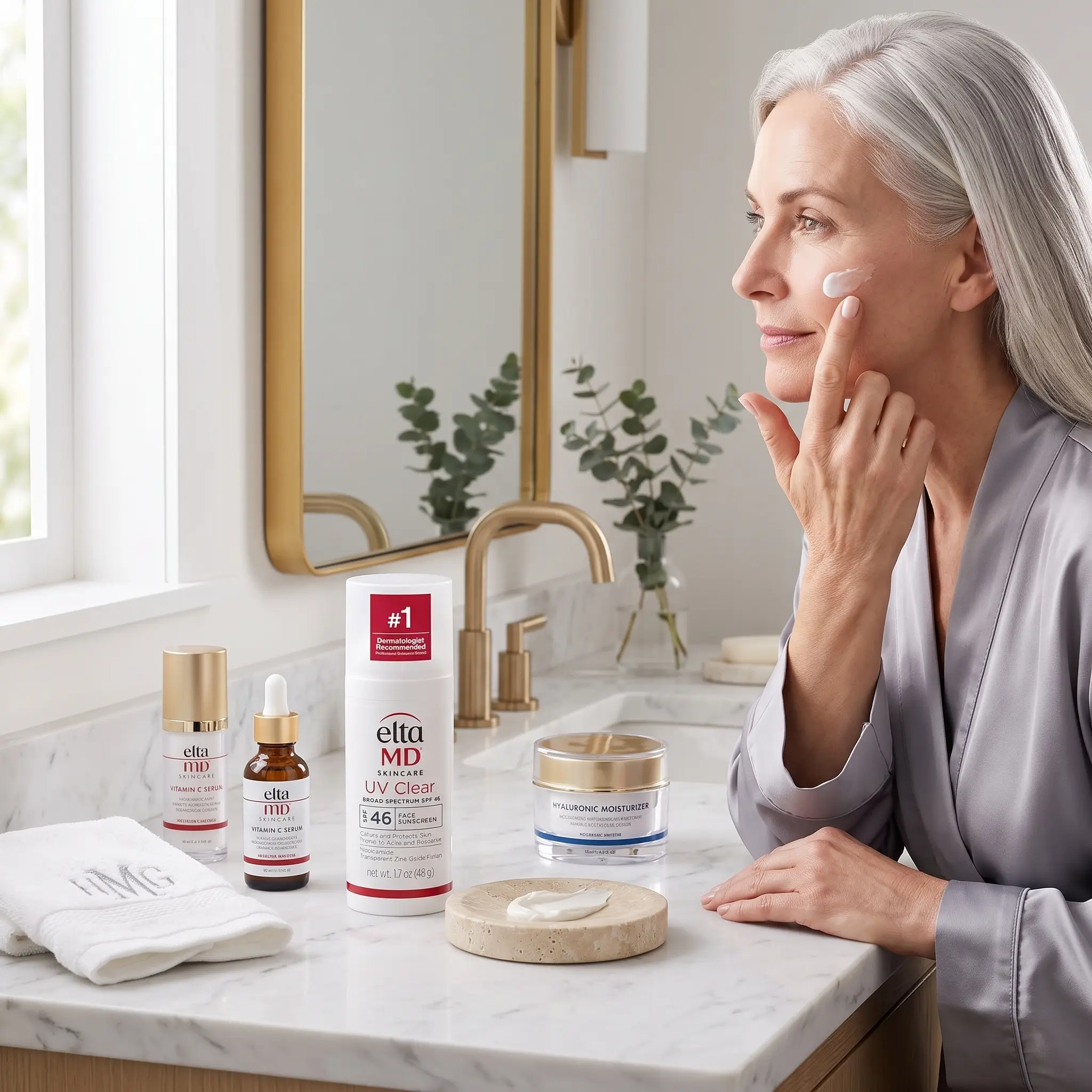
Best Skincare Routine for Menopause: A Simple Daily Guide

Menopause brings significant changes to your life, and your skin is often one of the first places you’ll notice them. Hormonal shifts-specifically the decline in estrogen-can lead to increased dryness, sensitivity, thinning, and a loss of firmness.
However, you don’t need an elaborate 10-step process to see results. In many cases, a simple, consistent skincare routine for menopause is the most effective approach. By focusing on hydration, protection, and gentle care, you can keep your skin comfortable and glowing.
Quick Answer: A basic menopause skincare routine consists of a gentle cleanser, a hydrating moisturizer, and broad-spectrum SPF 30+ sunscreen. Optional serums (like Hyaluronic Acid) or treatments (like Retinol) can be added based on your specific skin concerns.
What Happens to Skin During Menopause?
According to the American Academy of Dermatology (AAD), declining hormone levels cause the skin to lose collagen rapidly in the first few years of menopause. This contributes to the skin becoming drier, thinner, and more prone to irritation.
Common changes include:
- Increased Dryness: Skin loses its ability to retain water.
- Sensitivity: Products that used to work may now cause stinging or redness.
- Loss of Firmness: Fine lines and sagging become more noticeable.
- Slower Healing: The skin barrier becomes thinner and more fragile.
The goal of a menopausal routine isn’t to “reverse” aging, but to provide the hydration and protection your skin needs to stay healthy and resilient.
The Best Skincare Routine for Menopause
Morning Routine: Protect and Hydrate
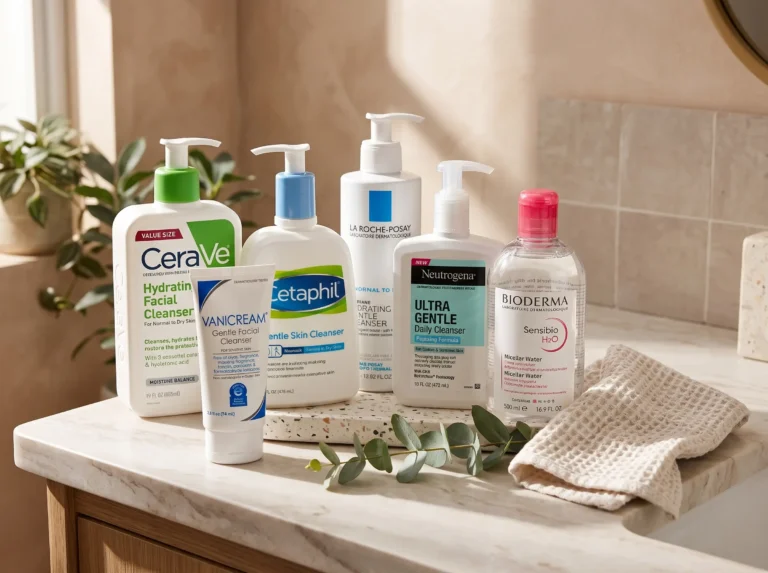
- Gentle Cleanser: Use a soap-free, non-foaming cleanser to avoid stripping natural oils.
- Hydrating Serum (Optional): Apply a Hyaluronic Acid serum to damp skin to lock in moisture.
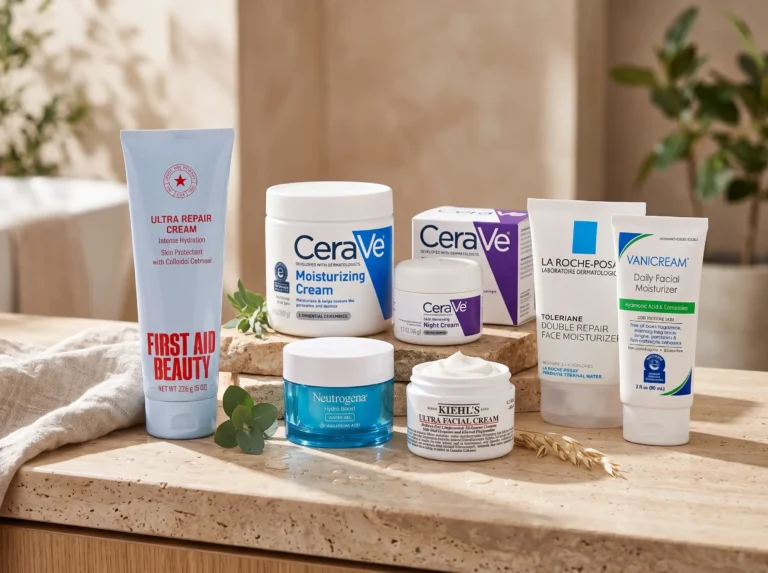
- Moisturizer: Use a cream containing ceramides or glycerin to support the skin barrier.
- SPF 30+ Sunscreen: Your most important “anti-aging” step to prevent further UV damage.
Evening Routine: Repair and Nourish
- Gentle Cleanser: Remove the day’s SPF, makeup, and pollutants.
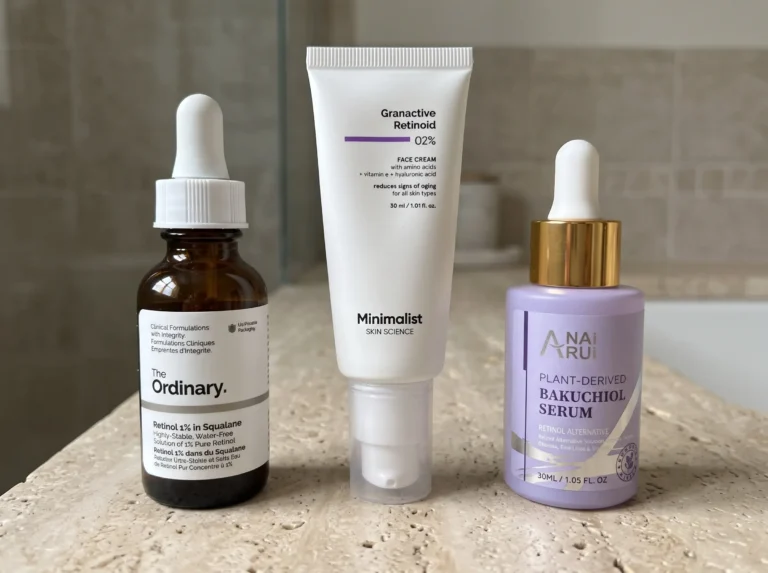
- Treatment Product (Optional): This is where you might add a Retinol or Peptide cream.
- Rich Moisturizer: Use a slightly thicker cream or “overnight mask” to combat nighttime water loss.
Deep Dive: Key Steps for Menopausal Skin
1. Start With a Gentle Cleanser
During menopause, avoid “squeaky clean” feelings. If your skin feels tight after washing, your cleanser is too harsh.
- Look for: Fragrance-free, cream or oil-based formulas.
- Avoid: Harsh scrubs or high-alcohol toners.
- Pro Tip: Look for “fragrance-free” and “pH-balanced” labels to minimize the risk of irritation on sensitive, menopausal skin. [Browse the best-selling gentle cleansers for mature skin.]
2. Choose the Right Moisturizer
Moisturizer is the backbone of your routine. Because skin produces less oil during menopause, look for “occlusives” and “humectants” that seal moisture in.
| Skin Concern | What to Look For |
|---|---|
| Extreme Dryness | Rich creams with Shea Butter or Petrolatum |
| Sensitivity | Fragrance-free, hypoallergenic formulas |
| Dullness | Formulas with Vitamin C or Niacinamide |
| Loss of Elasticity | Products containing Peptides or Ceramides |
3. Never Skip SPF 30+
Sun protection is vital. Thinner, menopausal skin is more susceptible to UV damage and “age spots” (hyperpigmentation). Choose a broad-spectrum formula that feels comfortable enough to wear every day. Compare the best sunscreens for mature skin here.
Best Ingredients for Menopausal Skin
- Hyaluronic Acid: A magnet for moisture; it helps plump the appearance of fine lines.
- Ceramides: Essential fats that help repair the skin barrier.
- Glycerin: A classic humectant that provides long-lasting hydration.
- Retinol: Helps with cell turnover and firmness, but use with caution as it can cause dryness.
- Peptides: The “building blocks” of skin that can help with the appearance of firmness.
Common Menopause Skincare Mistakes
- Using Too Many Products: Introducing five new “active” serums at once is a recipe for a damaged skin barrier.
- Washing With Hot Water: Hot water strips away the very oils your skin is struggling to produce. Use lukewarm water instead.
- Over-Exfoliating: Trying to “scrub away” dry flakes often leads to more irritation. If you must exfoliate, use a gentle chemical exfoliant (like Lactic Acid) once a week.
- Forgetting the Neck and Chest: These areas have thinner skin and show signs of menopause just as quickly as the face.
When to See a Dermatologist
While a good routine helps with everyday changes, professional advice is necessary if you experience:
- Persistent rashes or severe itching.
- New or changing moles/dark spots.
- Cystic acne (hormonal breakouts).
- Skin that is cracking or bleeding from dryness.
Frequently Asked Questions
How can I help dry skin during menopause?
Focus on layering moisture. Apply a hydrating serum to damp skin, followed by a rich cream containing ceramides. Avoid harsh soaps.
Should I use retinol during menopause?
Yes, but start slowly (1–2 times a week). Retinol can be drying, so always follow it with a high-quality moisturizer.
Is fragrance-free better?
Generally, yes. As skin becomes thinner and more sensitive during menopause, added fragrances are a common cause of irritation and “contact dermatitis.”
Do I need sunscreen during menopause?
Yes. Dermatologists recommend broad-spectrum SPF 30 or higher as part of everyday sun protection.
Can menopause cause sensitive skin?
Yes. The AAD notes that skin can become more sensitive and prone to rashes and irritation during menopause. Fragrance-free moisturizers and gentle skincare can be helpful.
Affiliate Disclosure: This article contains affiliate links. If you purchase a product through our links, EmeliaStyle may earn a commission at no additional cost to you. Always check current product labels for the most up-to-date ingredient lists.