Disclosure: This article contains affiliate links. If you purchase a product through one of these links, we may earn a commission at no additional cost to you.

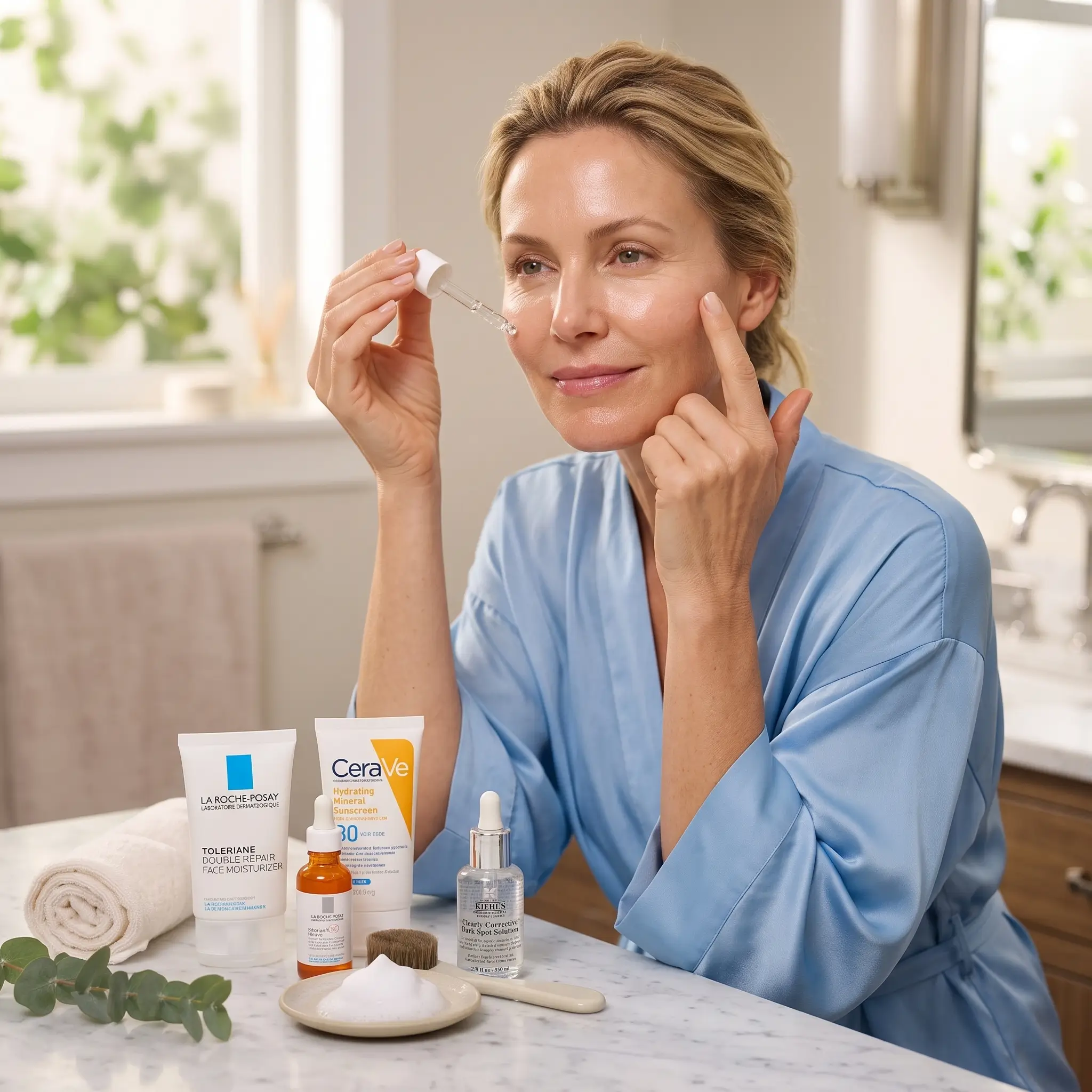
The Best Anti-Aging Skincare Routine for Radiant, Healthy Skin

In the world of beauty, the term “anti-aging” is undergoing a much-needed transformation. At Emelia Style, we prefer to think of it as “pro-skin health.” It isn’t about chasing an impossible fountain of youth or erasing the lines that tell the story of your life; it’s about providing your skin with the nutrients, hydration, and protection it needs to remain resilient and radiant at every age.
If you’ve noticed your skin feeling a bit drier, losing some of its “bounce,” or showing more pronounced texture, it might be time to refine your daily skincare routine. Whether you are 35 or 65, a structured anti-aging skincare routine can help support collagen production, repair the moisture barrier, and protect against environmental stressors.
In this guide, we’ll break down the essential steps for a morning and nighttime routine, explain the “powerhouse” ingredients you actually need, and help you choose the best anti-aging skin care products for your unique needs.
Quick Answer: The Essential Anti-Aging Routine
If you’re in a hurry, here is the “Gold Standard” structure for an effective anti-aging skin routine:
- Morning: Gentle Cleanser → Vitamin C Serum → Hyaluronic Acid → Moisturizer → SPF 30+.
- Nighttime: Double Cleanse → Retinol/Retinoid → Eye Cream → Night Cream (Ceramides/Peptides).
- The Golden Rule: Consistency is more important than the price tag. Results typically take 8–12 weeks of daily use.
Understanding Mature Skin: Why a Routine Matters
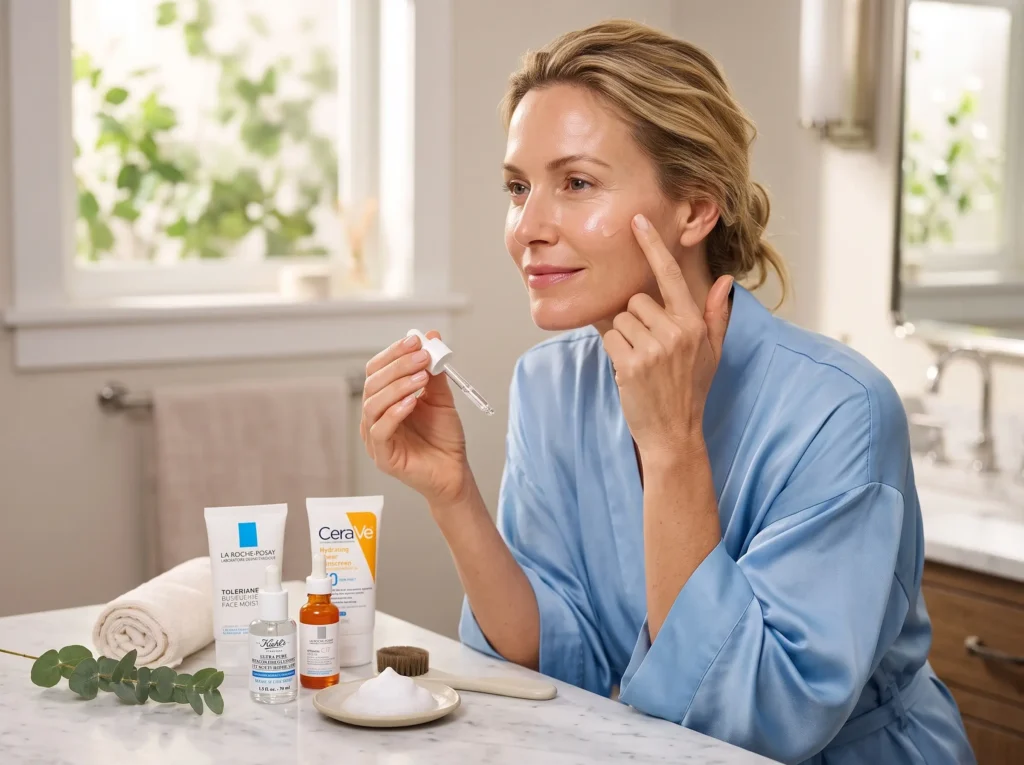
As we age, our skin undergoes several natural biological changes:
- Slower Cell Turnover: New skin cells don’t reach the surface as quickly, leading to a duller complexion.
- Collagen Depletion: We lose about 1% of our collagen every year starting in our mid-20s, leading to a loss of firmness.
- Reduced Sebum Production: The skin produces less oil, which often results in chronic dryness.
- Environmental Cumulative Damage: Years of UV exposure begin to manifest as “age spots” or hyperpigmentation.
A targeted skincare routine for mature skin focuses on addressing these specific shifts by stimulating renewal and deeply replenishing moisture.
Morning Anti-Aging Skincare Routine: Protect & Prevent
The primary goal of your morning routine is defense. You want to shield your skin from UV rays, pollution, and blue light while providing a boost of hydration.
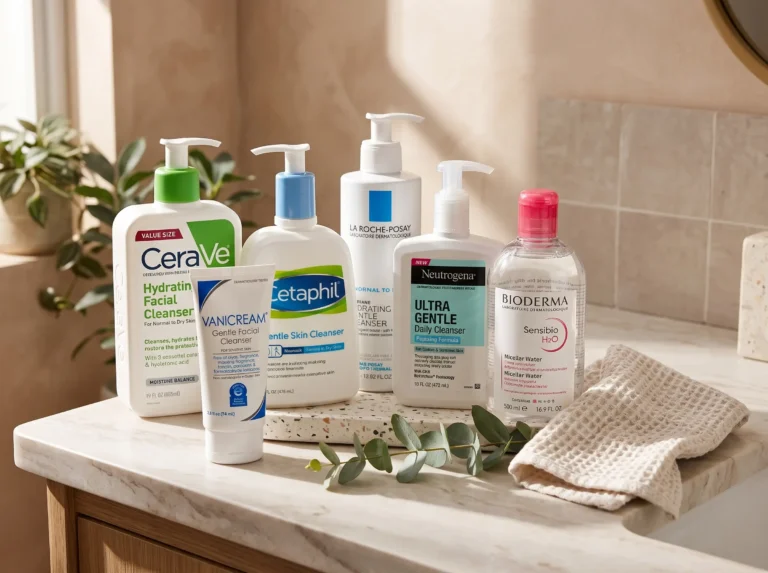
Step 1: Gentle Facial Cleanser
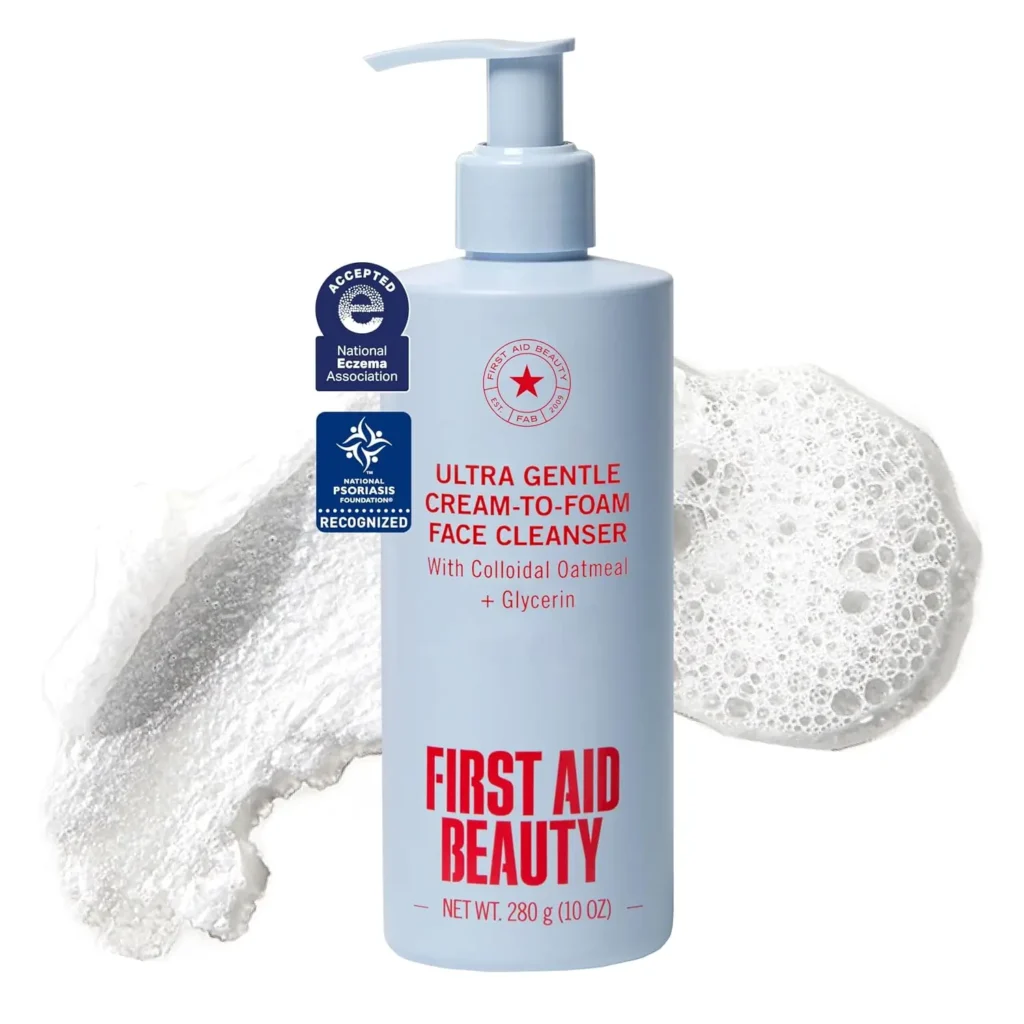
In the morning, you don’t need to “scrub.” You simply want to remove the sweat and oils from the night before without stripping your moisture barrier.
- What to look for: Creamy or milk-based cleansers that are non-foaming and fragrance-free.
- Why it works: Mature skin often has a fragile barrier; a gentle cleanser keeps that barrier intact.
Step 2: Vitamin C Serum
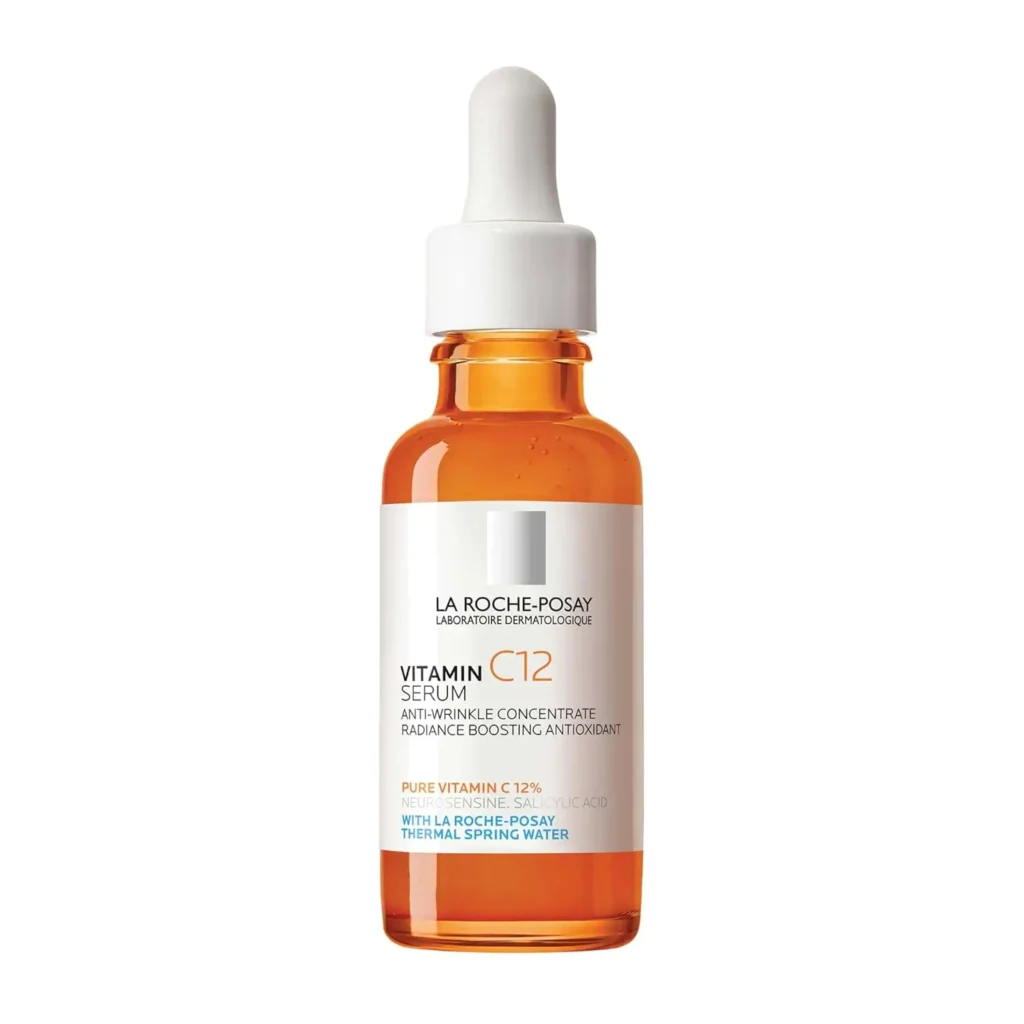
Vitamin C is a potent antioxidant that neutralizes free radicals caused by the sun and pollution.
- What to look for: L-ascorbic acid (10–20%) for maximum potency, or Sodium Ascorbyl Phosphate for sensitive skin.
- Affiliate Suggestion: [Shop the Current Leading Vitamin C Serums]
- How to use: Apply to dry skin immediately after cleansing.
Step 3: Hyaluronic Acid Serum
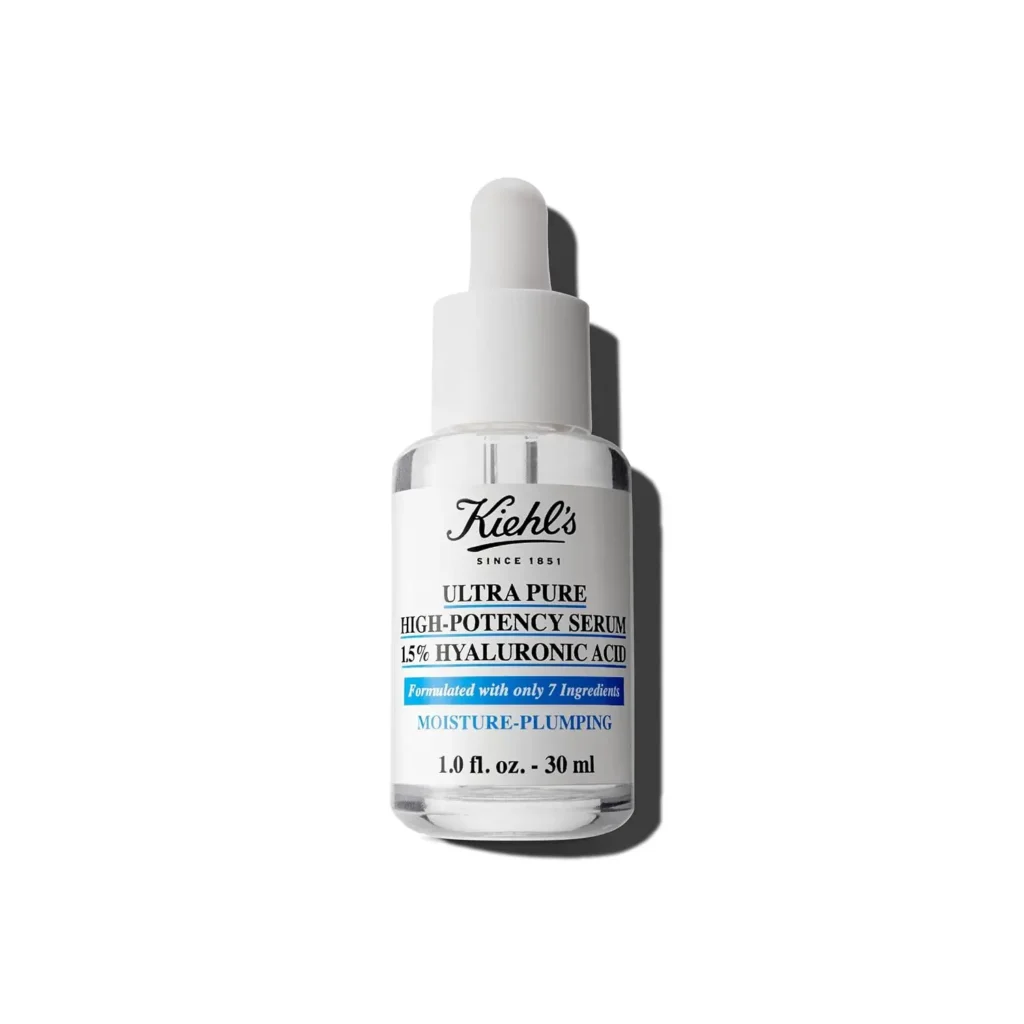
Think of Hyaluronic Acid (HA) as a “big drink of water” for your face. It can hold up to 1,000 times its weight in water, instantly plumping the appearance of fine lines.
- Best for: All skin types, especially those experiencing “crepy” texture.
- Pro Tip: Apply HA to slightly damp skin to lock in the moisture.
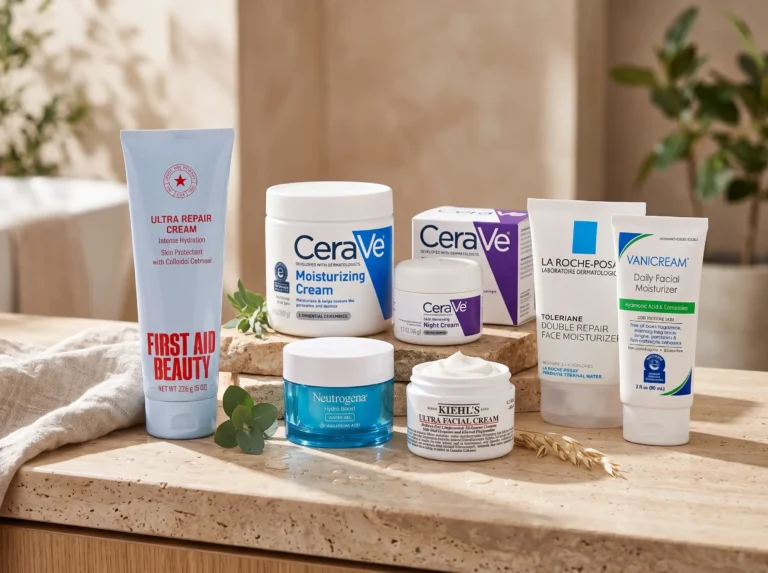
Step 4: Daytime Moisturizer
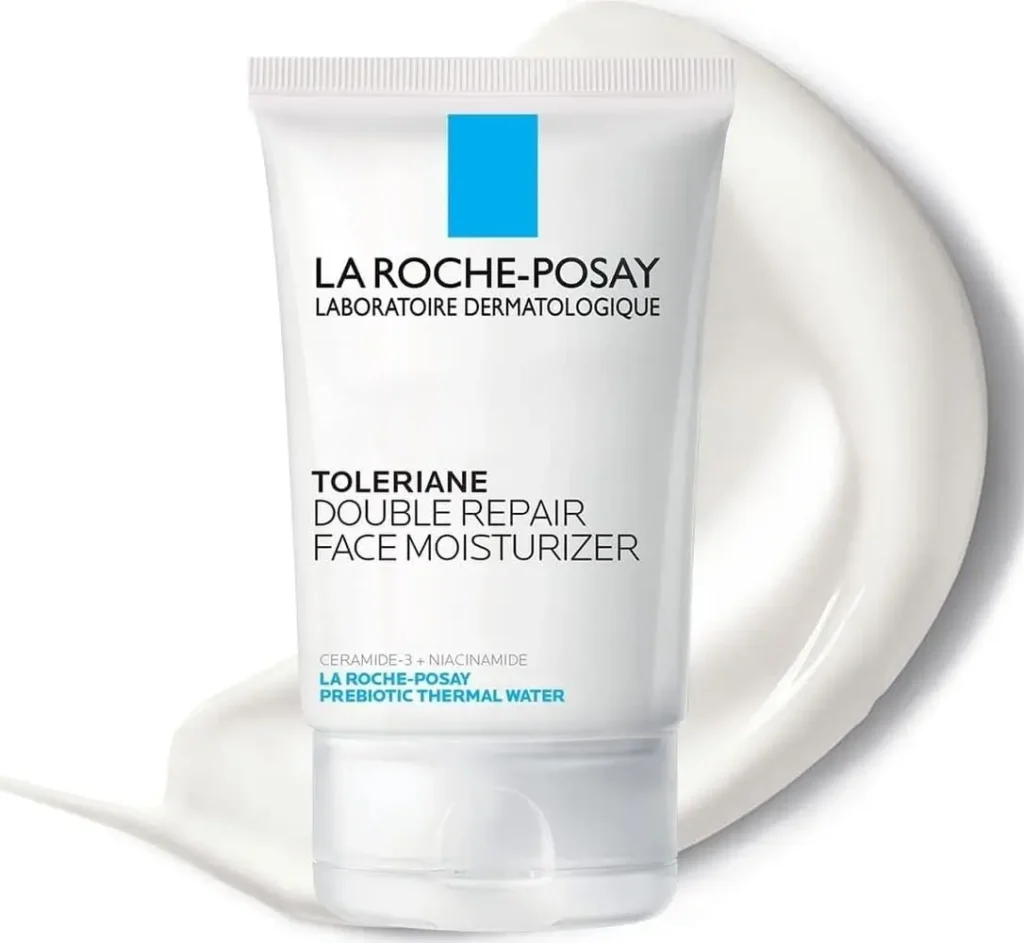
A good daytime moisturizer acts as a seal for your serums.
- Key Ingredients: Look for glycerin or squalane.
- Pros: Smoothes the skin for makeup application.
- Cons: Avoid overly heavy jars if you have oily-combination skin.
Step 5: Broad-Spectrum SPF 30+ Sunscreen
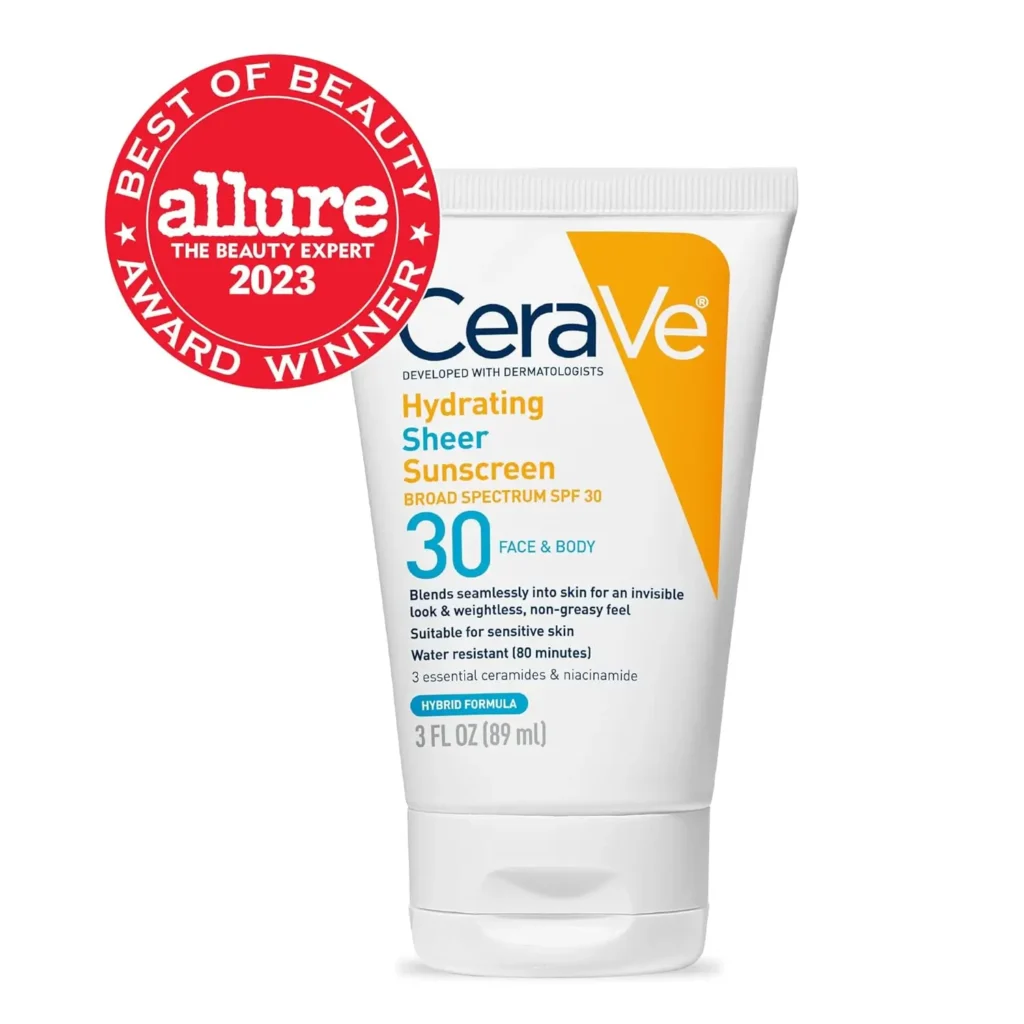
This is the most important step in any anti-aging skincare routine. Up to 80% of visible skin aging is caused by UV exposure.
- Requirements: Must be Broad-Spectrum (protects against UVA and UVB) and at least SPF 30.
- Texture: Modern mineral sunscreens (Zinc Oxide) are now formulated to be sheer and non-greasy.
Nighttime Anti-Aging Skincare Routine: Repair & Renew
While you sleep, your skin switches into “repair mode.” Your nighttime products should be richer and contain “active” ingredients that might make your skin sensitive to the sun during the day.
Step 1: Double Cleanse
To ensure your anti-aging treatments actually penetrate, you must remove the day’s SPF and grime.
- How: Use an oil-based balm first, followed by your gentle water-based cleanser.
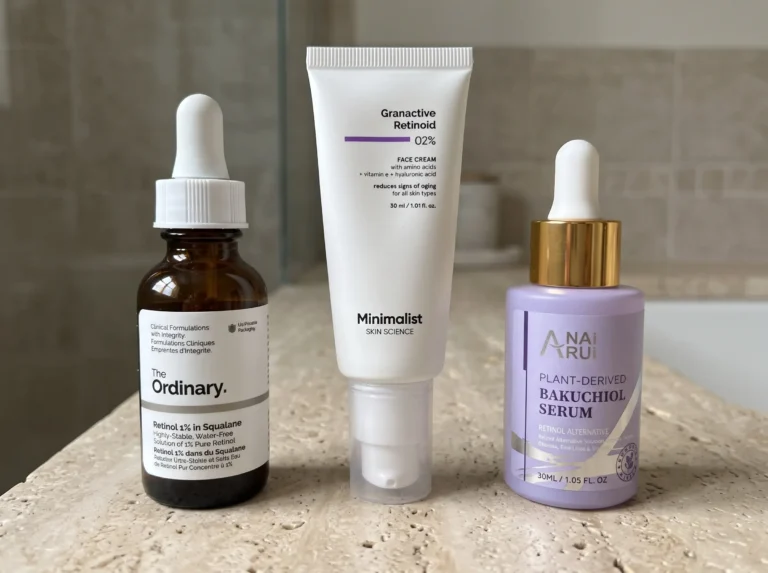
Step 2: Retinol or Retinoid Treatment
Retinol is widely considered the most effective anti-aging skincare product available over the counter. It speeds up cell turnover and helps boost collagen.
- Who it’s for: Most skin types, but start slowly (2-3 times a week).
- Potential Drawbacks: Can cause dryness or “purging” if introduced too quickly.
- Alternative: If your skin is too sensitive for retinol, look for Bakuchiol, a plant-based gentle alternative.
Step 3: Eye Cream
The skin around the eyes is the thinnest on the body and lacks oil glands, making it the first place to show fine lines.
- What to look for: Caffeine (for puffiness) or Peptides (for firming).
- How to use: Gently tap into the orbital bone with your ring finger.
Step 4: Night Cream / Barrier Repair
Night creams are generally thicker than day creams and are packed with lipids.
- Key Ingredients: Ceramides (to repair the skin barrier) and Peptides (to support elasticity).
- Why it’s worth considering: It prevents “Transepidermal Water Loss” (TEWL) while you sleep.
- Shop the product: [See the current best-selling night creams]
Key Anti-Aging Ingredients: A Buying Guide
When shopping for the best anti-aging skin care products, ignore the flashy packaging and look at the ingredient list on the back.
| Ingredient | Benefit | Best Time to Use |
|---|---|---|
| Vitamin C | Brightens, protects from pollution | Morning |
| Retinol | Softens fine lines, improves texture | Night |
| Hyaluronic Acid | Plumps and hydrates | Morning & Night |
| Ceramides | Strengthens the skin barrier | Night |
| Peptides | Supports firmness and elasticity | Night |
| Niacinamide | Evens skin tone, calms redness | Morning or Night |
Common Mistakes in an Anti-Aging Skin Routine
Even with the best products, certain habits can hinder your results:
- Using Too Many Actives at Once: Mixing Retinol, Vitamin C, and AHAs all in one go can lead to chemical burns or a damaged barrier. Introduce one “active” at a time.
- Forgetting the Neck and Décolletage: These areas show age just as quickly as the face but are often ignored. Always bring your serums and SPF down to your chest.
- Expecting Instant Results: Skincare is a marathon, not a sprint. It takes about 28–40 days for your skin cells to fully cycle. Give any new routine at least 3 months.
- Skipping Sunscreen on Cloudy Days: UVA rays (the “aging” rays) penetrate through clouds and glass windows year-round.
Featured Ingredient Spotlight: Why Peptides are the New Heroes
While Retinol gets all the glory, Peptides are becoming the favorite of beauty editors. Peptides are short chains of amino acids that act as building blocks for proteins like collagen and elastin.
Unlike Retinol, Peptides are generally non-irritating and safe for all skin types, including those with rosacea or extreme sensitivity. If you find your skin is too reactive for traditional “anti-aging” products, a peptide-rich serum or moisturizer is an excellent alternative.
FAQ: Frequently Asked Questions
At what age should I start an anti-aging skincare routine?
Prevention is easier than correction. Most dermatologists suggest starting a preventative routine in your late 20s or early 30s, primarily focusing on SPF and antioxidants like Vitamin C.
Can I use Vitamin C and Retinol together?
It is best to use them at different times of the day. Use Vitamin C in the morning for protection and Retinol at night for repair. Using them simultaneously can diminish their effectiveness and irritate the skin.
Do I really need a separate night cream?
You can use your day moisturizer at night if it doesn’t contain SPF. However, night creams are typically formulated without sunscreens and contain higher concentrations of repair ingredients that are better absorbed while you sleep.
What is the difference between a Retinol and a Retinoid?
“Retinoid” is the umbrella term for all Vitamin A derivatives. “Retinol” is a specific type of over-the-counter retinoid. Prescription-strength retinoids (like Tretinoin) are much stronger and work faster but come with a higher risk of irritation.
Why is my skin peeling after starting a new routine?
If you recently introduced a Retinol or a chemical exfoliant (like Glycolic Acid), your skin may be “purging” or reacting to the increased cell turnover. Reduce usage to twice a week and increase your moisturizer. If irritation persists, consult a professional.
Will these products remove deep wrinkles?
Cosmetic skincare products are designed to improve the appearance of fine lines, skin texture, and tone. They cannot physically remove deep-set wrinkles or replace the results of clinical procedures like fillers or lasers.
Final Thoughts
The best anti-aging skincare routine is the one you will actually follow every single day. You don’t need a 12-step process to see a difference; a few well-chosen, high-quality products like a Vitamin C serum, a reliable Retinol, and a daily SPF will do the heavy lifting for you.
Remember, skin health is a reflection of your overall well-being. Pair your daily skincare routine with plenty of water, a balanced diet, and adequate sleep for that true, “lit-from-within” Emelia Style glow.