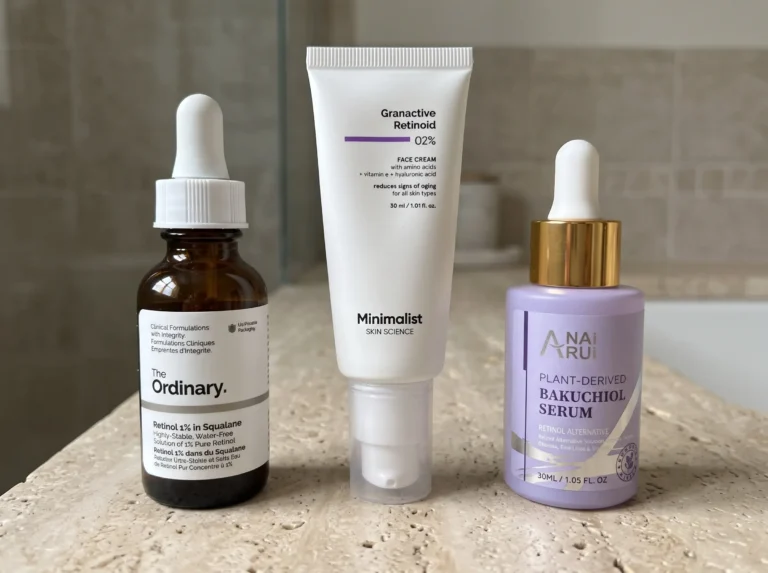
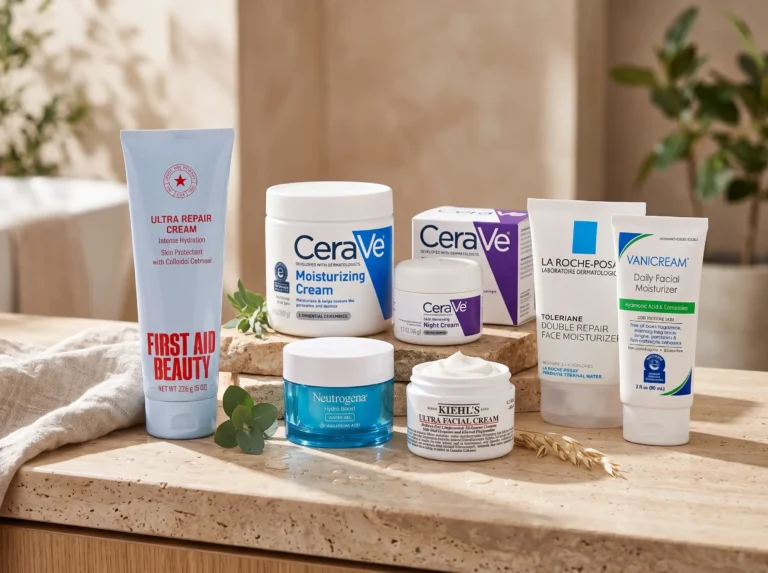
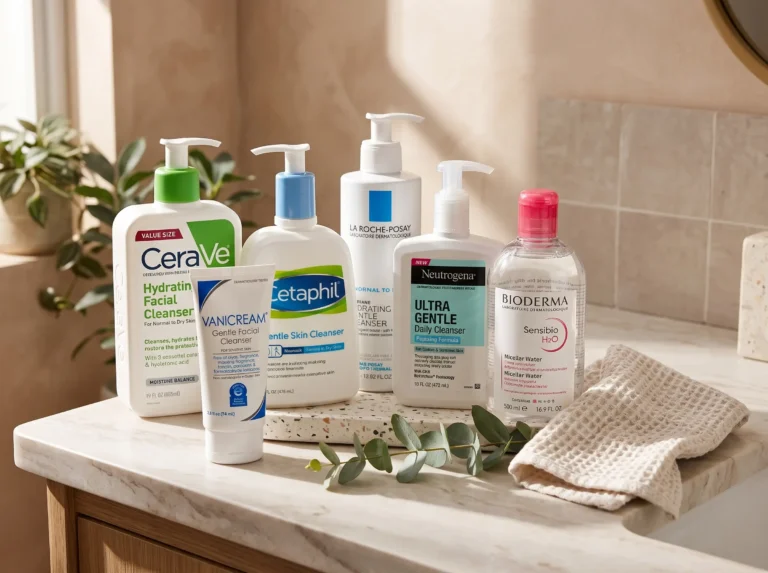
Disclosure: This article contains affiliate links. If you purchase a product through one of these links, we may earn a commission at no additional cost to you.

The Best Retinol Serums for Beginners

Retinol has a reputation as a skincare powerhouse and as a troublemaker. It can help smooth the look of fine lines, even out tone and improve texture, but if you use too much, too soon, it can leave skin red, dry and flaky.
The good news is that irritation is mostly avoidable. With a gentle formula, a slow start and the right support products, most people can add retinol to their routine comfortably. This guide covers how retinol works, how to start, and which beginner-friendly serums are worth considering.
What Is Retinol and What Does It Do?
Retinol is a form of vitamin A. It belongs to a group of ingredients called retinoids, which encourage skin cells to turn over and support collagen. With consistent use over months, retinol can help:
- Soften the look of fine lines and wrinkles
- Improve rough texture
- Fade the look of dark spots and uneven tone
- Reduce the look of clogged pores and some breakouts
It works gradually, so patience matters. Most people need at least eight to twelve weeks before they see clear results.
Retinol vs. Retinoids vs. Retinal: Quick Guide
- Retinol is available over the counter and works after skin converts it into its active form. It is the usual starting point.
- Retinal (retinaldehyde) is one step closer to the active form, so it may work faster, but it can also be more irritating.
- Retinyl esters are gentle, weaker forms that are often found in moisturizers.
- Prescription retinoids, such as tretinoin, are stronger and require a prescription from a doctor.
If you are a beginner, start with a low-strength retinol. If your skin tolerates it, you can work up gradually or ask a dermatologist about prescription options.
How to Choose a Beginner Retinol Serum
Start with a low percentage. Many beginners begin with around 0.1 to 0.3 percent retinol. A higher percentage is not always better, especially in the first few months.
Look for soothing ingredients. Formulas with niacinamide, ceramides, glycerin or squalane can help reduce dryness and irritation.
Choose protective packaging. Retinol breaks down with light and air, so opaque bottles and airless pumps are better than clear jars.
Skip heavy fragrance. It adds irritation risk without helping results.
Best Retinol Serums for Beginners
Strengths and formulas can change, so check the label on the current product page before buying.
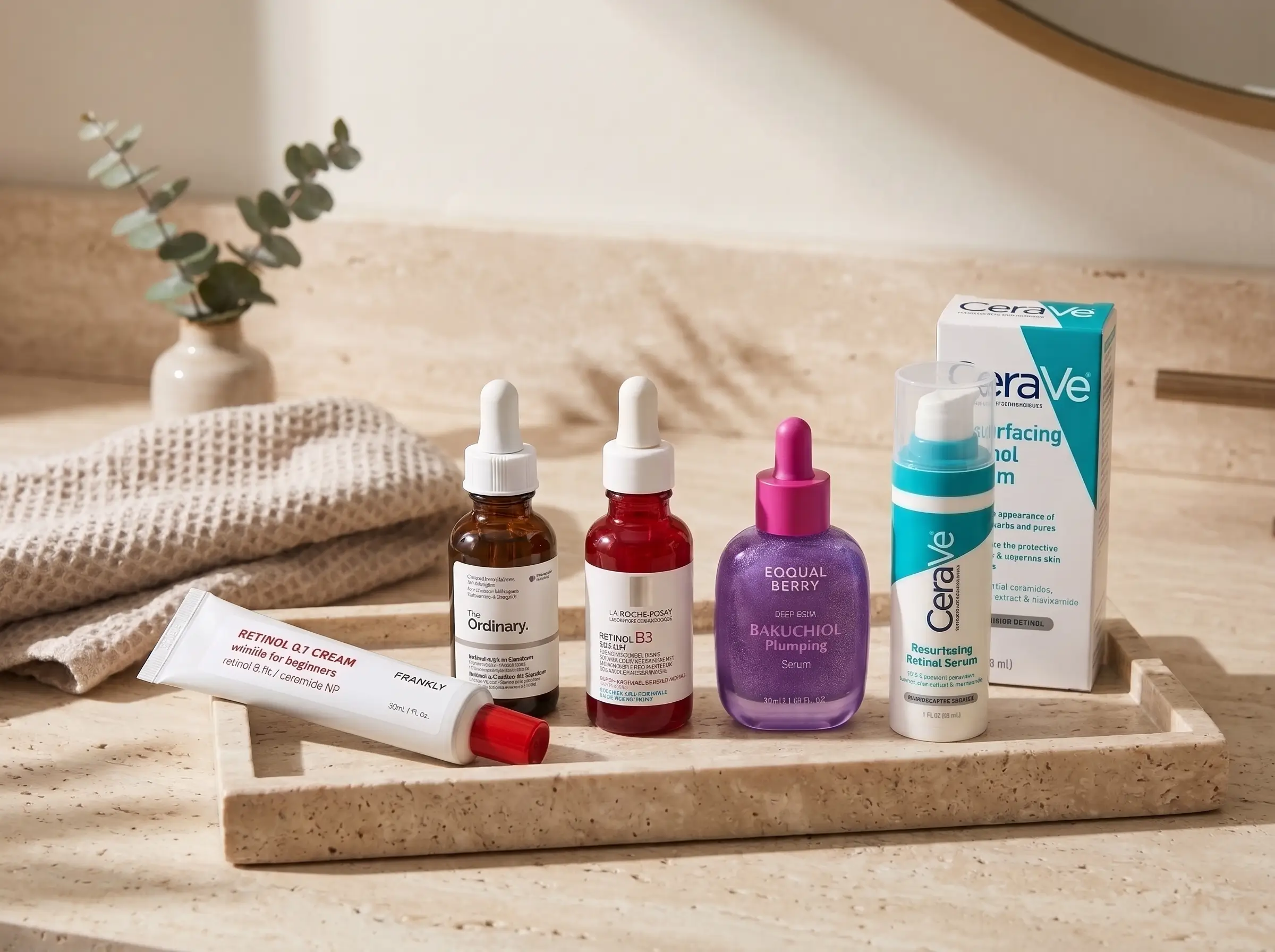
Best Overall for Beginners: La Roche-Posay Retinol B3 Serum
A gentle formula that pairs retinol with niacinamide, made by a brand known for sensitive-skin products. A good option for people who want a supported introduction to retinol.
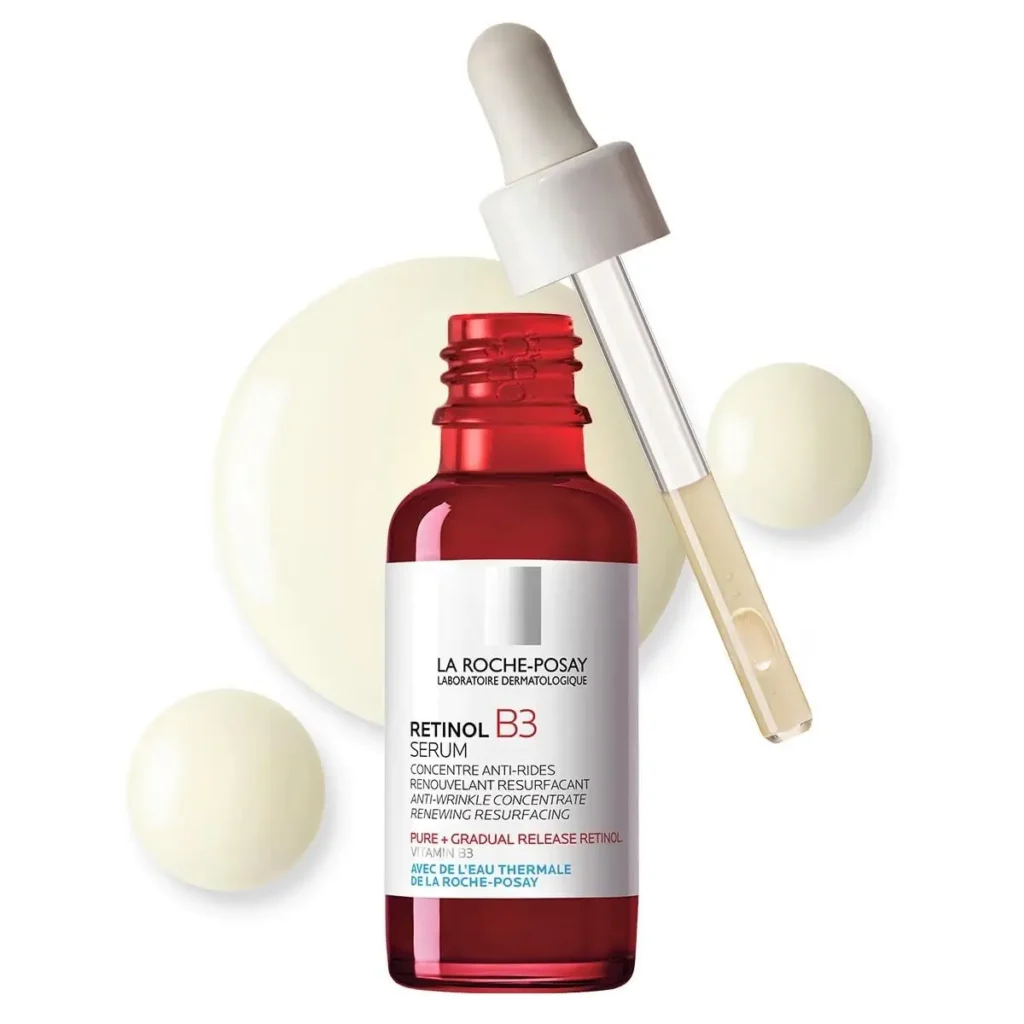
La Roche-Posay Retinol B3 Serum
Best Budget Pick: CeraVe Resurfacing Retinol Serum
An affordable and widely available serum with ceramides and niacinamide. It is designed to help refine texture and the look of post-blemish marks.
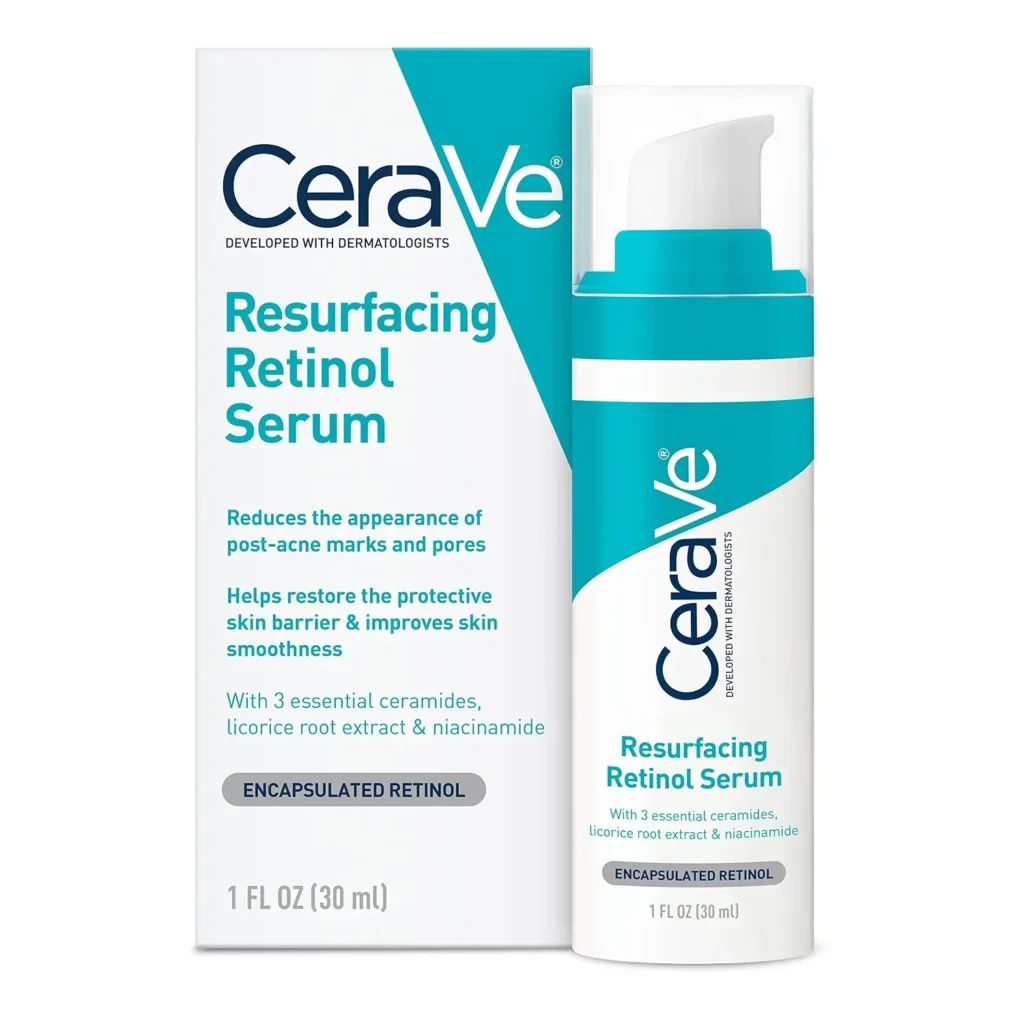
CeraVe Resurfacing Retinol Serum
Best Simple Formula: The Ordinary Retinol 0.2% in Squalane
A minimal, low-strength option suspended in squalane, which is a common choice for beginners. Higher strengths are also available once your skin is comfortable.
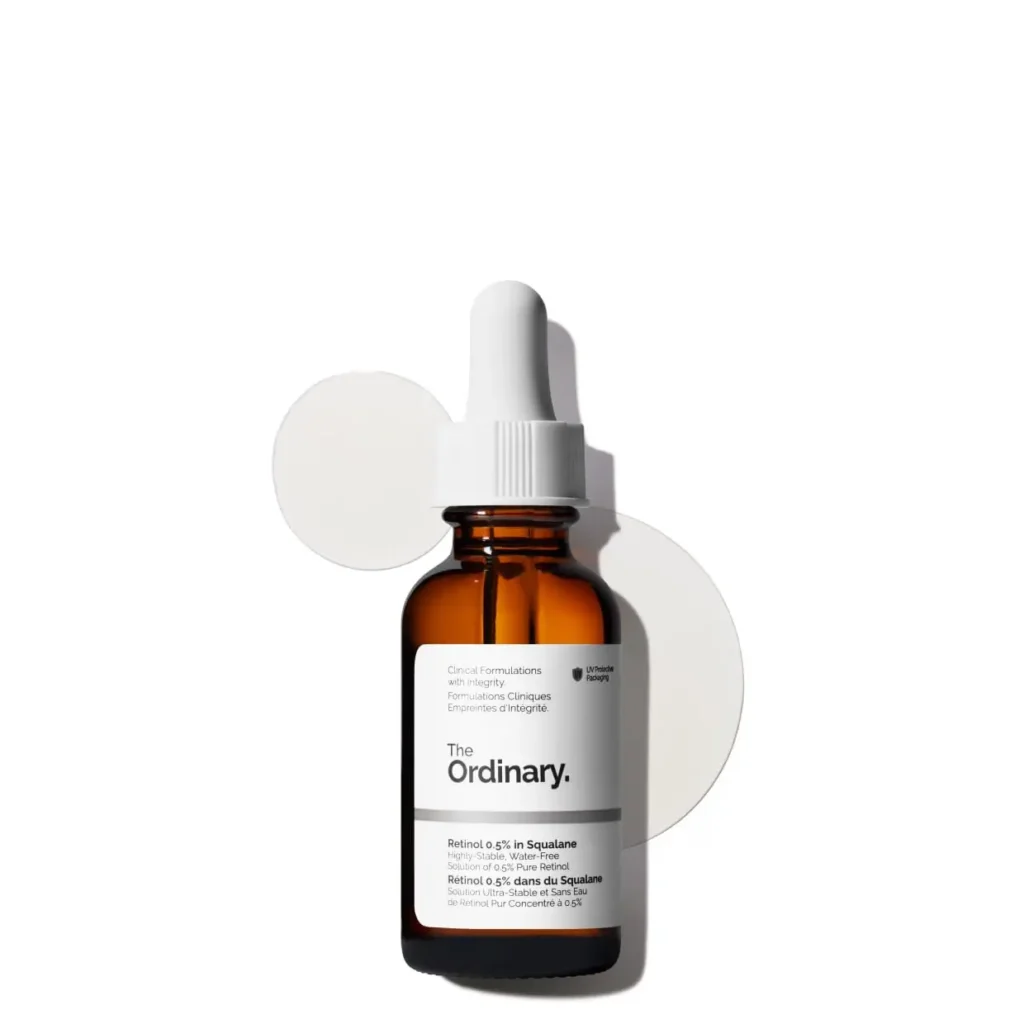
The Ordinary Retinol 0.2% in Squalane
Best for Dry Skin: A retinol cream or serum with ceramides and hyaluronic acid
If your skin is dry, a creamier retinol is usually more comfortable than a thin serum, because the formula itself helps cushion the skin.
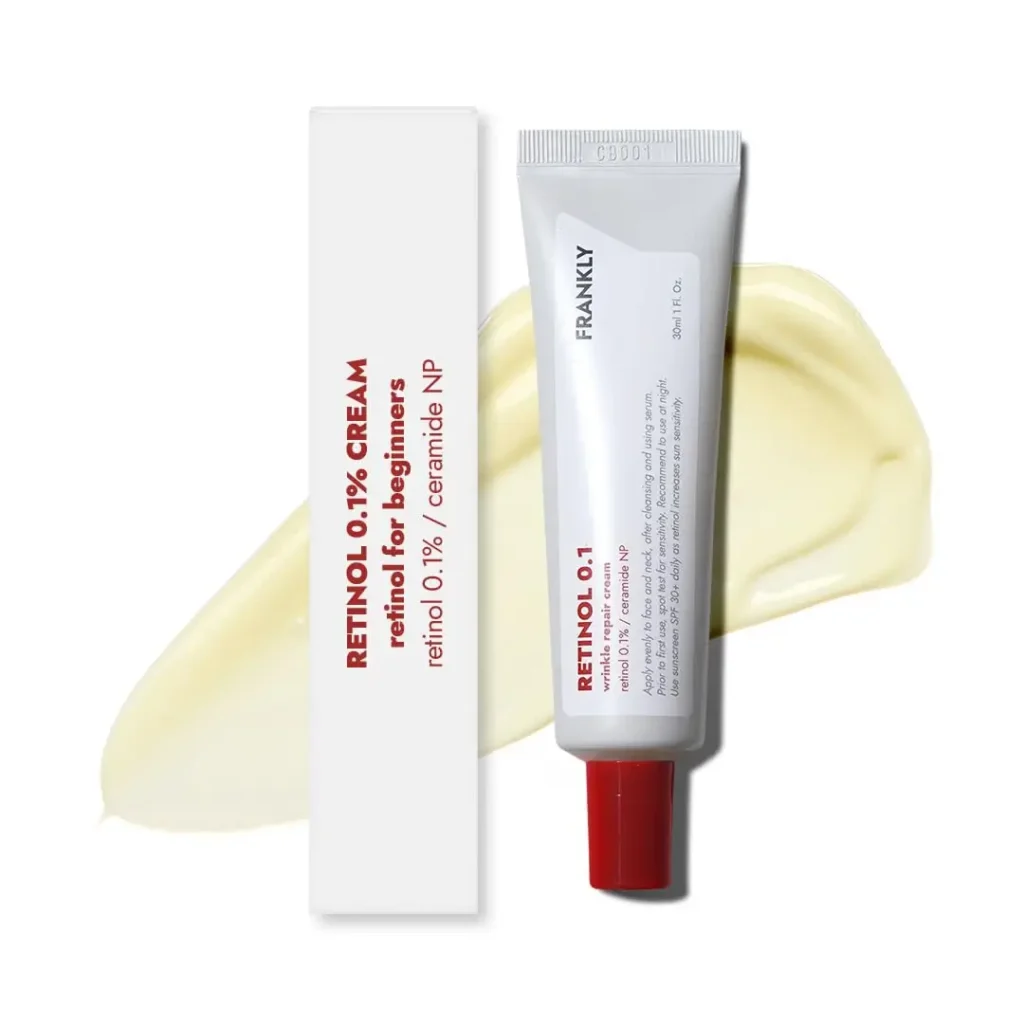
retinol cream for dry skin beginners
Best Gentle Alternative: Bakuchiol serum
Bakuchiol is a plant-derived ingredient that is often called a gentler alternative to retinol. It is not a retinoid and may be less potent, but some people with very sensitive skin prefer it.
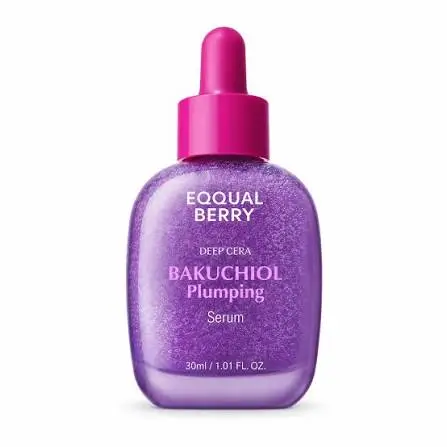
EQQUALBERRY Bakuchiol Plumping Serum
How to Start Using Retinol: A Four-Week Plan
The key to avoiding irritation is a slow start.
Week 1: Use retinol twice, for example on Monday and Thursday evenings.
Week 2: If your skin feels comfortable, use it three times a week.
Weeks 3 and 4: Move to every other night if your skin is calm.
If your skin feels tight, red or flaky, go back to the previous frequency. Some people stay at two or three nights a week for the long term, and that is perfectly fine.
How to Apply Retinol
- Cleanse gently in the evening, then pat your skin dry. Wait a few minutes so skin is completely dry.
- Use a pea-sized amount for your whole face.
- Avoid the eye area, corners of the nose and corners of the mouth, where skin is thinner.
- Follow with moisturizer. Some people also apply moisturizer first as a buffer, which is a common method called the sandwich technique.
- Use sunscreen every morning. Retinol makes skin more sensitive to the sun. Our guide to the best face sunscreens for daily wear can help you pick one.

What to Expect: The Retinol Adjustment Period
It is common to experience mild dryness, peeling or small bumps during the first few weeks. Some people also notice a short breakout period as skin adjusts. This is often called retinization. Mild, temporary signs are common, but burning, swelling or severe redness are not, and you should stop using the product.
To make the adjustment easier:
- Use a gentle, fragrance-free cleanser
- Add a hydrating serum or a hydrating mask on non-retinol nights
- Skip other strong actives, such as exfoliating acids, on retinol nights
- Apply a protective moisturizer
What Not to Mix With Retinol
When you are starting out, avoid layering retinol with strong exfoliants, such as glycolic or salicylic acid, or with benzoyl peroxide in the same routine. Many people use vitamin C in the morning and retinol at night, which is a well-known way to keep the two apart. If you are curious about vitamin C, read our guide to the best vitamin C serums for sensitive skin.
Who Should Avoid or Check With a Doctor First
Retinoids are not recommended for everyone. Talk to a doctor before using retinol if you are pregnant, trying to conceive or breastfeeding, or if you have a skin condition such as eczema, rosacea or very reactive skin. If you are not sure whether retinol suits you, a dermatologist can advise you.
Frequently Asked Questions
What is the best retinol for beginners?
A low-strength retinol, around 0.1 to 0.3 percent, in a formula with soothing ingredients such as niacinamide or ceramides is a good starting point.
Should I use retinol in the morning or at night?
Night is usually recommended, because retinol can break down in sunlight and make skin more sun-sensitive. Always wear sunscreen the next day.
How long does retinol take to work?
Most people notice improvement in texture after several weeks, with more visible changes in tone and fine lines after three months or more.
Can I use retinol every night?
Some people can, but most beginners do better building up slowly and settling at a frequency that keeps skin comfortable.
Can I use retinol with niacinamide?
Yes, many formulas combine them, and niacinamide can help reduce irritation.
Is retinol safe for sensitive skin?
Many people with sensitive skin can use it with care, using a low strength, a slow schedule and plenty of moisturizer. If your skin is very reactive, ask a dermatologist.
Final Thoughts
Retinol rewards patience. Start low, go slow, moisturize, protect your skin with sunscreen and give it time. If you do experience irritation, scale back instead of giving up, and your skin will usually adapt.