Disclosure: This article contains affiliate links. If you purchase a product through one of these links, we may earn a commission at no additional cost to you.

How to Find Your Foundation Shade at Home

The Short Answer
To find your foundation shade, work out your depth (how light or deep your skin is) and your undertone (the subtle warm, cool, neutral, or olive tone beneath the surface). Then test two or three close shades along your jawline, wait 10 to 15 minutes, and check them in natural daylight. The shade that disappears into both your face and neck is your match.
It sounds simple, but most mismatches come from skipping one of those steps, especially the waiting and the daylight check.
Why It’s Hard to Get Right
Matching foundation isn’t like matching paint. Several things work against you:
- Skin has more than one color. Your face, neck, and chest often differ.
- Foundation changes after you apply it. Some formulas darken or turn orange as they react with the air and your skin’s oils, a process called oxidation.
- Store lighting lies. Fluorescent lights can make the wrong shade look right.
- Shade names aren’t standard. “Beige 220” means different things in different brands.
- Skin changes. Tan, winter paleness, hormones, and age can all shift your shade over the year.
Knowing this up front makes the steps below easier to follow.
Step 1: Find Your Depth
Depth is how light or deep your skin looks, often described as fair, light, medium, tan, deep, or rich. Most brands group shades by depth first, so this narrows the choices quickly.
How to check: Look at your bare face in natural daylight, near a window, and compare it to your neck and chest. Don’t use your hands or arms, since they often get more sun and can be a different shade from your face.
Step 2: Work Out Your Undertone
Undertone is the subtle color beneath your skin’s surface. It doesn’t change when you tan, and it’s the main reason two foundations in the same depth can look completely different.
| Undertone | What It Looks Like | Common Shade Labels |
|---|---|---|
| Cool | Pink, red, or bluish hints | “C,” “Cool,” “Rose,” “Pink” |
| Warm | Yellow, golden, or peachy hints | “W,” “Warm,” “Golden,” “Yellow” |
| Neutral | A mix, with no clear lean | “N,” “Neutral,” “Beige” |
| Olive | Greenish or gray-yellow cast, often with a warm look | “Olive,” or sometimes labeled warm |
Many brands use letters like C, W, and N, but not all do, so read the brand’s shade guide.
At-Home Undertone Tests
These tests are helpful hints, not proof. Try more than one, and trust patterns over any single result.
- The jewelry test. Silver jewelry can look flattering on cool undertones, and gold on warm. If both look good, you may be neutral.
- The white-versus-cream test. Hold a pure white and a cream or off-white fabric near your face in daylight. Which one makes your skin look brighter and healthier?
- The vein test. Bluish or purple veins on the inside of your wrist are sometimes linked to cool undertones, and greenish veins to warm. This test is unreliable, especially on deeper skin tones and in poor light.
- The sun test. Skin that burns easily and turns pink is often cool, while skin that tans easily is often warm. This isn’t a firm rule either.
Step 3: Pick Two or Three Candidates
Once you know your depth and likely undertone, choose two or three shades close to each other, for example one slightly lighter, one that looks like your match, and one slightly warmer. Having a range to compare is far more useful than testing one shade alone.
Step 4: Test Along the Jaw and Neck
- Start with a clean, moisturized face.
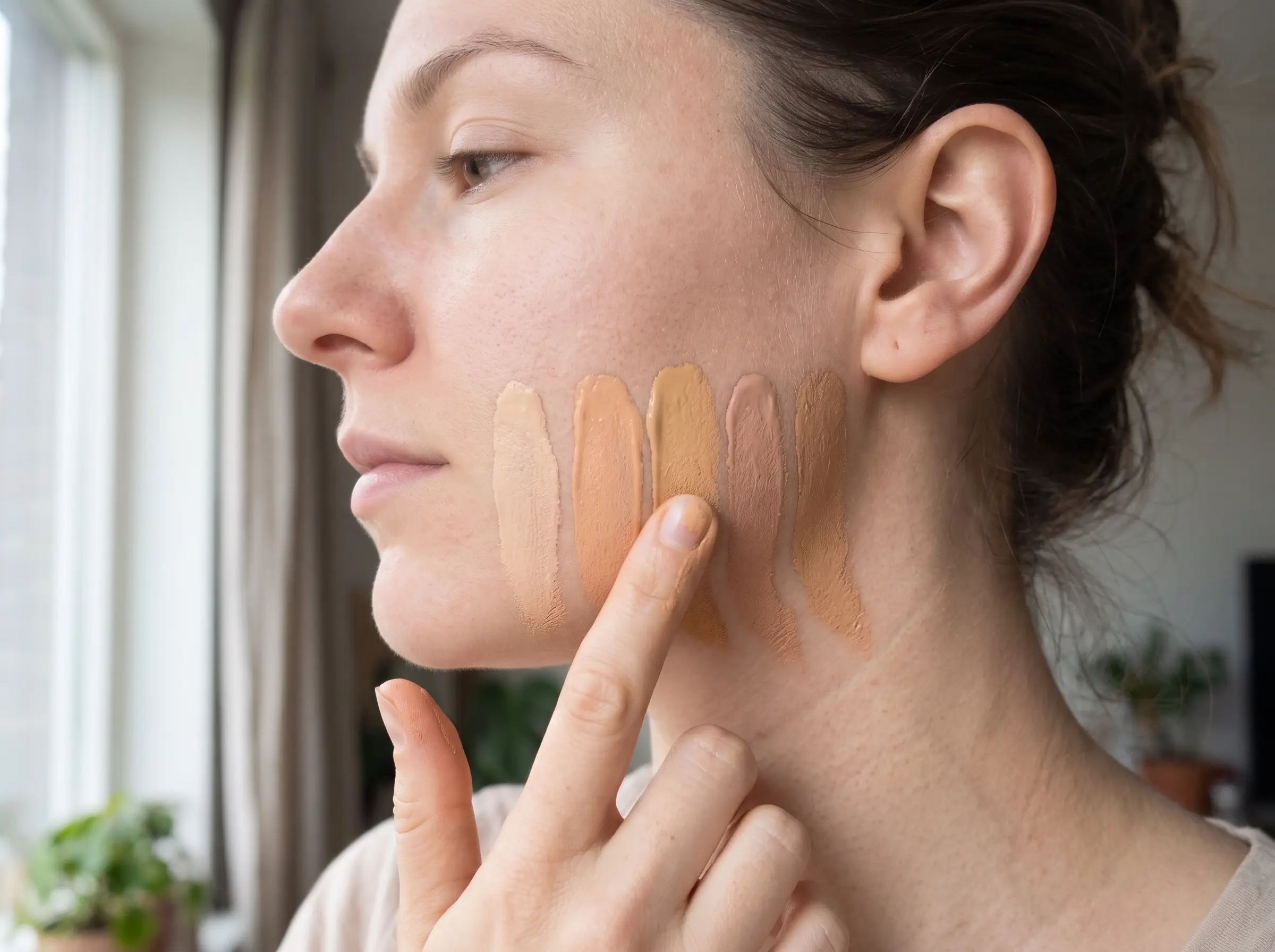
- Apply a small stripe of each shade along your jawline, extending slightly onto your neck.
- Blend each stripe lightly.
- Wait 10 to 15 minutes. This lets the foundation settle and shows whether it oxidizes.
- Check in natural daylight, by a window or outside, with a mirror. Avoid relying on bathroom lighting.
- Look for the stripe that disappears. It should blend into both your face and your neck without a visible edge.
If a stripe looks orange, gray, or pink after waiting, it’s the wrong undertone for you, even if the depth looks right.
Step 5: Check It in Different Lighting
Take a few steps away from the mirror and look at yourself in:
- Natural daylight (the most honest)
- Indoor warm lighting
- Phone camera with flash, if you’re matching for events or photos
If you notice an ashy or white cast in flash photos, your foundation or sunscreen may contain ingredients that reflect flash. It’s called flashback, and choosing a different formula often fixes it.
Step 6: Match Your Neck and Body, Not Just Your Face
Foundation should blend down into your neck so you don’t see a line. If your face and neck differ significantly, you can:
- Choose a shade between the two, and blend down.
- Use a bit of body makeup, bronzer, or a slightly deeper shade on the neck.
- Check that your skincare, like sunscreen and exfoliants, isn’t making your face temporarily lighter or darker.
Matching Foundation Online
If you’re buying without testing in person, you can still improve your odds:
- Use the brand’s shade finder if there is one, but treat it as a starting point.
- Read reviews from people with a similar skin tone. Look for comments about undertone and whether the shade runs light, dark, yellow, or pink.
- Compare to a foundation you already own, if you know that shade works. Some brands offer matching charts.
- Don’t trust swatch photos alone. Screen colors vary.
- Choose a shade close to your own, not the lightest one, since foundation that’s too light looks ashy.
- Check the return policy before you buy.
- Consider a smaller size or sample first, if one is available.
What to Do If You’re Between Shades
- Mix two shades. A slightly lighter and a slightly deeper one can combine into your exact match.
- Choose the warmer one if you’re unsure, since a slightly warm match often looks more natural than a pink or ashy one.
- Use an adjuster. Some brands sell drops or tints that deepen, lighten, or warm a foundation.
- Try a different formula. A sheer formula can be more forgiving than a full-coverage one.
Seasonal Changes
Many people need two shades over a year: a lighter one for winter and a deeper one for summer. You can also mix them in between. Instead of buying a new bottle each time, keep both and blend as your skin changes.
Matching Foundation on Mature Skin
Skin often becomes slightly more muted or yellow with age, and dryness can affect how foundation sits. A few tips:
- Avoid going too light. Too-pale foundation tends to look ashy.
- Choose hydrating formulas with a natural finish.
- Blend into your neck.
- Consider a sheer base. Tints can be more forgiving of small mismatches. See our guides to tinted moisturizers and BB creams and foundations for mature skin.
- Follow the rest of the routine. Our makeup for mature skin guide covers the other steps.
Foundation Type Changes How Forgiving It Is
| Type | Coverage | How Forgiving a Mismatch Is |
|---|---|---|
| Sheer tint or tinted serum | Light | Most forgiving |
| BB or CC cream | Light to medium | Fairly forgiving |
| Medium-coverage foundation | Medium | Moderate |
| Full-coverage foundation | Full | Least forgiving |
If you’re nervous about matching, a sheer product is a lower-risk place to start.
If You Only Buy One: Three Examples With Broad Shade Ranges
Shade ranges and names change, so check the current chart and your match before buying.
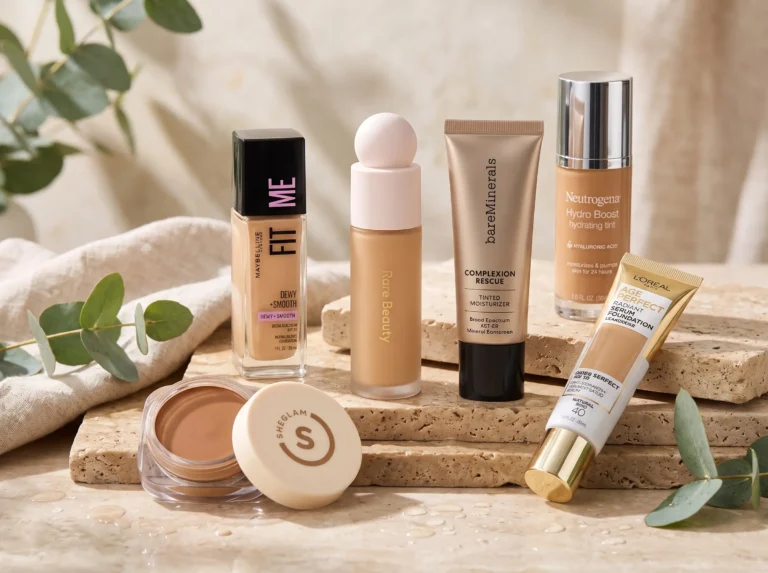
- Maybelline Fit Me Matte + Poreless Foundation is a widely available drugstore option that comes in a broad range of shades.
- L’Oréal Paris True Match Super-Blendable Foundation is known for a wide range of depths and undertones, labeled with letters.
- e.l.f. Halo Glow Liquid Filter is a sheer, glowy product that can be more forgiving, but check the shade range before choosing.
Other posts on this topic include our guide to long-wear foundations for oily skin and our concealer guide, which also covers shade-matching concealer to your base.
Common Mistakes
- Testing on your hand or wrist. Skin on your hands is usually a different shade.
- Judging in store lighting.
- Not waiting for oxidation.
- Choosing the lightest shade to look brighter.
- Matching only your face and ignoring your neck.
- Ignoring undertone.
- Never rechecking. Your skin changes with the seasons.
Your Quick Checklist
- [ ] I checked my depth in daylight, on my neck and chest.
- [ ] I tried at least two undertone tests.
- [ ] I picked two or three close shades.
- [ ] I tested them along my jaw and neck.
- [ ] I waited 10 to 15 minutes.
- [ ] I checked in natural light, and in flash if needed.
- [ ] I checked the return policy.
- [ ] I’ll recheck my shade when the seasons change.
Frequently Asked Questions
How do I know if I’m warm or cool?
Try several tests, like jewelry, white-versus-cream, and how skin reacts to sun. If results conflict, you may be neutral or olive.
Should I match foundation to my face or my neck?
Aim for a shade that blends both. If they differ, choose between them and blend downward.
Why does foundation turn orange?
Oxidation can darken some formulas as they react with your skin. Waiting 10 to 15 minutes before judging helps you see it.
Can I wear a slightly darker shade?
A slightly deeper, warmer shade can look more natural than one that’s too light, but it shouldn’t leave a visible line.
How often should I change my shade?
Many people need to adjust with the seasons.
Is it better to buy foundation in person?
In-person testing is easier, but careful online shopping works if you check reviews and return policies.
Final Thoughts
Finding your foundation shade comes down to three things: knowing your depth and undertone, testing a few shades along your jaw, and judging them in daylight after waiting. Take your time, don’t rely on your hand, and remember that sheer products forgive more than full coverage does.