Disclosure: This article contains affiliate links. If you purchase a product through one of these links, we may earn a commission at no additional cost to you.

How to Get Rid of Body Acne (Bacne): Causes and Best Products

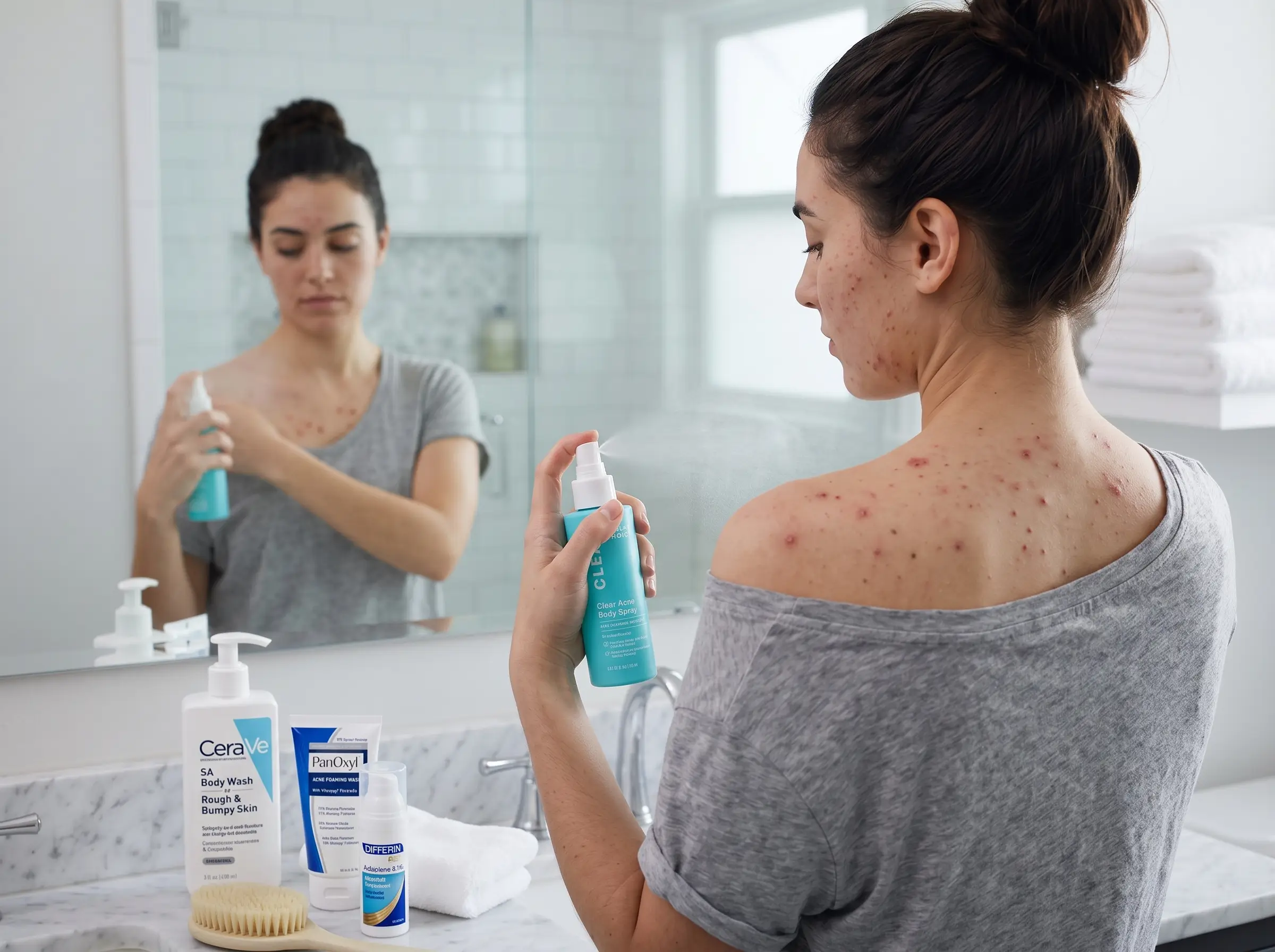
Body acne, commonly called “bacne” when it shows up on the back, but just as frequently affecting the chest and shoulders, can be even more stubborn to treat than facial breakouts. Thicker skin, more densely packed oil glands, and the friction of clothing all combine to make body acne a genuinely different challenge than acne on the face.
The good news is that many of the same principles that work for facial acne, consistent gentle cleansing, targeted active ingredients, and patience, apply here too. The key is adapting your approach to account for body skin’s specific characteristics.
This guide breaks down what typically causes body acne and walks through practical, evidence-based ways to help manage and prevent it.
What Causes Body Acne?
Clogged Pores from Oil and Sweat
Like facial acne, body acne often starts with clogged pores, a combination of excess oil, dead skin cells, and sometimes bacteria trapped within hair follicles.
Friction and Tight Clothing
Tight-fitting clothing, backpacks, or sports equipment can trap sweat and create friction against skin, a phenomenon sometimes called “acne mechanica,” which can trigger or worsen breakouts in those specific areas.
Sweat Left on Skin
Not showering soon after sweating, whether from exercise or heat, can allow sweat, oil, and bacteria to sit on skin longer than ideal, increasing the likelihood of clogged pores.
Heavy Body Products
Rich, oil-based lotions or thick sunscreens can sometimes contribute to clogged pores on the back and chest, particularly for those already prone to body acne.
Hormonal Fluctuations
Hormonal changes, including those related to the menstrual cycle, puberty, or certain medications, can increase oil production and contribute to body acne, similar to how they affect facial skin.
Hair Products and Conditioner Residue
Conditioner or hair styling products that run down the back during showering can leave residue that contributes to clogged pores, particularly for those with longer hair.
How to Treat and Prevent Body Acne
Shower Soon After Sweating
Try to shower relatively soon after a workout or heavy sweating, rather than letting sweat sit on skin for extended periods.
Use a Body Wash With Salicylic Acid or Benzoyl Peroxide
These are two of the most well-studied acne-fighting ingredients. Salicylic acid helps exfoliate within the pore, while benzoyl peroxide targets acne-causing bacteria. Look for body washes specifically formulated with one of these active ingredients.
Avoid Heavy, Pore-Clogging Products
Choose non-comedogenic body lotions and sunscreens, particularly for the back and chest if you’re prone to breakouts in those areas.
Wash Hair Before Body
If you use conditioner or other hair products, washing your hair before your body can help prevent residue from those products contributing to clogged pores.
Wear Looser, Breathable Clothing When Possible
Reducing friction and allowing skin to breathe, especially during and after exercise, can help minimize acne mechanica.
Change Out of Sweaty Clothes Promptly
Avoid lingering in sweaty workout gear longer than necessary, and wash athletic clothing regularly to prevent bacteria buildup.
Be Patient and Consistent
As with facial acne, body acne typically takes several weeks of consistent treatment before meaningful improvement becomes visible.
Product Recommendations for Body Acne
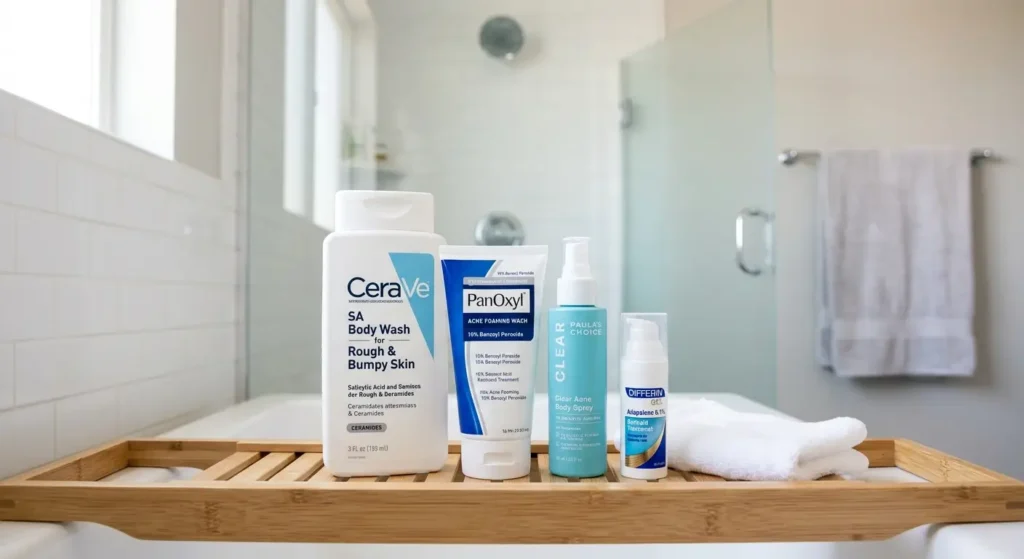
PanOxyl Acne Foaming Wash is a widely recommended benzoyl peroxide body wash, available in different strengths depending on severity and skin tolerance.
Neutrogena Body Clear Body Wash combines salicylic acid with a gentle, rinse-clean formula suited to daily use on acne-prone back and chest skin.
CeraVe SA Body Wash for Rough & Bumpy Skin offers salicylic acid alongside ceramides, helping exfoliate while still supporting the skin barrier.
Paula’s Choice 2% BHA Liquid Exfoliant can be applied to the back or chest as a leave-on treatment for those wanting a more targeted, non-rinse-off option.
La Roche-Posay Effaclar Duo is commonly used as a spot treatment for more stubborn or inflamed body acne, applied directly to affected areas.
A Sample Routine for Managing Body Acne
- Shower: Use a salicylic acid or benzoyl peroxide body wash, focusing on affected areas, allowing the product to sit for a minute before rinsing (check product instructions for recommended contact time).
- Post-shower: Apply a lightweight, non-comedogenic body lotion, avoiding directly layering heavy products over acne-prone areas.
- As needed: Use a leave-on spot treatment for particularly stubborn or inflamed spots.
- After workouts: Shower promptly and change out of sweaty clothing as soon as reasonably possible.
When to See a Dermatologist
While many cases of body acne respond well to consistent over-the-counter care, it’s worth seeing a dermatologist if:
- Acne is severe, cystic, or causing scarring
- Over-the-counter treatments haven’t shown improvement after eight to twelve weeks of consistent use
- Breakouts are accompanied by significant pain or inflammation
- You’re interested in prescription-strength topical or oral treatments for more persistent cases
Frequently Asked Questions
What causes bacne?
Body acne typically results from clogged pores caused by a combination of oil, sweat, dead skin cells, and sometimes bacteria, often worsened by friction, tight clothing, or heavy body products.
How do you get rid of bacne fast?
While there’s no truly instant fix, using a salicylic acid or benzoyl peroxide body wash consistently, along with showering promptly after sweating, tends to show improvement within several weeks.
What ingredients help clear body acne?
Salicylic acid and benzoyl peroxide are two of the most well-studied and effective ingredients for treating body acne.
Should you exfoliate if you have bacne?
Gentle exfoliation, particularly with chemical exfoliants like salicylic acid, can help, though physical scrubbing over active, inflamed acne can sometimes worsen irritation.
Does sweating cause body acne?
Sweat itself doesn’t directly cause acne, but letting sweat sit on skin for extended periods, combined with oil and bacteria, can contribute to clogged pores.
Can body lotion cause acne on the back or chest?
Heavy, oil-based lotions can potentially contribute to clogged pores in acne-prone individuals, so choosing non-comedogenic formulas for those areas is generally recommended.
How long does it take to clear body acne?
Most people see noticeable improvement within four to eight weeks of consistent treatment, though more severe cases may take longer or require professional treatment.
Is bacne more common with certain clothing?
Yes, tight, non-breathable clothing, particularly when combined with sweat and friction, is a well-known contributor to body acne, sometimes called acne mechanica.
Final Thoughts
Body acne can feel more stubborn than facial acne, but the same core principles, consistent gentle cleansing, targeted active ingredients, and patience, apply here too. Small adjustments like showering promptly after sweating, choosing non-comedogenic products, and incorporating a salicylic acid or benzoyl peroxide body wash into your routine can make a meaningful difference over time.