Disclosure: This article contains affiliate links. If you purchase a product through one of these links, we may earn a commission at no additional cost to you.


The Best Sunscreens for Face That Don’t Leave a White Cast

If you’ve ever applied sunscreen and watched your face turn ghostly gray or purple in photos, you already know the frustration. The white cast complaint is one of the most common reasons people skip sunscreen altogether, especially those with medium to deep skin tones, where the chalky residue from many mineral formulas is far more noticeable.
The good news is that sunscreen formulation has come a long way. Between refined mineral filters, tinted options, and lightweight chemical formulas, there are now plenty of sunscreens that blend seamlessly into skin without the telltale white or purple tint.
In this guide, we’re rounding up some of the best sunscreens for face that skip the white cast entirely, so protecting your skin doesn’t mean compromising how you look while doing it.
Why Some Sunscreens Leave a White Cast
Understanding the cause helps explain why some formulas are more prone to this than others.
Mineral vs. Chemical Filters
Mineral sunscreens use zinc oxide and/or titanium dioxide, which sit on top of the skin and physically reflect UV rays. Older or lower-quality mineral formulas often use larger, unrefined particles that show up as a visible white or grayish tint, particularly on deeper skin tones. Chemical sunscreens, by contrast, use filters that absorb into skin and convert UV rays into heat, generally leaving little to no visible residue.
Micronized or Nano Mineral Particles
Newer mineral formulas use smaller, “micronized” particles that are less likely to sit visibly on the skin’s surface, significantly reducing (though not always eliminating) the white cast effect.
Tinted Formulas
Some sunscreens include iron oxide tints, originally added for extra protection against visible light, that also happen to counteract the whitish tone left by mineral filters, blending more naturally into a range of skin tones.
Application Amount and Technique
Even a well-formulated sunscreen can look chalky if too much product is applied at once, or if it isn’t blended in thoroughly. Applying in thin, even layers and allowing time to set can reduce cast, even with formulas that are more prone to it.
What to Look for in a No-White-Cast Sunscreen
- Formula type. Chemical or hybrid (chemical-mineral) sunscreens are generally less likely to leave a visible cast than pure mineral formulas, though refined mineral options exist.
- Tint. A sheer or universal tint can help mineral sunscreens blend more naturally across skin tones.
- Finish. Look for descriptions like “invisible,” “no white cast,” or “sheer” as a starting signal, though it’s still worth checking reviews from people with your skin tone.
- Texture. Lightweight, fluid, or gel-based textures tend to sit better on skin than thick, heavy creams.
- Broad-spectrum SPF 30 or higher. Regardless of finish, look for broad-spectrum protection with an SPF of at least 30 for adequate daily coverage.
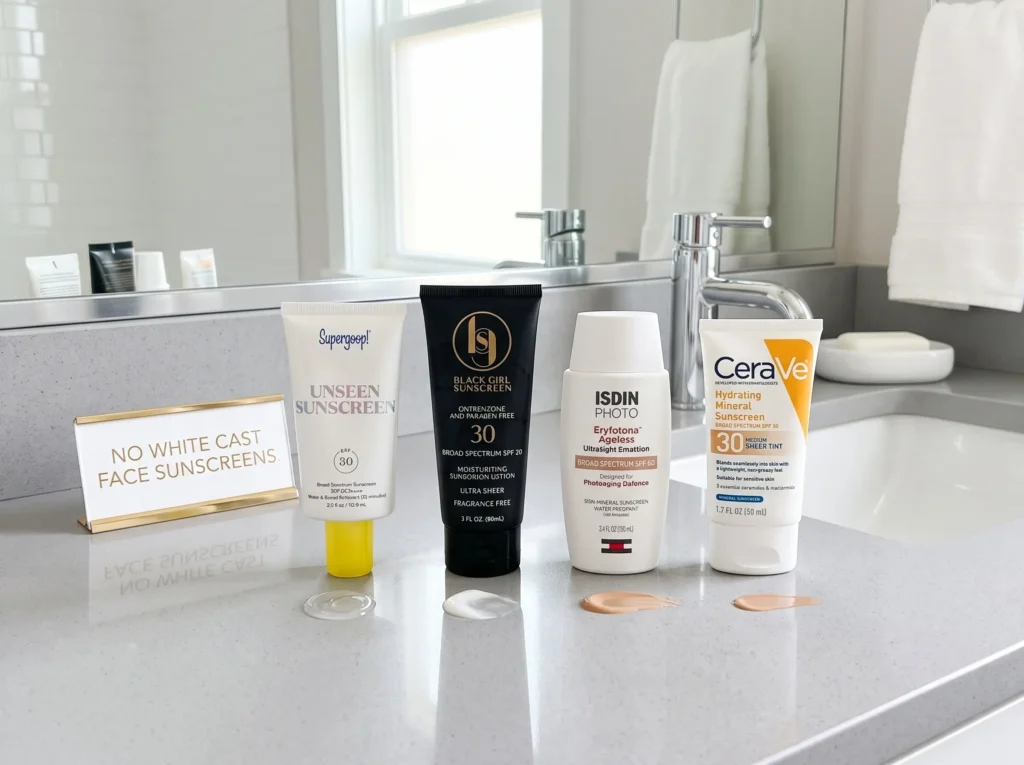
Best Sunscreens With No White Cast at a Glance
| Product | Best For | Formula Type | SPF | Key Reason to Consider It |
|---|---|---|---|---|
| La Roche-Posay Anthelios Ultra Light Fluid | All-around invisible finish | Chemical | SPF 60 | Lightweight fluid texture that disappears into skin |
| Supergoop! Unseen Sunscreen | Makeup-friendly, primer-like feel | Chemical | SPF 40 | Clear, gel-to-oil texture that doubles as a primer |
| EltaMD UV Clear | Sensitive or acne-prone skin | Hybrid (chemical-mineral) | SPF 46 | Contains niacinamide with a lightweight, non-cast finish |
| Black Girl Sunscreen | Deeper skin tones | Chemical | SPF 30 | Formulated specifically to avoid cast on deeper tones |
| CeraVe Hydrating Mineral Sunscreen (Tinted) | Mineral-preferring, sensitive skin | Tinted mineral | SPF 30 | Universal tint helps offset typical mineral cast |
| Isdin Eryfotona Ageless | Anti-aging, luxury option | Hybrid (chemical-mineral) | SPF 50 | Tinted mineral-chemical blend with added antioxidants |
La Roche-Posay Anthelios Ultra Light Fluid
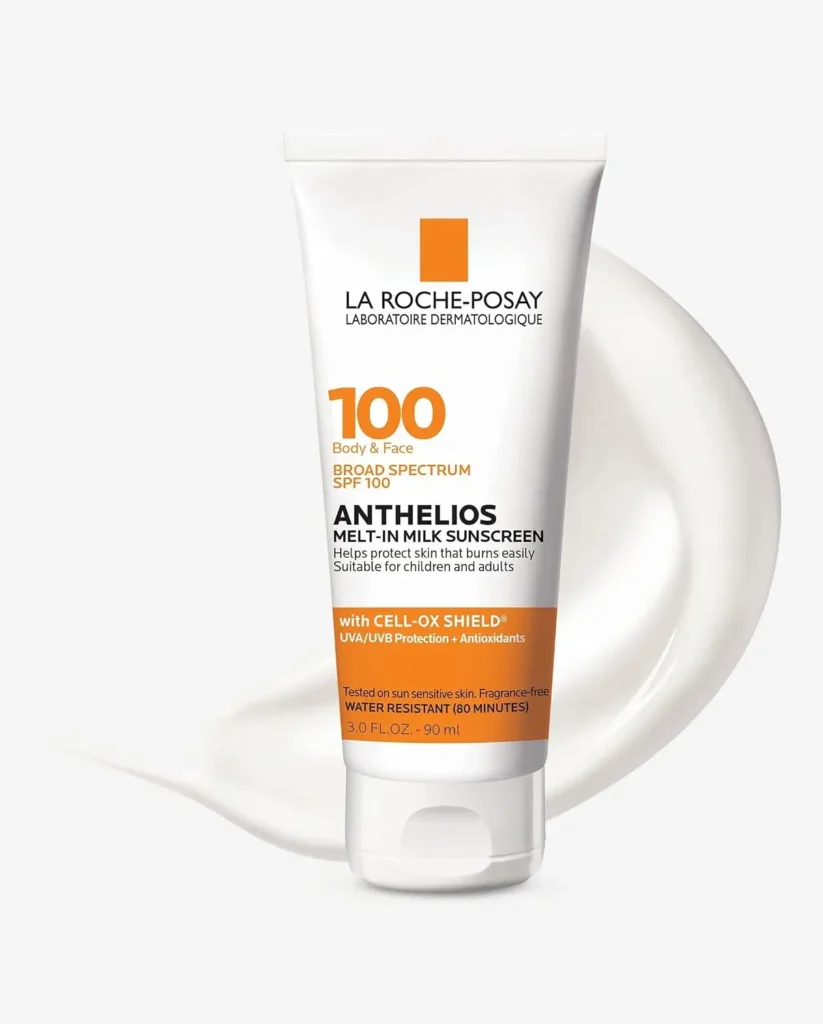
Best for: All-around invisible finish
This French pharmacy favorite has built a loyal following for its genuinely weightless, fluid texture that disappears into skin almost immediately after application.
What makes it stand out: Its high SPF 60 protection comes in a fluid, almost water-like formula that blends without any visible residue, even under makeup.
Texture and feel: Extremely lightweight and fast-absorbing, with a slightly matte finish once fully set.
Who may like it: Anyone who wants high-level protection without any trace of a cast, and those who apply sunscreen under makeup daily.
Skin-type considerations: Works well across most skin types, including oily and combination skin, thanks to its lightweight, non-greasy finish.
Pros:
- High SPF 60 protection
- Genuinely invisible finish across skin tones
- Lightweight, fast-absorbing texture
- Works well under makeup
Cons:
- Chemical filters may not be preferred by those specifically seeking mineral formulas
- Higher price point than typical drugstore sunscreens
Verdict: One of the most reliable options for a truly invisible, no-cast finish, regardless of skin tone.
Supergoop! Unseen Sunscreen

Best for: Makeup-friendly, primer-like feel
Supergoop!’s Unseen Sunscreen has become something of a cult favorite, prized for its clear, gel-to-oil texture that works equally well alone or as a makeup base.
What makes it stand out: Its completely clear, weightless formula doubles as a makeup primer, smoothing the skin’s surface while delivering SPF 40 protection.
Texture and feel: A unique gel-to-oil texture that melts into skin with a smooth, velvety finish and no visible residue.
Who may like it: Those who want a multi-purpose product that combines sun protection with a primer-like effect before makeup application.
Skin-type considerations: Suitable for most skin types, including oily skin, given its lightweight, non-greasy finish.
Pros:
- Completely clear, invisible finish
- Doubles as a makeup primer
- Pleasant, lightweight texture
- Works well across skin tones
Cons:
- SPF 40 is slightly lower than some alternatives
- Higher price point for the bottle size
Verdict: A standout choice for anyone who wants their sunscreen to double as a smoothing makeup base.
EltaMD UV Clear

Best for: Sensitive or acne-prone skin
EltaMD UV Clear is frequently recommended by dermatologists, particularly for sensitive or acne-prone skin, thanks to its niacinamide-infused, lightweight formula.
What makes it stand out: Beyond avoiding a white cast, its inclusion of niacinamide offers additional calming benefits, making it a popular pick for reactive or blemish-prone skin.
Texture and feel: Lightweight and slightly matte, absorbing quickly without clogging pores for most users.
Who may like it: Those with sensitive, acne-prone, or post-procedure skin who need a gentle, well-tolerated daily SPF.
Skin-type considerations: Well suited to sensitive, oily, and acne-prone skin, given its niacinamide content and non-comedogenic formulation.
Pros:
- Contains calming niacinamide
- Lightweight, non-greasy finish
- Dermatologist-recommended
- No visible cast on most skin tones
Cons:
- Higher price point than drugstore alternatives
- Some users note a slight residual sheen in humid conditions
Verdict: A trusted, gentle option for sensitive or acne-prone skin that still delivers a genuinely invisible finish.
Black Girl Sunscreen
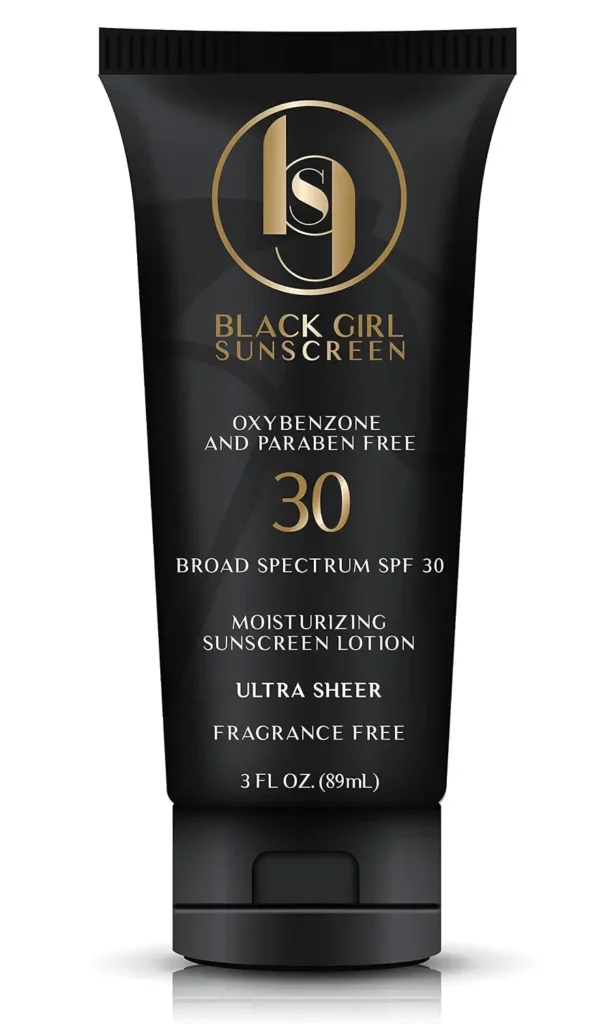
Best for: Deeper skin tones
Black Girl Sunscreen was specifically developed to address the common complaint of white cast on deeper skin tones, an area where many mainstream sunscreen formulas have historically fallen short.
What makes it stand out: Its formula was purpose-built with deeper skin tones in mind, aiming to blend seamlessly without the grayish or ashy finish common in many other sunscreens.
Texture and feel: Lightweight and moisturizing, with a slightly dewy finish that blends in smoothly.
Who may like it: Those with medium to deep skin tones who have struggled to find a sunscreen that doesn’t leave a visible cast or ashy tint.
Skin-type considerations: Works well for normal to dry skin. Very oily skin types may want to set with powder for extended wear.
Pros:
- Formulated specifically to avoid cast on deeper skin tones
- Lightweight, moisturizing finish
- Contains added moisturizing ingredients
- Widely praised by users with deeper skin tones
Cons:
- Slightly dewy finish may not suit those who prefer a fully matte sunscreen
- Limited SPF range compared to some competitors
Verdict: A genuinely purpose-driven option for deeper skin tones seeking a sunscreen with zero visible cast.
CeraVe Hydrating Mineral Sunscreen (Tinted)
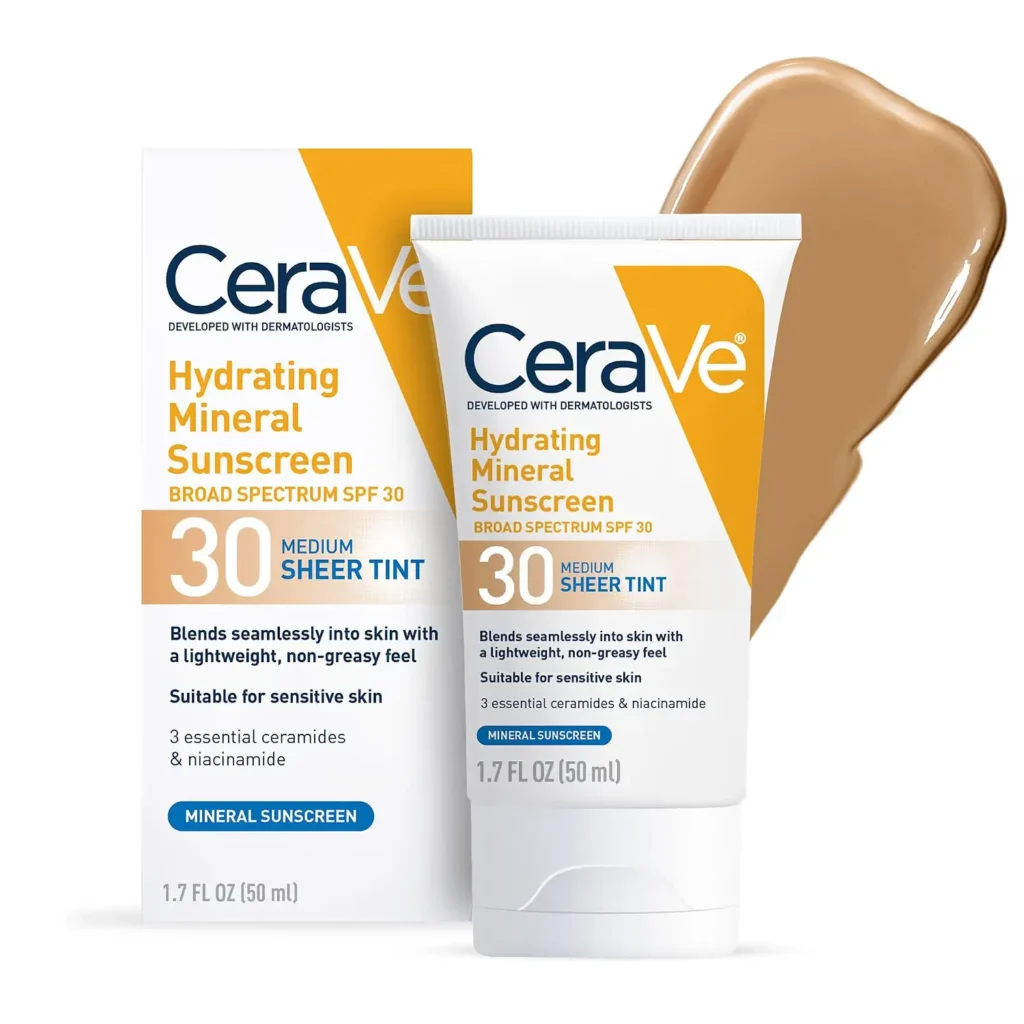
Best for: Mineral-preferring, sensitive skin
For those who specifically want a mineral sunscreen but are wary of the typical white cast, CeraVe’s tinted mineral formula offers a solution that blends across a range of skin tones.
What makes it stand out: Its universal tint is designed to counteract the whitish tone typical of mineral formulas, while still relying solely on zinc oxide and titanium dioxide as active ingredients.
Texture and feel: A slightly thicker mineral texture, though the tint helps it blend more naturally than untinted mineral sunscreens.
Who may like it: Those who prefer mineral filters for sensitivity reasons but want a more universally flattering finish than traditional mineral sunscreens offer.
Skin-type considerations: Well suited to sensitive skin, given its mineral-only active ingredients and fragrance-free formulation.
Pros:
- Mineral-only active ingredients
- Universal tint reduces visible cast
- Fragrance-free
- Contains ceramides for barrier support
Cons:
- May not blend as seamlessly as chemical formulas on very deep skin tones
- Slightly thicker texture than chemical alternatives
Verdict: A solid choice for those who want the benefits of mineral sunscreen without the typical chalky finish.
Isdin Eryfotona Ageless
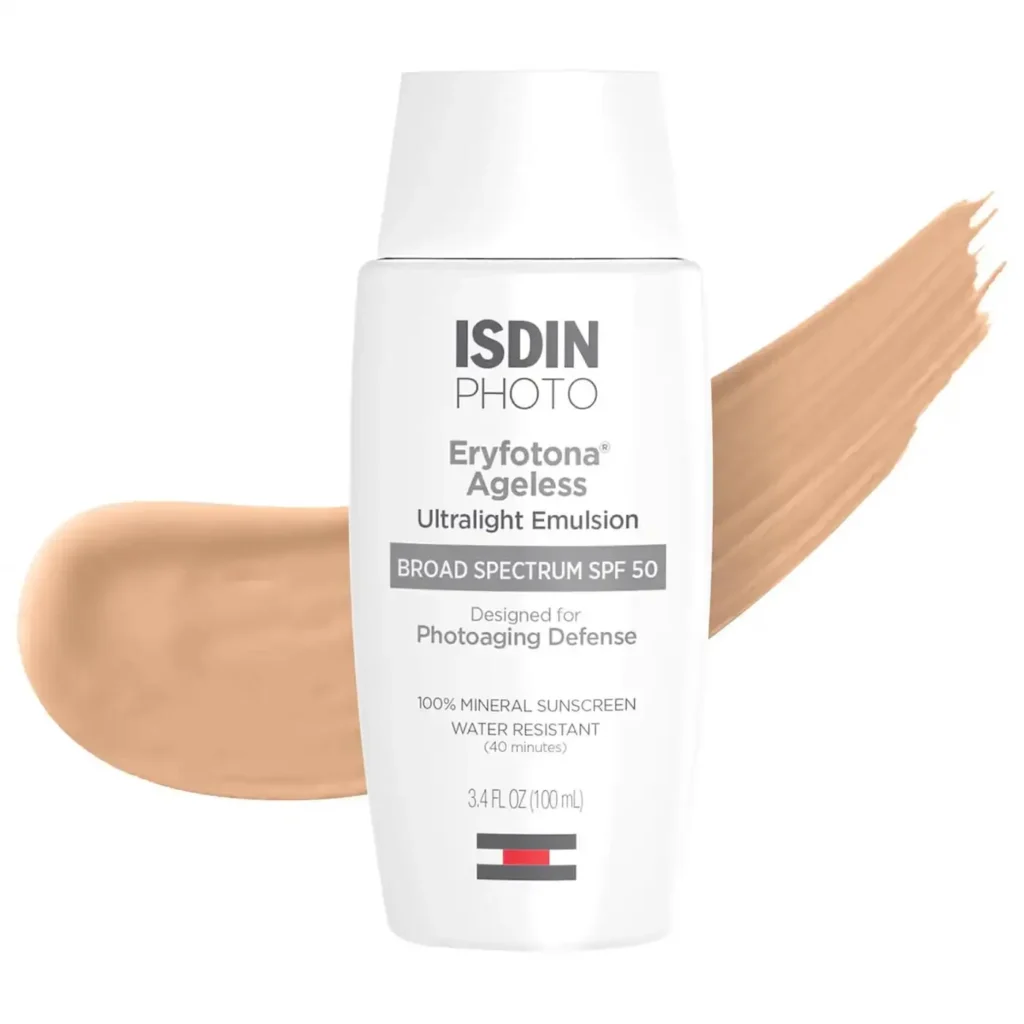
Best for: Anti-aging, luxury option
This hybrid mineral-chemical formula from Isdin combines sun protection with additional anti-aging ingredients, positioned as a more premium, multitasking option.
What makes it stand out: Beyond its no-cast, tinted finish, it includes DNA repair enzymes and antioxidants, appealing to those who want their sunscreen to double as an anti-aging step.
Texture and feel: A silky, slightly tinted formula that blends smoothly and sets to a soft, natural finish.
Who may like it: Those willing to invest in a more premium daily sunscreen that combines protection with additional skincare benefits.
Skin-type considerations: Suitable for most skin types, including normal to dry skin, given its slightly richer, more hydrating base.
Pros:
- Hybrid mineral-chemical formula with universal tint
- Added antioxidant and repair ingredients
- Smooth, natural-looking finish
- Suitable across a range of skin tones
Cons:
- Premium price point
- Smaller bottle size relative to cost
Verdict: A worthwhile splurge for those who want their daily SPF to double as an anti-aging treatment, without sacrificing a natural finish.
How to Choose the Best No-White-Cast Sunscreen for You
- Want a completely invisible, primer-like feel: Supergoop! Unseen Sunscreen or La Roche-Posay Anthelios Ultra Light Fluid.
- Sensitive or acne-prone skin: EltaMD UV Clear offers a gentle, calming formula with a lightweight finish.
- Deeper skin tones: Black Girl Sunscreen was purpose-built to avoid cast and ashiness on deeper tones.
- Prefer mineral-only filters: CeraVe Hydrating Mineral Sunscreen (Tinted) offers mineral protection with a universal tint to reduce cast.
- Want anti-aging benefits alongside SPF: Isdin Eryfotona Ageless combines sun protection with additional skincare ingredients.
Tips for Avoiding White Cast, Regardless of Formula
- Apply a thin, even layer. Overapplying any sunscreen, even a well-formulated one, can increase the appearance of cast.
- Let it set before blending further. Rubbing too aggressively while a sunscreen is still setting can sometimes emphasize a chalky finish rather than reduce it.
- Warm the product between your fingers first. This can help mineral or thicker formulas glide on more evenly.
- Consider a tinted formula. Tinted sunscreens, whether mineral or chemical, are specifically designed to counteract cast across a range of skin tones.
- Layer thin coats rather than one thick one. If you need higher coverage, applying in two thin layers, allowing time to set between each, can look more natural than one heavy application.
Frequently Asked Questions
What is the best sunscreen for face that doesn’t leave a white cast?
Lightweight chemical formulas like La Roche-Posay Anthelios Ultra Light Fluid or Supergoop! Unseen Sunscreen are widely regarded as genuinely invisible options, though tinted mineral formulas like CeraVe’s can also work well.
Why does mineral sunscreen leave a white cast?
Mineral sunscreens use zinc oxide and titanium dioxide, which sit on top of the skin and reflect UV rays. Larger, unrefined particles are more visible on the skin’s surface, especially on deeper skin tones.
Do tinted sunscreens work better for avoiding white cast?
Yes, tinted sunscreens include iron oxide pigments that help counteract the whitish tone typical of mineral formulas, allowing them to blend more naturally across a range of skin tones.
Is chemical sunscreen better than mineral for avoiding cast?
Chemical sunscreens are generally less prone to leaving a visible cast since they absorb into the skin rather than sitting on top of it, though some people prefer mineral filters for sensitivity reasons.
What sunscreen is best for deeper skin tones?
Black Girl Sunscreen was specifically formulated to avoid cast and ashiness on deeper skin tones, and many tinted formulas also work well.
Can you wear sunscreen under makeup without a cast?
Yes, lightweight formulas like Supergoop! Unseen Sunscreen or La Roche-Posay Anthelios Ultra Light Fluid are designed to blend seamlessly under makeup.
How much sunscreen should you apply to your face?
A commonly cited guideline is about a quarter-teaspoon (roughly a nickel-sized amount) for full face coverage, though this can vary by product and formula.
Do you need to reapply sunscreen throughout the day?
Yes, reapplying every two hours, or after swimming or heavy sweating, is generally recommended for continued protection.
Final Verdict
A white cast shouldn’t be the price of daily sun protection, and thankfully, it no longer has to be. Whether you prefer a completely invisible chemical formula, a tinted mineral option, or something that doubles as a makeup base, there’s a no-cast sunscreen suited to your skin tone and preferences.
For an all-around invisible finish, La Roche-Posay Anthelios Ultra Light Fluid is hard to beat. If you want your SPF to double as a primer, Supergoop! Unseen Sunscreen delivers a genuinely multi-purpose formula. Sensitive and acne-prone skin types will likely appreciate EltaMD UV Clear, while Black Girl Sunscreen remains one of the most purpose-built options for deeper skin tones. Mineral fans can turn to CeraVe Hydrating Mineral Sunscreen (Tinted), and those wanting an anti-aging boost alongside protection might consider splurging on Isdin Eryfotona Ageless.
Whichever you choose, the best sunscreen is ultimately the one you’ll actually wear every day, cast-free and comfortable enough to become a genuine habit.