Disclosure: This article contains affiliate links. If you purchase a product through one of these links, we may earn a commission at no additional cost to you.

How to Build a Capsule Wardrobe on a Budget

A capsule wardrobe sounds like it should save money, fewer pieces, less impulse shopping, more intentional choices. But it’s easy to assume it requires investing in expensive, “quality” basics right out of the gate, which can actually make the whole approach feel out of reach. The good news is that a capsule wardrobe isn’t about spending more per item. It’s about spending more intentionally, which is entirely possible on a limited budget.
This guide walks through how to build a genuinely useful capsule wardrobe without a big upfront investment, in the right order, with the right priorities.
Start With an Honest Closet Audit
Before buying anything, go through what you already own. Pull out pieces that fit well, that you actually reach for, and that are in good condition. You’ll likely find you already have two or three capsule-worthy pieces, which immediately reduces what you need to buy. This step costs nothing and is the single most effective way to stretch a limited wardrobe budget.
Build in the Right Order
Buying randomly, whatever looks good that week, tends to produce a closet full of pieces that don’t actually combine well. A smarter approach is to buy in a sequence that maximizes outfit combinations from the fewest pieces.
- Bottoms first. A pair of jeans and one pair of trousers or a versatile skirt give you a foundation to build every outfit around.
- Layer the top half. One or two neutral tops, then a sweater or cardigan that works over them.
- Add one outerwear piece. A jacket or coat that matches your climate and pairs with everything else you’ve bought so far.
- Shoes last. By this point, you’ll know exactly what colors and formality level your shoes actually need to match.
This order matters because each new piece should expand the number of outfits you can make, not just add one more option in isolation.
Where to Spend More, Where to Spend Less
Not every piece deserves the same budget. A rough rule of thumb:
Spend a bit more on:
- Jeans or trousers you’ll wear multiple times a week
- A coat or jacket, since it’s worn constantly through its season and seen in nearly every outfit
- Shoes you’ll walk in regularly, since comfort and durability matter more with frequent wear
Spend less on:
- Trend-driven tops or colors you’re still testing out
- Accessories, which are easy and cheap to swap as your style evolves
- Anything you’re unsure you’ll wear more than a handful of times
Affordable Pieces Worth Starting With
- Amazon Essentials offers simple, well-reviewed basics, straight-leg jeans, crewneck sweaters, and tees, at genuinely low price points, making it a practical starting point for foundational pieces.
- Target’s in-house labels (like A New Day or Universal Thread) are a reliable source for affordable trousers, sweaters, and layering pieces, often sold in stores and online.
- Old Navy remains a dependable source for budget denim and basic layering pieces that hold up reasonably well with regular wear.
- Thrift and secondhand shops can be an excellent source for one or two higher-quality pieces, like a wool coat or leather bag, at a fraction of retail price.
How to Avoid Common Budget Capsule Mistakes
- Don’t buy a “capsule wardrobe set” all at once. Pre-packaged capsule collections often include pieces that don’t actually suit your body, climate, or lifestyle. Build gradually instead.
- Don’t skip trying things on because it’s cheap. A poor fit at a low price is still a wasted purchase; fit matters just as much on a budget as it does with investment pieces.
- Don’t ignore care instructions. Cheaper fabrics sometimes require more careful washing to last, so check labels before tossing everything in the dryer.
- Don’t chase every trend. A capsule wardrobe works because pieces combine well together; constantly swapping in trend pieces undermines that structure.
A Sample Budget Capsule Starting Point
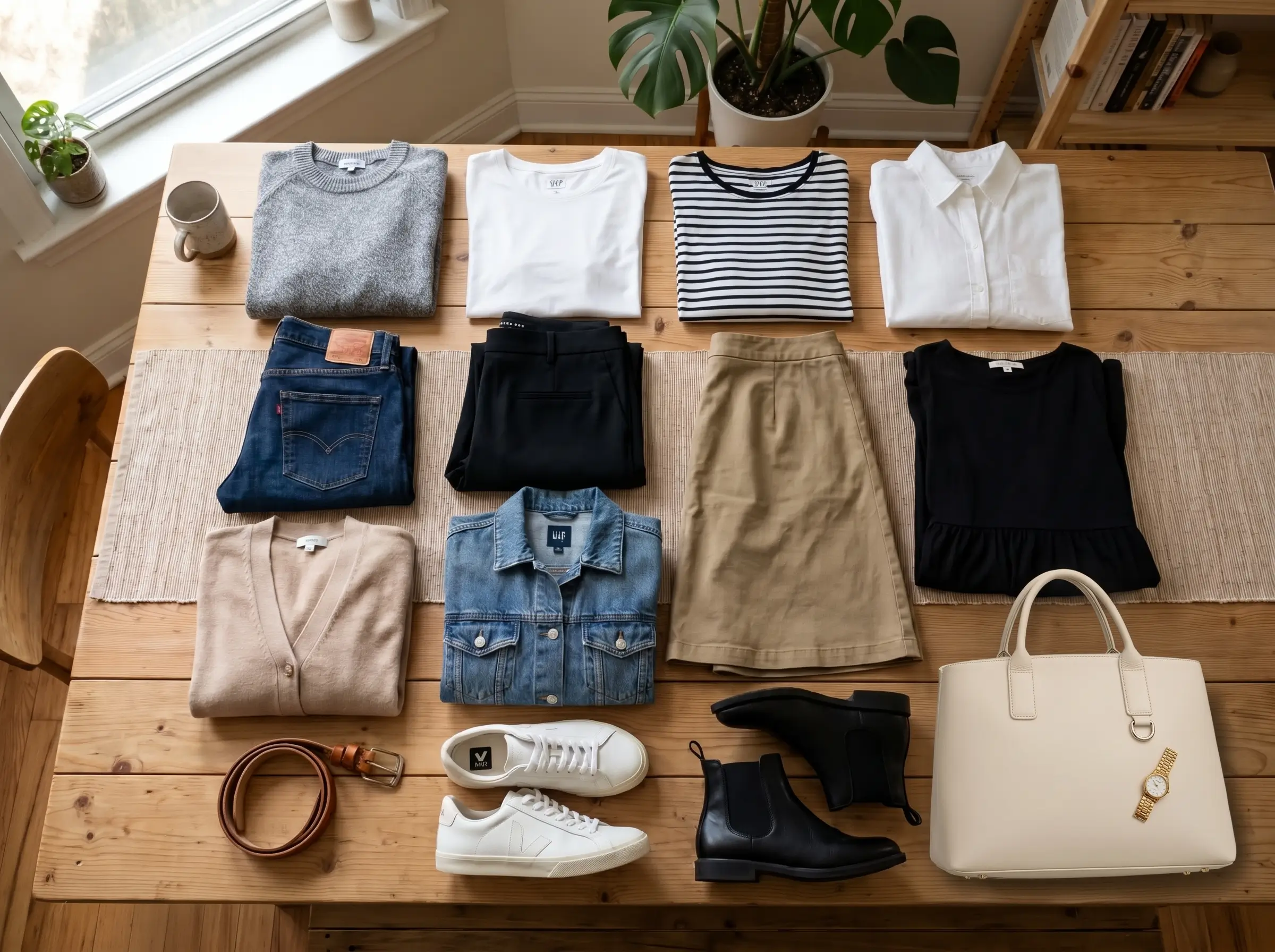
- 1 pair of straight-leg jeans
- 1 pair of black trousers
- 2 neutral tops (one fitted, one relaxed)
- 1 versatile sweater
- 1 jacket suited to your climate
- 1 pair of white sneakers (our guide to the best white sneakers that go with everything covers several affordable, well-reviewed options)
- 1 pair of ankle boots or flats
- 1 structured bag in a neutral color
This is a deliberately small starting list. Once you’ve worn these pieces for a few weeks and identified genuine gaps, you’ll know exactly what to add next, rather than guessing upfront.
How This Connects to a Fuller Capsule Wardrobe
Once your budget starter pieces are in place, you can gradually work toward the fuller list in our guide to capsule wardrobe essentials, adding pieces like a blazer or a structured coat as your budget allows, rather than purchasing everything at once.
Frequently Asked Questions
How much does it cost to build a capsule wardrobe?
This varies enormously depending on brands and piece count, but a basic starter capsule of eight to ten pieces can realistically be built for a few hundred dollars using affordable retailers.
What should I buy first for a budget capsule wardrobe?
Start with bottoms (jeans and trousers), since they anchor the most outfits, before adding tops, layers, and shoes.
Is it better to buy cheap basics or save for quality pieces?
A mix works well for most budgets: spend a bit more on frequently worn pieces like jeans, coats, and shoes, and save on trend-driven or lower-wear items.
Can thrifted clothes work in a capsule wardrobe?
Yes, secondhand shopping is one of the most effective ways to add higher-quality pieces, like coats or leather goods, without paying full retail price.
How many pieces should a budget capsule wardrobe have?
There’s no fixed number, but starting with eight to twelve well-chosen pieces is enough to create multiple outfit combinations while keeping costs manageable.
Final Thoughts
A capsule wardrobe on a budget isn’t about buying less expensive versions of a “perfect” closet. It’s about being deliberate with a smaller number of purchases, in the right order, so every piece earns its place. Start small, audit what you already own, and build outward only as real gaps appear.


