Disclosure: This article contains affiliate links. If you purchase a product through one of these links, we may earn a commission at no additional cost to you.

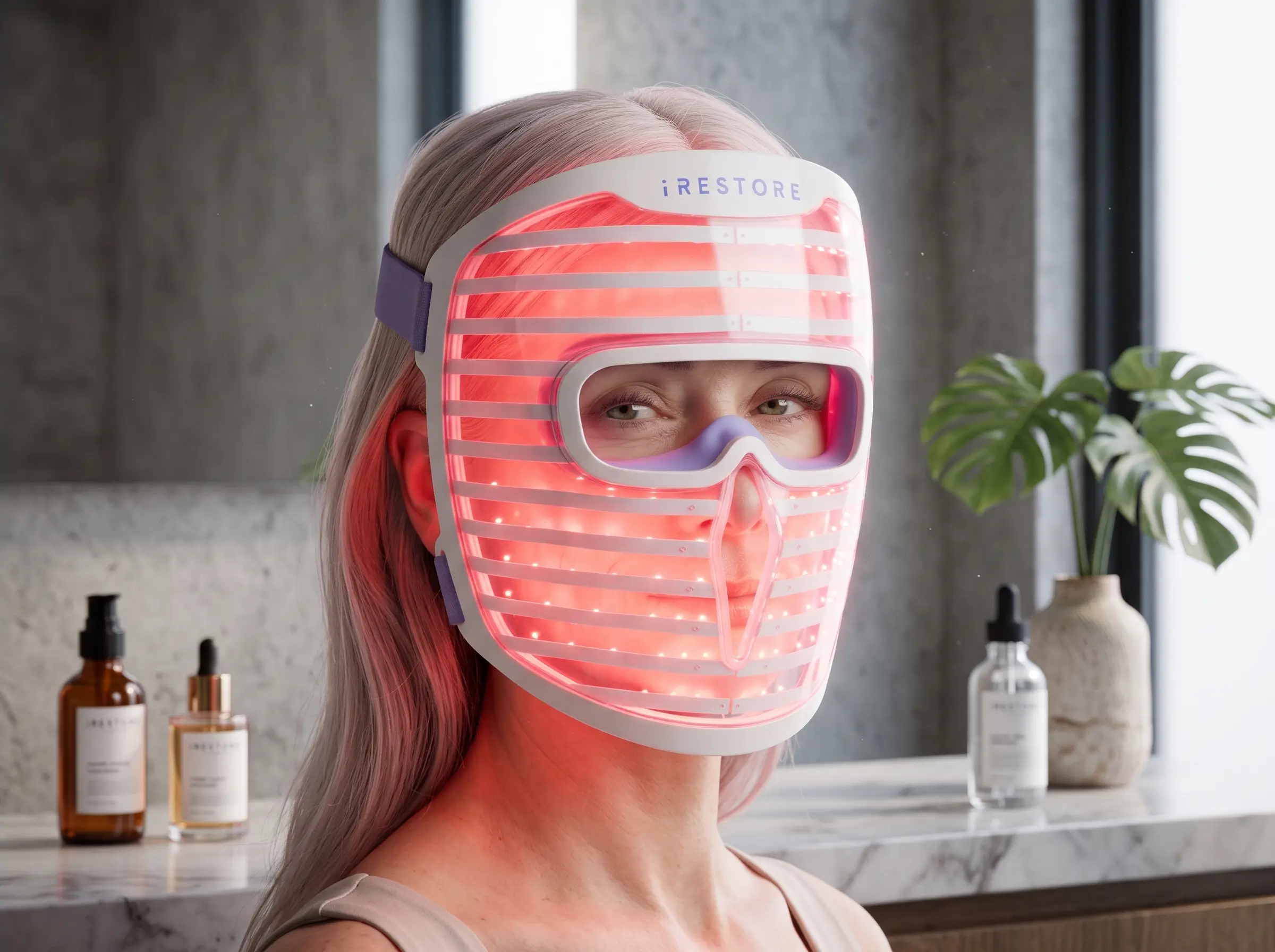
This LED Face Mask Made My Skin Look Plumper and More Radiant

Affiliate Disclosure: This article may contain affiliate links. If you purchase through links on this page, we may earn a commission at no additional cost to you.
There’s a particular kind of skincare fatigue that sets in around week three of a new routine: you’re serum-ing, you’re moisturizing, you’re doing all the “right” things, and your skin still looks… tired. A little dull. Not bad, just not glowing the way you’d like. If that sounds familiar, you’ve probably already scrolled past a dozen ads for LED face masks promising to fix it.
I get it—the claims can sound too good to be true, and honestly, some of them are. But at-home LED light therapy has moved from niche dermatology offices into a legitimate (if not miraculous) category of skincare tools, and one device that keeps coming up in conversations about at-home options is the iRestore LED Face Mask for Youthful Skin. It combines red, blue, and infrared light across 360 LEDs, and it’s designed to be a low-effort addition to an existing skincare routine rather than a replacement for one.
Below, I’m breaking down what this mask actually is, what LED light therapy can realistically do, how the iRestore stacks up against other well-known devices like the TheraFace PRO, the Qure LED Mask, and Solawave, and who is—and isn’t—a good candidate for adding one of these to their routine. Results can vary from person to person, and nothing here should be taken as medical advice.
What Is the iRestore LED Face Mask?
LED light therapy uses specific wavelengths of light to interact with the skin at different depths. It’s a technology that’s been used in professional dermatology and med-spa settings for years, and it’s since been adapted into wearable, at-home devices—LED face masks being one of the most popular formats.
The iRestore LED Face Mask is built around 360 LEDs distributed across a full-face design, and it combines three types of light:
- Red light, which is generally associated with supporting the skin’s surface appearance and is the most commonly used wavelength in at-home LED devices.
- Blue light, which is often marketed toward skin clarity and is a popular choice for those dealing with occasional blemishes.
- Infrared light, which penetrates slightly deeper than red light and is frequently paired with red light in combination devices.
The mask is designed to be worn hands-free over the face, which is the main appeal of this format compared to handheld wands or spot-treatment devices—you can sit back, scroll your phone, or just relax for the treatment window instead of actively holding a device.
Who tends to be interested in a mask like this? Generally, people who already have a skincare routine in place and are looking for a low-effort way to layer in an additional step—not people looking for a single fix for a specific, persistent skin concern. It’s worth setting expectations accordingly: an LED mask is a tool within a broader routine, not a stand-alone treatment plan, and it’s not going to produce the same results as an in-office procedure.
My Experience With the iRestore LED Face Mask
I want to be upfront: skincare devices are deeply personal, and what one person notices after weeks of consistent use, another might not notice at all. So rather than promising dramatic before-and-afters, I’ll focus on what’s actually assessable-the day-to-day experience of using the device.
Ease of use is where a mask-style device like this tends to shine compared to wands or rollers. There’s no maneuvering around your face for a set number of minutes; you put it on, and it does its thing. For anyone who has ever abandoned a serum-and-massage routine because it felt like too much effort at 10 p.m., the hands-free design is a genuine point in its favor.
Comfort matters more than people expect from a device like this. A mask that’s uncomfortable, too heavy, or awkward to wear while sitting upright is a mask that ends up in a drawer after two weeks. The full-face, flexible design is meant to sit against the contours of the face rather than a single rigid shape, which is the kind of detail that determines whether a device becomes a habit or a novelty.
Fitting it into a routine is arguably the biggest factor in whether any skincare device “works” for a given person—consistency tends to matter more than any single session. Because the mask doesn’t require much hands-on effort, it’s realistic to imagine using it while doing something else (reading, watching TV, catching up on a podcast), which lowers the barrier to actually sticking with it several times a week.
What I won’t do here is claim a specific timeline for visible changes or describe clinical-level results—that’s not something a short-term, subjective review can honestly establish. What I can say is that the experience of using it feels more like a relaxing, low-effort addition to a routine than a chore, which is often the deciding factor in whether a device gets used consistently enough to matter.
What Does Red Light Therapy Actually Do?
It’s worth stepping back and talking about the technology itself, separate from any single product.
Red and near-infrared light therapy (sometimes called low-level light therapy or photobiomodulation) has been studied in clinical and dermatological settings, generally in the context of supporting skin appearance and comfort. Blue light therapy has been more specifically studied in relation to skin clarity concerns.
That said, a few important caveats apply to any at-home LED device, not just the iRestore:
- At-home devices typically operate at lower intensities than the professional-grade equipment used in dermatology offices or med-spas, so it’s reasonable to expect more modest, gradual effects rather than clinical-level outcomes.
- Individual results vary significantly based on skin type, consistency of use, and a range of other factors.
- LED therapy is generally considered a complementary tool within a skincare routine, not a replacement for treatments recommended by a dermatologist for diagnosed or persistent skin concerns.
If you have ongoing or worsening skin concerns—unexplained irritation, persistent acne, or changes in your skin that concern you—the right move is a conversation with a board-certified dermatologist, not a home device. LED masks are best thought of as a maintenance or “feel-good” step, not a treatment for medical skin conditions.
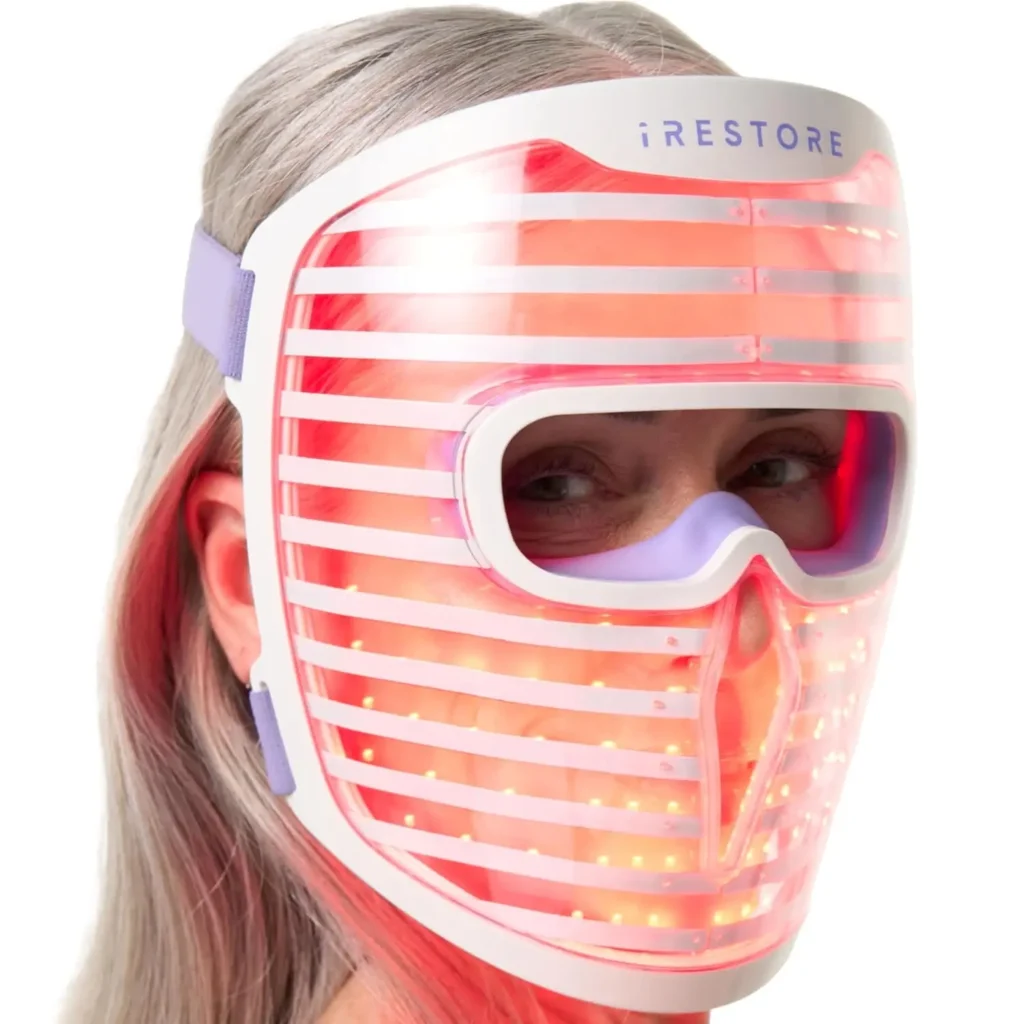
iRestore LED Face Mask
Now 50% Off
Here’s a quick, scannable rundown of what the device offers:
- 360 LEDs distributed across a full-face mask design
- Red light for the skin’s surface layer
- Blue light for clarity-focused use
- Infrared light for deeper-reaching wavelength coverage
- Full-face, hands-free design that doesn’t require active use of your hands during treatment
- At-home convenience, allowing use without booking or traveling to an appointment
- Designed to be layered into an existing skincare routine rather than replace one
- Straightforward enough to fit into a regular schedule (e.g., a few times per week) without a steep learning curve
As always, refer to the manufacturer’s official product listing for the complete and current technical specifications, since details like session length, power source, and included accessories can be updated over time.
Pros and Cons
Pros
- Hands-free design makes it easy to multitask during a session
- Combines three light types (red, blue, infrared) in one device
- Full-face coverage instead of spot treatment
- At-home convenience—no appointments needed
- Fits into an existing skincare routine as an added step rather than a full overhaul
Cons
- Upfront cost is a real consideration compared to traditional skincare products
- Requires consistent, repeated use to have a realistic chance of noticeable effects
- Results are individual and not guaranteed—some users may notice more than others
- Not a substitute for professional treatments or dermatologist-recommended care for specific skin concerns
- Storage and charging/power management is another small step to build into a routine
Other Red Light Therapy Devices We Trust
While the iRestore is our top recommendation for full-face coverage, the skincare world is not one-size-fits-all. Depending on your budget, your travel schedule, or your interest in other technologies like microcurrent, you may want to consider these other trusted alternatives.

TheraFace Therabody TheraFace PRO
If you want a device that does absolutely everything, the TheraFace PRO is a marvel of engineering. This is an 8-in-1 compact face massager and facial sculpting tool. Not only does it offer light therapy (Red, Blue, and Red+Infrared), but it also includes microcurrent for skin tightening and percussive therapy to relieve facial tension. It is the ultimate tool for someone who wants to “work” on their face, combining massage, cleansing, and light in one handheld device.
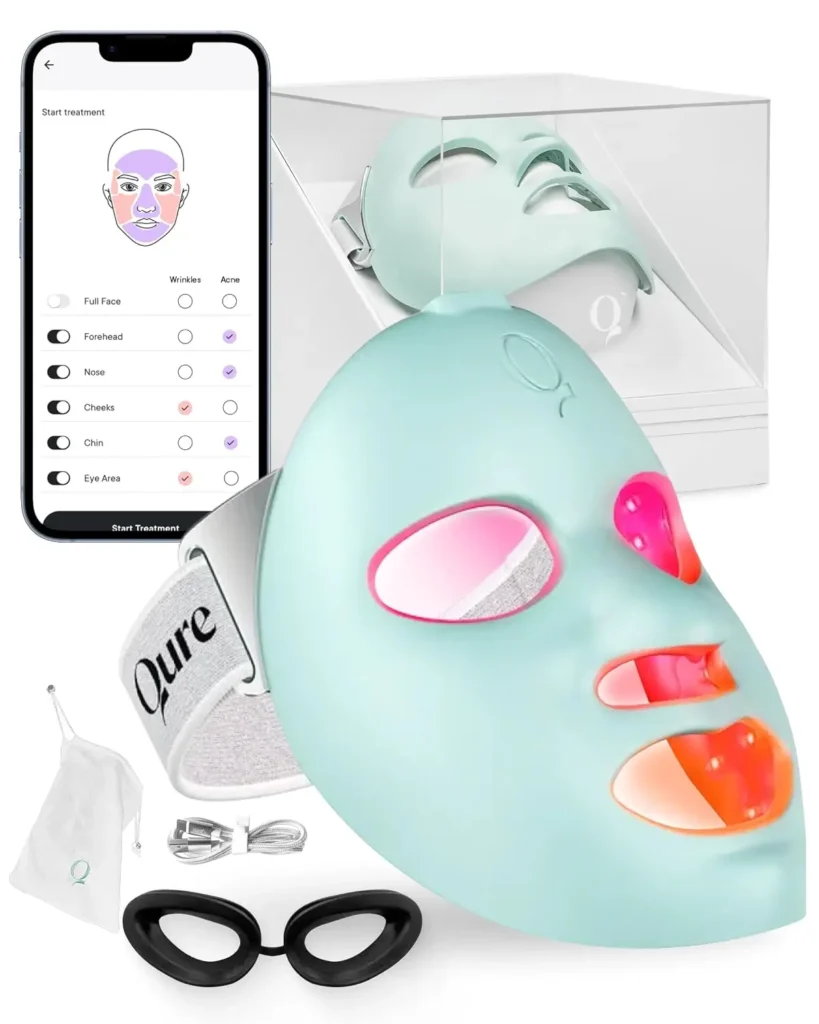
Qure LED Light Therapy Mask for Face
The Qure LED Mask is a favorite for those who are short on time. It is FDA-cleared and features a very efficient 3-minute daily routine. What makes the Qure unique is its customization; via an app, you can treat different facial areas with different lights simultaneously (e.g., blue light on the chin for acne and red light on the forehead for wrinkles). It features 5 lights, including red, deep-red, blue, amber, and infrared.
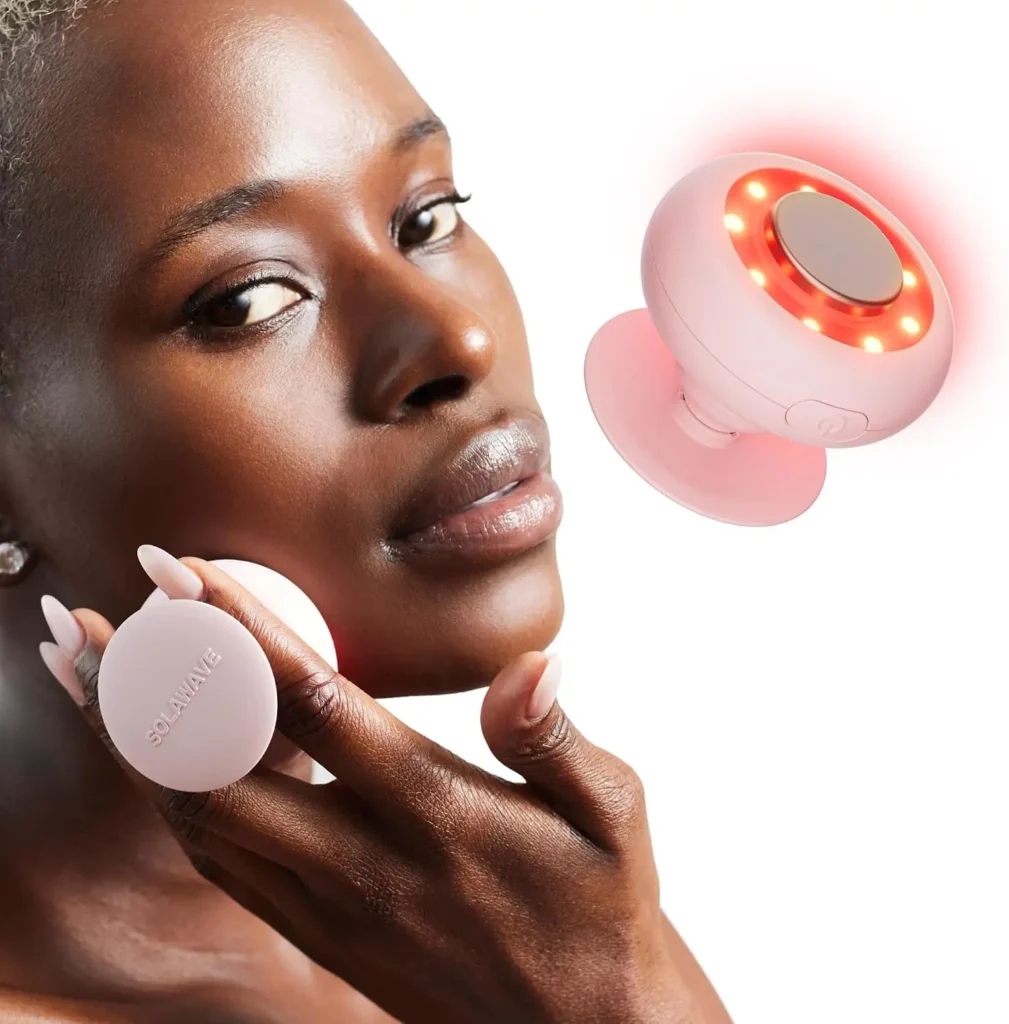
Solawave Red Light Therapy Device for Face & Body
For those who are always on the move, the Solawave Wand is the gold standard for portability. This near-infrared light therapy device is designed for targeted skincare. It’s a 4-in-1 tool that combines red light, galvanic current, facial massage, and therapeutic warmth. It’s particularly excellent for de-puffing under the eyes and treating smaller, specific areas of the face and body.
iRestore vs. TheraFace PRO
These two devices are aimed at fairly different shoppers. The iRestore is a dedicated LED mask—its entire design is built around delivering full-face light therapy in a single, hands-free session. The TheraFace PRO, by contrast, is a multi-function device: it combines microcurrent facial toning, massage functionality, and light therapy in one handheld tool.
If you want a “set it and forget it” light therapy session while you do something else, the iRestore’s mask format is the more convenient choice. If you’re looking for a more hands-on, multi-step facial tool that goes beyond light therapy alone—and you don’t mind actively holding and maneuvering a device—the TheraFace PRO’s versatility may be more appealing. It comes down to whether you want simplicity and passive use (iRestore) or a broader toolkit in one device (TheraFace PRO).
iRestore vs. Qure LED Mask
Both the iRestore and the Qure are full-face LED masks, which makes this the closest apples-to-apples comparison on this list. The Qure is FDA-cleared specifically for the treatment of wrinkles and acne, uses five light types across five facial zones, and is designed around a short, roughly three-minute daily session with built-in eye protection.
The iRestore’s 360-LED design emphasizes broad, full-face coverage with red, blue, and infrared light. If a fast daily routine and a specific regulatory clearance matter most to you, the Qure’s structured approach may stand out. If you’re drawn to a more traditional full-coverage mask experience, the iRestore fits that mold. Either way, always follow each manufacturer’s specific usage instructions rather than assuming they’re interchangeable.
iRestore vs. Solawave
Solawave takes a different form factor entirely: it’s a compact, portable device rather than a full-face mask, which makes it suited to targeted use or travel. That portability is its biggest strength—you can toss it in a bag and use it wherever you are, and it can be used on areas beyond just the face.
The iRestore, by trading portability for full-face coverage, is more of an “at-home relaxation session” experience than a grab-and-go tool. If you want something you can use anywhere with minimal setup, Solawave’s format may suit your lifestyle better. If you’d rather have one consistent, full-coverage session at home, the mask format of the iRestore is the more natural fit.
Who Should Consider an LED Face Mask?
An LED face mask like the iRestore is likely to appeal to:
- Adults who already have a skincare routine and want to add a low-effort, at-home step
- People who prefer a hands-free, sit-back-and-relax approach over active treatments
- Those interested in trying light-based skincare tools without committing to in-office visits
- People who value consistency and are willing to use a device regularly, since occasional use is unlikely to produce noticeable results
It’s not a device to reach for if you’re expecting a quick fix or dramatic transformation—think of it as a maintenance habit, similar to a weekly face mask or a consistent moisturizing routine, rather than a one-time treatment.
Who May Want to Skip It?
An LED mask might not be the right fit if you:
- Don’t want to add another step to an already full skincare routine
- Are expecting fast, dramatic results rather than gradual, subtle changes
- Would prefer in-office or professional-grade treatments over at-home devices
- Have a specific, persistent, or worsening skin concern that really calls for a dermatologist’s evaluation rather than a consumer device
There’s no shame in deciding an at-home device isn’t for you—skincare is genuinely personal, and the “best” tool is the one that actually fits your routine, budget, and expectations.
How to Use an LED Face Mask Safely
Regardless of which device you choose, a few general safety principles apply:
- Follow the manufacturer’s instructions for your specific device rather than assuming all LED masks are used identically.
- Stick to the recommended session length and frequency—more isn’t necessarily better, and overuse isn’t a shortcut to faster results.
- Keep the device clean according to the manufacturer’s guidance, especially since it makes direct contact with your face.
- Use eye protection if your device requires or includes it.
- Stop use if you notice significant discomfort or irritation, and don’t push through it expecting things to improve.
- Talk to a healthcare professional first if you’re pregnant, taking photosensitizing medication, or unsure whether LED therapy is appropriate for a skin condition you have.
This is general safety guidance, not medical advice—when in doubt about your specific situation, a doctor or dermatologist is the right resource.
Is the iRestore LED Face Mask Worth It?
The honest answer: it depends on what you’re looking for. If you want a hands-free, full-face LED device that fits into a broader skincare routine and you’re realistic about the fact that results build gradually (if at all) with consistent use, the iRestore is a reasonable option to consider. Its combination of red, blue, and infrared light across 360 LEDs gives it broad coverage in a single, low-effort session format.
If you’re hoping for a device that will dramatically transform your skin after a handful of uses, any at-home LED mask—not just this one—is likely to disappoint. The value here is in the convenience and the “maintenance habit” it can become, not in miracle results.
Frequently Asked Questions
Does the iRestore LED Face Mask really work?
LED light therapy is a studied category of skincare technology, but at-home devices generally produce more modest, gradual effects than professional treatments. Individual results vary, and consistent use over time is typically necessary to notice any changes.
How often should you use an LED face mask?
This depends entirely on the specific device’s manufacturer instructions, which are designed around that device’s light intensity and session length. Always follow the guidance provided with your particular mask rather than a generic schedule.
Is red light therapy good for your face?
Red light therapy is one of the most widely used wavelengths in at-home skincare devices and has been studied in professional and clinical settings. That said, it’s not a guaranteed or medical-grade treatment when used in a consumer device, and results can vary.
Can LED face masks help with the appearance of wrinkles?
Some people use LED devices as part of a routine aimed at supporting the skin’s overall appearance, but at-home devices should not be expected to match the results of professional, in-office treatments. Consult a dermatologist for concerns about wrinkles that you’d like addressed more directly.
Is blue light therapy different from red light therapy?
Yes. Blue light is generally associated with skin clarity, while red and infrared light are more commonly associated with supporting the skin’s surface and slightly deeper layers, respectively. Many devices, including the iRestore, combine more than one wavelength for broader coverage.
What is the best LED face mask for at-home use?
There isn’t a single universal “best” option—it depends on your priorities. A full-face, hands-free mask like the iRestore suits people who want passive convenience, while devices like the Qure or Solawave may appeal more depending on whether you prioritize a fast routine or portability.
Is an LED face mask worth the money?
That depends on your expectations and budget. If you see it as a long-term, low-effort addition to a skincare routine and you’re comfortable with gradual, individually-variable results, many people find the convenience worthwhile. If you’re expecting dramatic or fast results, it’s worth adjusting expectations before purchasing.
Final Verdict
Of the devices covered here, the iRestore LED Face Mask stands out as the most convenient full-face, hands-free option, which is why it’s the featured pick in this guide. If you want a more multi-functional device, the TheraFace PRO is worth a look. If a fast daily routine with FDA clearance is a priority, consider the Qure LED Mask. And if portability matters most, the Solawave is the more travel-friendly choice.
Whichever you choose, treat it as one piece of a broader skincare routine—not a stand-alone fix—and give it consistent time before drawing conclusions about how well it works for you.