Disclosure: This article contains affiliate links. If you purchase a product through one of these links, we may earn a commission at no additional cost to you.


How to Help Your Skin During Menopause: The Ultimate Skincare Routine

Navigating the transition of menopause is a journey that touches every part of a woman’s life, including her reflection in the mirror. As our bodies shift and evolve, our skin often begins to tell a different story. You might notice that the rich creams you once loved no longer feel quite heavy enough, or that your once-resilient complexion has become unexpectedly sensitive.
These menopause skin changes are a natural result of shifting hormone levels—specifically a decline in estrogen-which plays a vital role in maintaining collagen, moisture, and elasticity. While these changes can include increased dryness, reduced firmness, and more noticeable fine lines, caring for your skin doesn’t have to become a complicated chore.
At EmeliaStyle, we believe in skincare that grows with you. Instead of fighting against time, we focus on nourishing the skin you’re in today. By building a simple skincare routine for menopause centered on a Cleanse → Hydrate → Moisturize → Protect philosophy, you can support your skin’s barrier and maintain a healthy, radiant glow through every stage of life.
Quick Answer: What is a good skincare routine during menopause?
A supportive menopause skincare routine focuses on barrier repair and intense hydration. In the morning, use a gentle cleanser, a hyaluronic acid serum, a ceramide-filled moisturizer, and SPF 30+. In the evening, cleanse again, apply a peptide serum or targeted treatment, and finish with a rich moisturizer. Always introduce new products gradually.
How Does Menopause Affect Your Skin?
Understanding how to care for skin during menopause begins with understanding the biological shifts occurring beneath the surface. Estrogen is a powerhouse hormone for skin health; it stimulates the production of collagen, elastin, and hyaluronic acid. As its levels decline, the skin’s structure and behavior change in several key ways.
Increased Dryness and Dehydration
One of the most common complaints is dry skin during menopause. With lower estrogen levels, oil production slows down significantly. The skin’s ability to retain water diminishes, leading to a complexion that may feel tight, look dull, or even become flaky.
Sensitivity and Irritation
The skin’s protective barrier, often called the “moisture barrier,” can become thinner and more permeable. This means irritants can get in more easily, and moisture can escape more quickly. You may find that products you’ve used for years suddenly cause redness or a stinging sensation.
Changes in Firmness and Texture
Collagen is the scaffolding of our skin. Studies show that women’s skin loses about 30% of its collagen during the first five years of menopause. This loss results in reduced firmness and “crepiness,” making fine lines and wrinkles appear more prominent.
Changes in Oil Production
While most women experience dryness, some may actually notice a brief increase in oiliness or even adult acne. This is often due to the relative increase in testosterone as estrogen levels drop, which can trigger the sebaceous glands.
The Best Skincare Routine for Menopause
The best skincare for menopause isn’t about the most expensive products; it’s about the most supportive ingredients. Here is a step-by-step guide to building a routine that honors your skin’s changing needs.
Step 1 – Use a Gentle Facial Cleanser
During menopause, the goal of cleansing is to remove debris without stripping the skin of its precious remaining oils. Many traditional cleansers use harsh sulfates that can further damage a fragile skin barrier.
Switching to a soap-free, non-foaming, or cream-based cleanser is a cornerstone of effective menopausal skin care. These formulas gently lift away impurities while leaving a light, hydrating film on the skin.
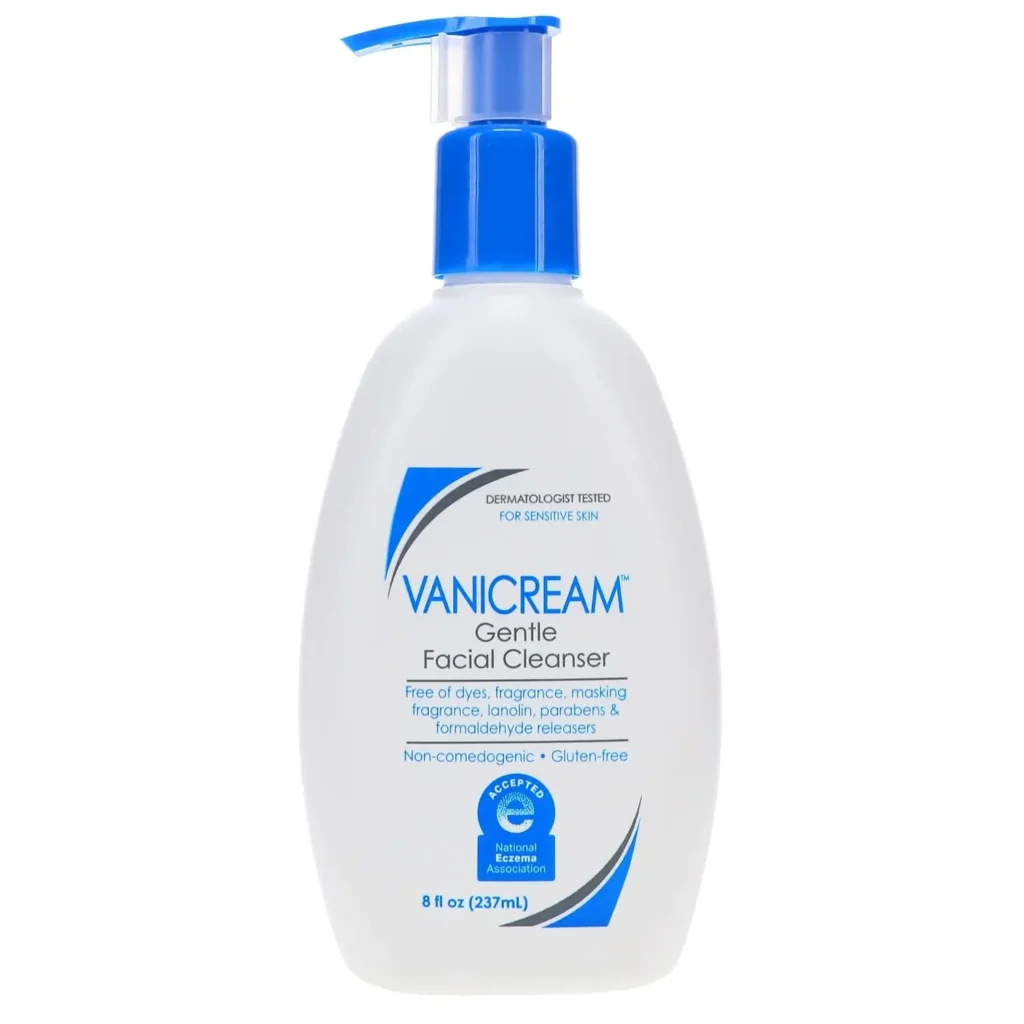
Gentle Facial Cleanser
- What it is: A non-stripping, pH-balanced cleanser designed to preserve the skin’s natural lipid barrier.
- Best for: Dry, sensitive, and mature skin types that feel tight after washing.
- Key features: Look for ingredients like glycerin or thermal spring water; free from harsh sulfates (like SLS) and synthetic fragrances.
- Potential drawbacks: May not effectively remove heavy waterproof makeup or high-zinc sunscreens in one go (consider a double cleanse with a cleansing oil first).
- How to use: Massage onto damp skin using gentle, circular motions. Rinse with lukewarm—never hot—water.
- Why consider it: It sets the stage for the rest of your skincare routine for menopause by ensuring the skin is clean but hydrated.
Step 2 — Add a Hydrating Serum
If your skin feels perpetually thirsty, a moisturizer alone might not be enough. This is where a hydrating serum—specifically one featuring hyaluronic acid—becomes essential. Hyaluronic acid is a humectant that can hold up to 1,000 times its weight in water, drawing moisture from the environment into your skin.
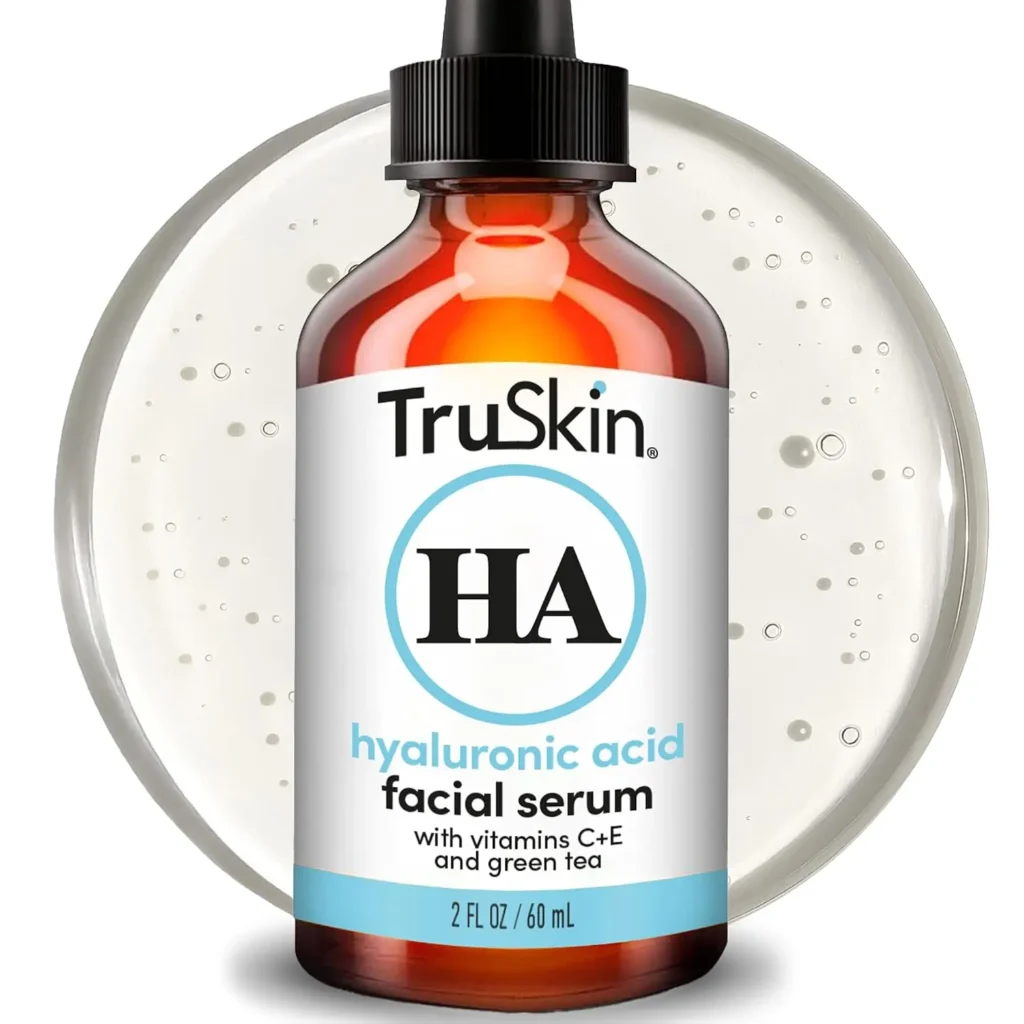
Hyaluronic Acid Serum
- What it does: Deeply hydrates the surface layers of the skin, providing a temporary “plumping” effect that softens the look of fine lines.
- Best for: Dehydrated skin and those looking to improve the overall “glow” of their complexion.
- Key features: Often contains multiple weights of hyaluronic acid to penetrate different layers of the skin surface.
- Potential drawbacks: In very dry climates, humectants can actually draw moisture out of the skin if not properly sealed in with a moisturizer.
- How to use: Apply a few drops to slightly damp skin immediately after cleansing.
- Why consider it: It provides the intensive water-based hydration that skincare for mature skin desperately needs.
Step 3 – Use a Ceramide Moisturizer
A moisturizer is the most critical step for anyone dealing with menopause skin changes. While serums provide the “water,” moisturizers provide the “oil” and the “seal.” Ceramides are lipids (fats) that naturally make up over 50% of our skin’s composition. They act like the “mortar” between the “bricks” of our skin cells.
As ceramide levels drop during menopause, a dedicated ceramide-rich cream helps rebuild that barrier, locking in your hydrating serum and protecting against environmental stressors.
| Skin Need | Product Type to Consider |
|---|---|
| Mild dryness | Lightweight lotion with ceramides |
| Dry skin | Rich cream moisturizer |
| Very dry skin | Intensive balm or night cream |
| Sensitive skin | Fragrance-free, hypoallergenic cream |

Ceramide Moisturizer
- What it is: A barrier-repairing cream designed to replenish the natural fats in the skin.
- Best for: Everyone experiencing menopause-related dryness or sensitivity.
- Key features: Typically contains a blend of three essential ceramides (1, 3, and 6-II) and cholesterol.
- Potential drawbacks: Heavier formulas may feel slightly “greasy” if you have combination or oily-leaning skin.
- How to use: Apply a nickel-sized amount over your serum, morning and night.
- Why consider it: It is widely considered the best moisturizer for menopause support because it addresses the root cause of moisture loss—a compromised barrier.
Should You Use a Peptide Serum During Menopause?
Peptides are short chains of amino acids that serve as the building blocks for proteins like collagen and elastin. In skincare products for menopausal skin, peptides are used to “signal” the skin to behave in a more youthful, resilient way.
While they are not “miracle” erasers for wrinkles, they are excellent for improving skin texture and supporting firmness without the irritation often associated with stronger actives like Retinol.
Peptide Serum

Peptide Serum
- Best for: Targeted support for firmness, elasticity, and smoothing the appearance of the skin’s surface.
- Key features: Look for “signal peptides” or “copper peptides”; often formulated in soothing, water-based serums.
- Potential drawbacks: Results are cumulative and require consistent use over several months; they can be expensive compared to basic moisturizers.
- How to use: Apply in the evening after your hydrating serum but before your moisturizer.
- Why consider it: It’s a gentle, sophisticated way to support skin structure during a time of rapid collagen loss.
Don’t Skip Sunscreen
Daily sun protection is the ultimate insurance policy for your skin. UV damage is cumulative, and since menopausal skin is thinner, it is more susceptible to “age spots” (hyperpigmentation) and further collagen degradation.
We recommend a broad-spectrum SPF 30 or higher. “Broad-spectrum” means it protects against both UVA rays (which cause aging) and UVB rays (which cause burning).
- Mineral Sunscreens (Zinc/Titanium): Often better for sensitive skin as they sit on the surface.
- Chemical Sunscreens: Usually offer a thinner, more “elegant” texture that sits invisibly under makeup.

Broad-Spectrum SPF 30+ Sunscreen
- What to look for: Formulations that include antioxidants (like Vitamin E or C) for extra protection against pollution.
- Best for: Everyone, regardless of skin tone or whether they spend the day indoors.
- Key features: Non-comedogenic, lightweight, and easy to reapply.
- Potential drawbacks: Some mineral versions can leave a “white cast” on deeper skin tones.
- How to use: Use about half a teaspoon for the face and neck every morning as the final step of your routine.
Simple Morning Skincare Routine for Menopause
- Gentle Cleanser: Start with a fresh, clean base without stripping natural oils.
- Hyaluronic Acid Serum: Apply to damp skin to “plump” and hydrate.
- Ceramide Moisturizer: Apply to seal in moisture and soften the skin.
- SPF 30+ Sunscreen: Your non-negotiable shield against UV damage.
Simple Nighttime Skincare Routine for Menopause
- Gentle Cleanser: Remove the day’s SPF, pollutants, and any makeup.
- Optional Treatment: This is the time for a gentle retinoid or exfoliant (start with 1-2 times per week).
- Peptide Serum: Support the skin’s natural repair process while you sleep.
- Ceramide Moisturizer: A slightly thicker application at night helps prevent “trans-epidermal water loss” (TEWLS).
What Ingredients Should You Look For?
| Ingredient | Why It May Be Useful | Best For |
|---|---|---|
| Hyaluronic Acid | Draws moisture into the skin; helps with “crepiness.” | Dehydrated, dry skin. |
| Ceramides | Strengthens the skin’s barrier; prevents water loss. | Sensitive or very dry skin. |
| Glycerin | A reliable, gentle humectant that smooths texture. | All skin types. |
| Peptides | Supports the appearance of firmness and elasticity. | Mature skin with fine lines. |
| Squalane | Mimics natural skin oils for a soft, silky finish. | Adding a healthy glow. |
| SPF | Protects against further aging and pigmentation. | Daily use for everyone. |
Ingredients and Habits to Approach Carefully
As your skin thins, its “tolerance” for harsh treatments decreases. To keep your complexion happy, be mindful of the following:
- Excessive Exfoliation: Over-using acids (like Glycolic) or physical scrubs can lead to micro-tears and a compromised barrier.
- Too Many Active Ingredients: Mixing Vitamin C, Retinol, and AHAs all at once can lead to chronic inflammation.
- Harsh Foaming Cleansers: If your face feels “squeaky clean,” you’ve probably removed too much of your natural protection.
- Fragrance and Essential Oils: These are common triggers for sensitivity, especially during hormonal shifts.
- Hot Water: While a hot shower feels great, it can strip the skin of its essential lipids. Stick to lukewarm water for your face.
Common Menopause Skincare Mistakes
- Using harsh cleansers: Thinking “squeaky clean” is good when it actually damages your barrier.
- Skipping moisturizer: Assuming hot flashes mean your skin is oily (it’s likely still dehydrated).
- Forgetting sunscreen: Thinking protection is only for “beach days.”
- Over-exfoliating: Trying to scrub away wrinkles, which only leads to redness.
- Adding too many actives: Using Retinol, Vitamin C, and Acids all at once.
- Changing products too frequently: Not giving a product the 60–90 days it needs to show results.
How to Build a Budget-Friendly Menopause Skincare Routine
You do not need a 10-step, $500 routine to have beautiful skin. In fact, many dermatologists recommend a “skin-imalist” approach for menopausal skin care.
Essential Products (Spend your budget here)
- A high-quality moisturizer: This is the workhorse of your routine. CeraVe Moisturizing Cream is a gold standard for its price.
- A sunscreen you enjoy wearing: If you don’t like the texture, you won’t use it. Neutrogena Hydro Boost SPF offers great value and feel.
Optional Products (Add these if you have room in the budget)
- Serums: Hyaluronic acid and peptides are great “boosters.” The Ordinary offers these at accessible prices under $20.
- Eye Creams: Most facial moisturizers are safe for the eye area, provided they are fragrance-free.
How to Choose Skincare Products on Amazon
Amazon is a fantastic resource for skincare products for menopausal skin, but it requires a discerning eye. Use this checklist:
- Check the Seller: Ensure the product is “Sold by” the brand itself or “Shipped from Amazon” to ensure authenticity.
- Scan the Ingredients: Look for ceramides, glycerin, or petrolatum in the first five ingredients.
- Look for Fragrance-Free: Especially if you’ve noticed increased sensitivity lately.
- Read the Reviews for Context: Look for reviewers in your age bracket (45–60+) to see how the product worked for them.
- Compare Price per Ounce: Larger pump bottles are often much more cost-effective than fancy jars.
When Should You See a Dermatologist?
While a great routine can do wonders, it isn’t a substitute for professional medical care. We recommend seeing a board-certified dermatologist if you experience:
- Persistent irritation or redness: This could indicate rosacea.
- Severe, painful dryness: You may require prescription-strength barrier repair.
- Unusual skin changes: Any new moles or spots that won’t heal.
- Adult Acne: Hormonal acne may require targeted medical treatment.
FAQ
What is the best skincare routine for menopause?
A great routine focuses on barrier support. At minimum, use a gentle cream cleanser, a moisturizer with ceramides or hyaluronic acid, and a daily SPF 30+. At night, focus on hydration and perhaps a gentle peptide serum.
How can I help dry skin during menopause?
Layering is key. Apply a hydrating serum (like hyaluronic acid) to damp skin, then immediately follow with a rich, occlusive moisturizer to “seal” that water in. Avoid harsh soaps and very hot water.
What moisturizer is best for menopausal skin?
The best moisturizer for menopause is one that contains ceramides. These fatty acids help repair the skin’s protective barrier, which naturally thins as estrogen levels decline.
Should I use hyaluronic acid during menopause?
Yes. It is one of the most effective ways to combat the “crepiness” and dehydration associated with skincare during menopause. It provides instant, lightweight hydration that helps the skin look smoother and more refreshed.
Are peptides good for mature skin?
Peptides are excellent for mature skin because they are generally non-irritating and help support the skin’s overall texture and firmness. They are a great “slow and steady” ingredient for long-term skin health.
Should I wear sunscreen every day during menopause?
Absolutely. Menopausal skin is thinner and more prone to sun damage and dark spots. Daily protection is the most effective way to prevent further collagen breakdown and maintain an even skin tone.
Can I use retinol during menopause?
You can, but start slowly. Because menopausal skin is more sensitive, a high-strength retinol might cause peeling or redness. Look for “encapsulated” retinol or start with a very low concentration once or twice a week.
How many skincare products do I really need?
You only truly need three: a cleanser, a moisturizer, and a sunscreen. Every other product-serums, oils, and masks-should be added only if you enjoy the process and your skin tolerates them well.