Disclosure: This article contains affiliate links. If you purchase a product through one of these links, we may earn a commission at no additional cost to you.

The Best Hyaluronic Acid Serums for Plump, Hydrated Skin

Few skincare ingredients have earned the kind of universal reputation that hyaluronic acid has. It’s found in nearly every “hydrating” product on the shelf, and for good reason. Hyaluronic acid is a humectant, meaning it works by drawing moisture into the skin, and it’s capable of holding significantly more water than its own weight, which is part of why it’s associated with that plump, dewy look so many people chase.
But not all hyaluronic acid serums are created equal. Molecular weight, formula concentration, and supporting ingredients all affect how well a given serum actually performs on your skin.
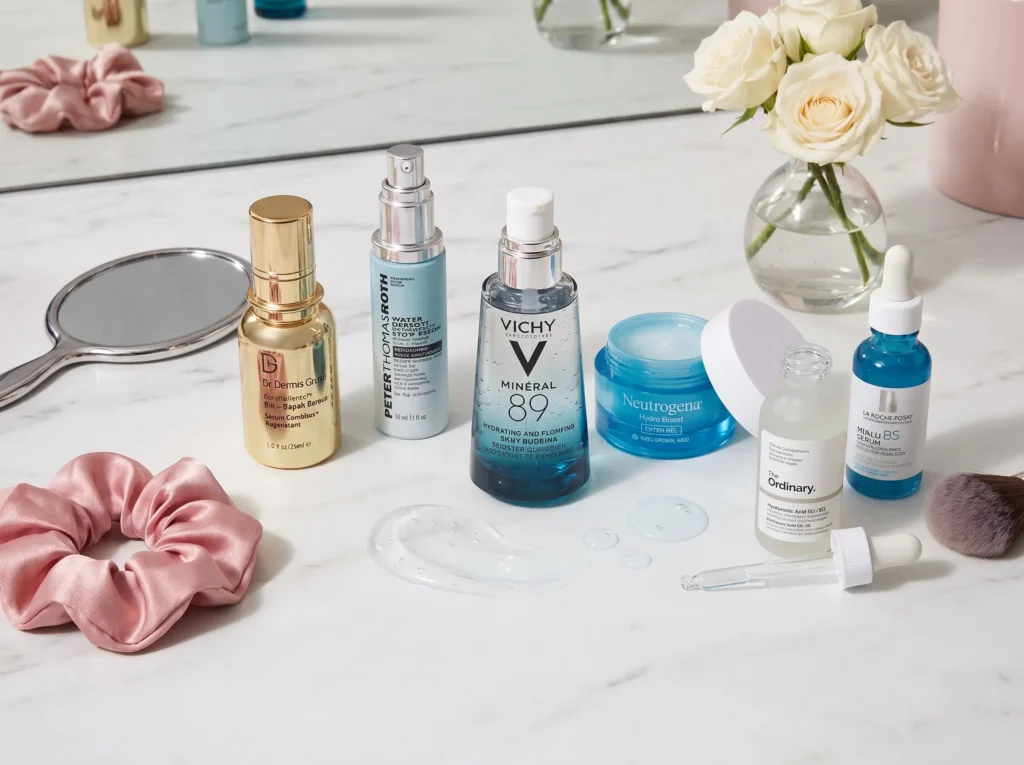
In this guide, we’re rounding up some of the best hyaluronic acid serums for genuinely plump, hydrated-looking skin, across a range of price points and skin types.
What to Look for in a Hyaluronic Acid Serum
Understanding a few basics about how hyaluronic acid works can help you choose a serum that actually delivers on its promises.
Multiple Molecular Weights
Hyaluronic acid comes in different molecular weights, and formulas that combine several (sometimes labeled as “multi-molecular” or listing both hyaluronic acid and sodium hyaluronate) tend to hydrate at multiple skin depths, rather than sitting only on the surface.
Supporting Humectants
Ingredients like glycerin or panthenol are often paired with hyaluronic acid to further support hydration and help the serum feel more comfortable on skin.
Application Environment
Hyaluronic acid draws moisture from wherever is available, including the air. In very dry climates or low-humidity environments, applying it to damp skin and sealing it with a moisturizer is important to avoid it pulling moisture from deeper skin layers instead.
Texture and Absorption
Most hyaluronic acid serums are lightweight and gel-like, absorbing quickly without leaving a sticky or tacky residue, though richer, cream-like versions do exist for those wanting more of an all-in-one product.
Added Actives
Some formulas combine hyaluronic acid with other beneficial ingredients, like vitamin B5, ceramides, or niacinamide, for a more multitasking approach.
Fragrance and Sensitivity
Since hydrating serums are often used daily, fragrance-free formulas are generally a safer choice for sensitive or reactive skin.
Best Hyaluronic Acid Serums at a Glance
| Product | Best For | Formula Highlights | Key Reason to Consider It |
|---|---|---|---|
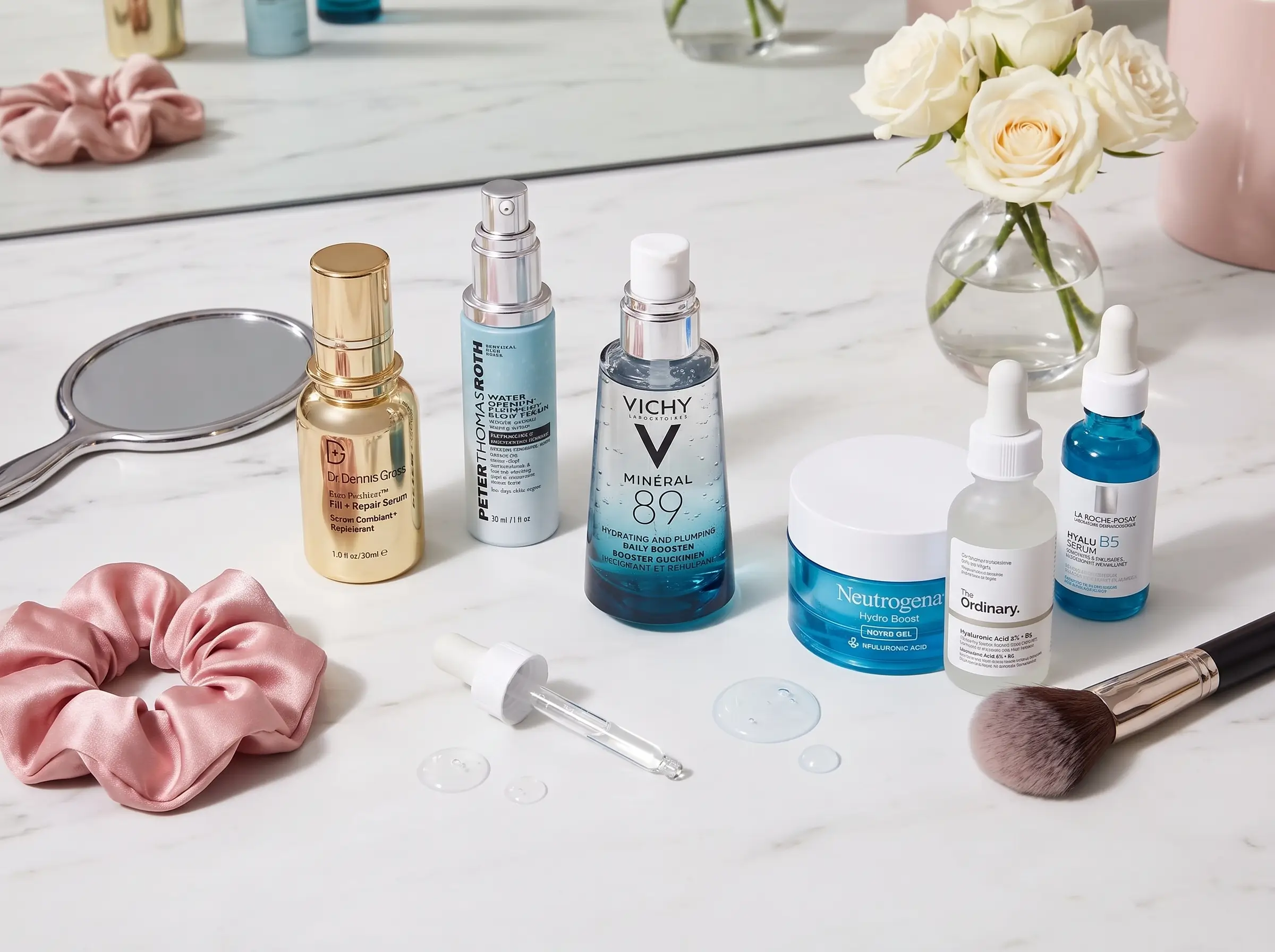
| The Ordinary Hyaluronic Acid 2% + B5 | Budget-friendly hydration | Multi-molecular weight HA, vitamin B5 | Affordable, straightforward formula with proven basics |
| Neutrogena Hydro Boost Water Gel | Drugstore accessibility | Hyaluronic acid gel-cream | Widely available with a cooling, gel-like texture |
| Dr. Dennis Gross Hyaluronic Marine™ Filler Serum | Advanced, targeted hydration | HA + proxylane complex | Clinically-backed formula aimed at improving skin’s own HA production |
| Vichy Minéral 89 | Hybrid hydrator and barrier support | HA + mineralizing thermal water | Combines hydration with added barrier-supporting minerals |
| La Roche-Posay Hyalu B5 Serum | Sensitive or post-procedure skin | HA + vitamin B5 | Gentle, soothing formula suited to reactive skin |
| Peter Thomas Roth Water Drench Hyaluronic Cloud Serum | Rich, all-day hydration | High-concentration HA blend | Richer texture for those wanting deeper, longer-lasting hydration |
The Ordinary Hyaluronic Acid 2% + B5
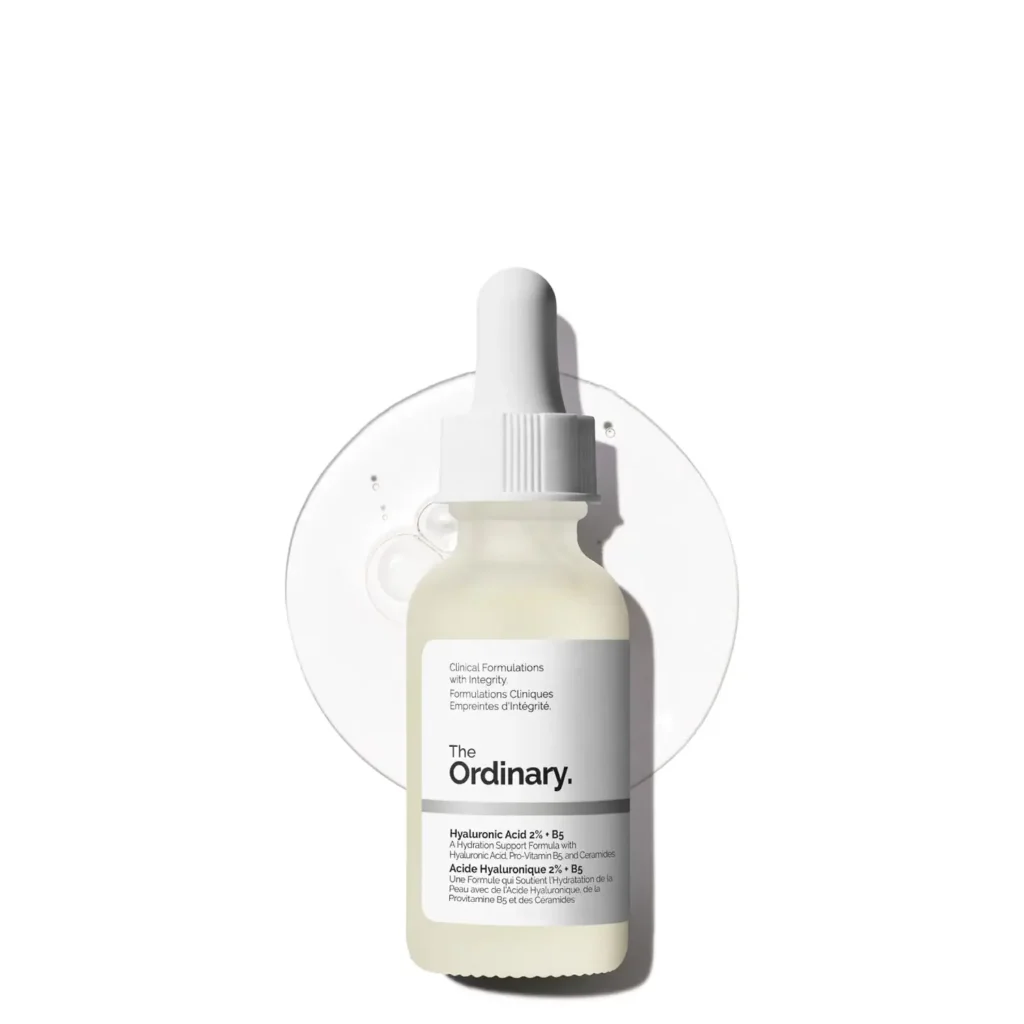
Best for: Budget-friendly hydration
The Ordinary has become nearly synonymous with accessible, ingredient-focused skincare, and this hyaluronic acid serum remains one of its most popular products for good reason.
What makes it stand out: Its formula includes multiple types of hyaluronic acid alongside vitamin B5, aiming to hydrate at different skin depths without a long list of unnecessary additional ingredients.
Texture and feel: Lightweight and slightly gel-like, absorbing well without a sticky residue.
Who may like it: Budget-conscious shoppers who want a straightforward, effective hyaluronic acid serum without added extras.
Skin-type considerations: Suitable for most skin types, including sensitive skin, given its fragrance-free formulation.
Pros:
- Affordable price point
- Multi-molecular weight hyaluronic acid
- Fragrance-free
- Simple, transparent ingredient list
Cons:
- Can feel tacky if applied to very dry skin without a moisturizer layered on top
- Minimal additional actives compared to more complex formulas
Verdict: One of the best entry points into hyaluronic acid serums, offering genuine hydration at an accessible price.
Neutrogena Hydro Boost Water Gel
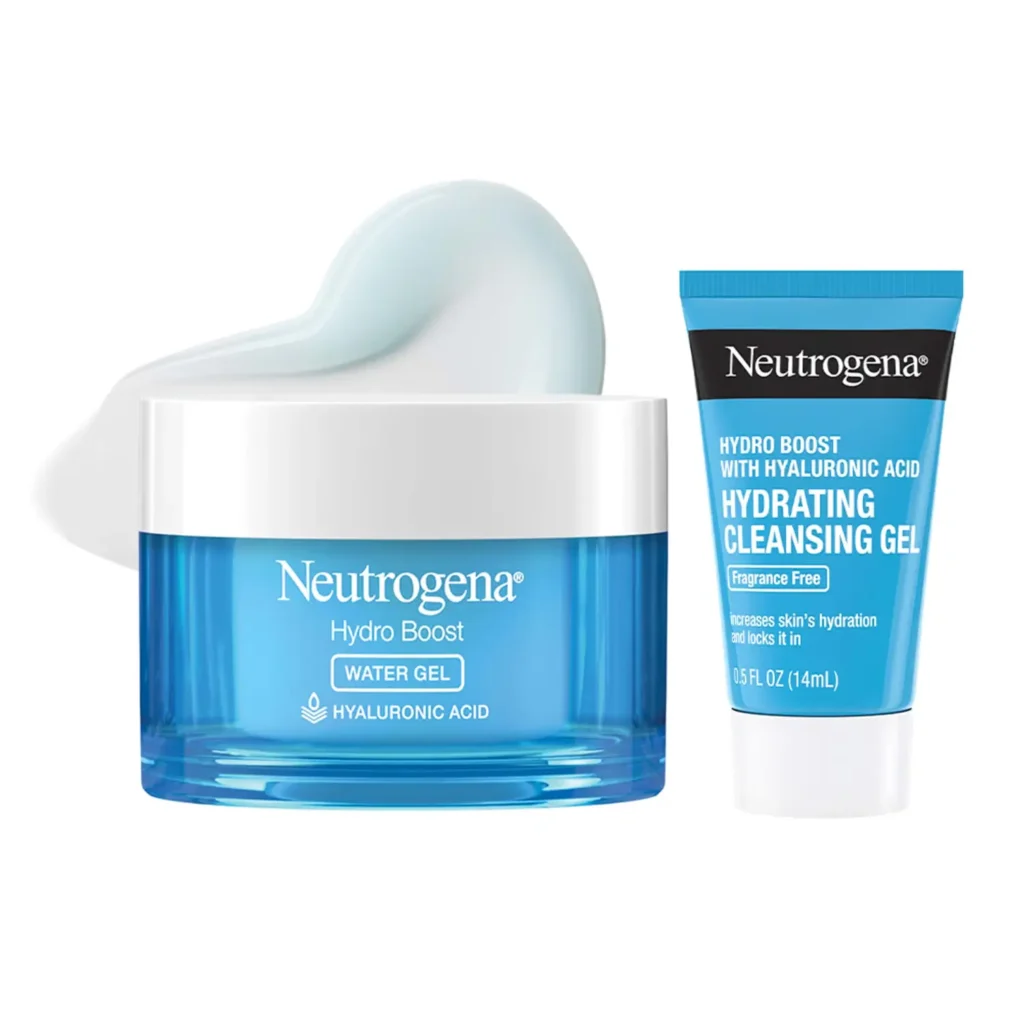
Best for: Drugstore accessibility
Neutrogena’s Hydro Boost line has built a strong reputation for its water-gel texture, offering a refreshing, hydrating option that’s easy to find at most drugstores.
What makes it stand out: Its gel-cream texture delivers a burst of hydration with a cooling, refreshing feel that many find particularly appealing in warmer climates or seasons.
Texture and feel: A bouncy, gel-like texture that feels cooling on application and absorbs into a smooth, hydrated finish.
Who may like it: Those who want a widely available, easy-to-find hyaluronic acid product, along with anyone who prefers a gel-cream texture over a thinner serum.
Skin-type considerations: Works well for normal to oily skin, given its lightweight, non-greasy gel texture.
Pros:
- Widely available at drugstores
- Refreshing, cooling gel texture
- Affordable price point
- Suitable for oilier skin types
Cons:
- Technically a moisturizer-serum hybrid rather than a pure serum, so layering needs may differ
- Very dry skin may still need an additional moisturizer on top
Verdict: A convenient, accessible option that delivers genuine hydration in a uniquely refreshing texture.
Dr. Dennis Gross Hyaluronic Marine™ Filler Serum
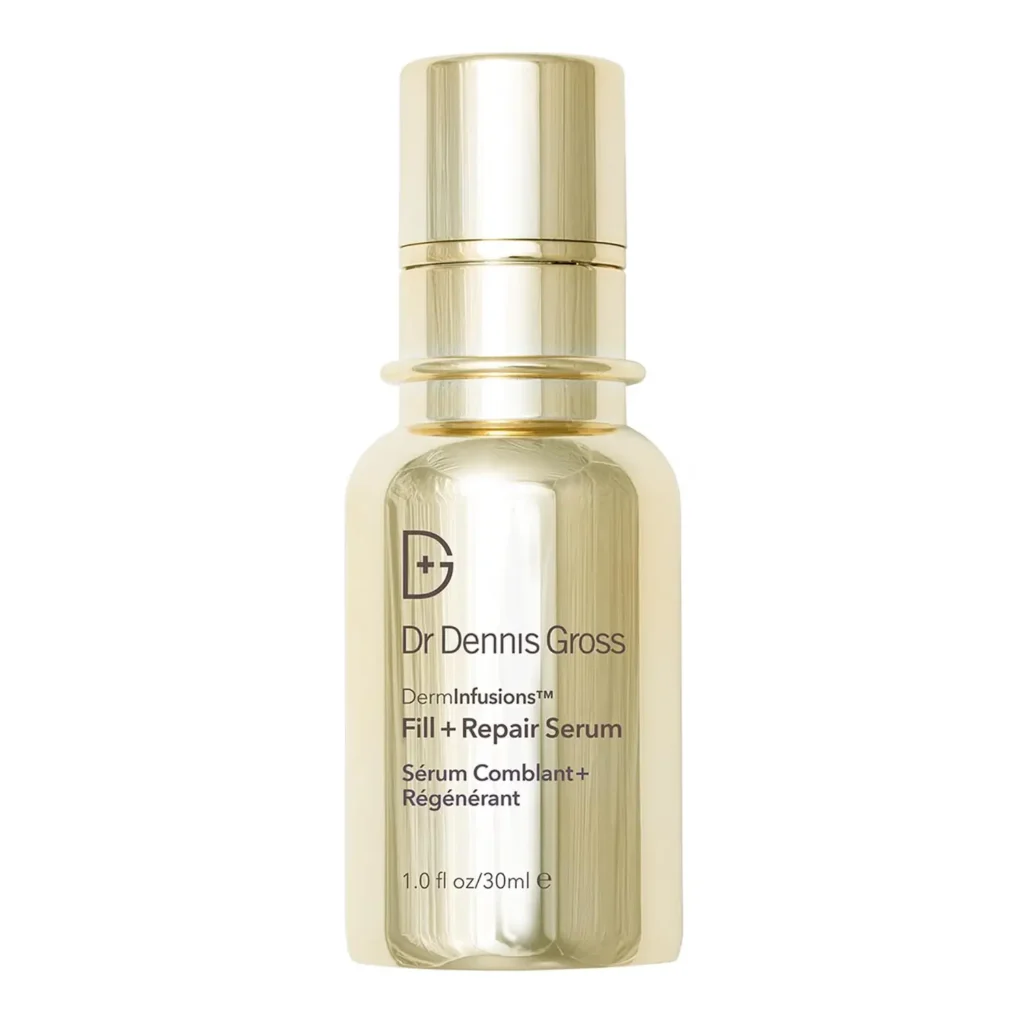
Best for: Advanced, targeted hydration
Dr. Dennis Gross takes a similarly clinical approach to hyaluronic acid, combining three molecular weights of HA with a marine-derived complex studied for its potential to support the skin’s own moisture-retention capacity over time.
What makes it stand out: Rather than just sitting on the surface, this formula is designed to work at multiple skin depths, plumping fine lines immediately while aiming to improve the skin’s longer-term hydration reservoir.
Texture and feel: A lightweight, fast-absorbing serum with a slightly cushiony finish that layers well under moisturizer.
Who may like it: Shoppers who want a dermatologist-developed, clinically-positioned formula but prefer to shop and read reviews on Amazon rather than a specialty skincare site.
Skin-type considerations: Suitable for most skin types, including sensitive skin, given its fragrance-free formulation.
Pros:
- Tri-molecular-weight HA + marine complex
- Widely available and well-reviewed on Amazon
- Fragrance-free
- Reputable, dermatologist-founded brand
Cons:
- Premium price point, similar to SkinCeuticals
- Longer-term benefits require consistent use to assess
Verdict: A close match to the SkinCeuticals pick in both positioning and price, but one shoppers can buy and return easily through Amazon.
Want me to check that this exact product is reliably sold (not just resold) on Amazon before you publish, or swap in a cheaper mid-tier option instead (e.g., Isdin or Skinfix) to differentiate more from the price point of your other picks?
Vichy Minéral 89
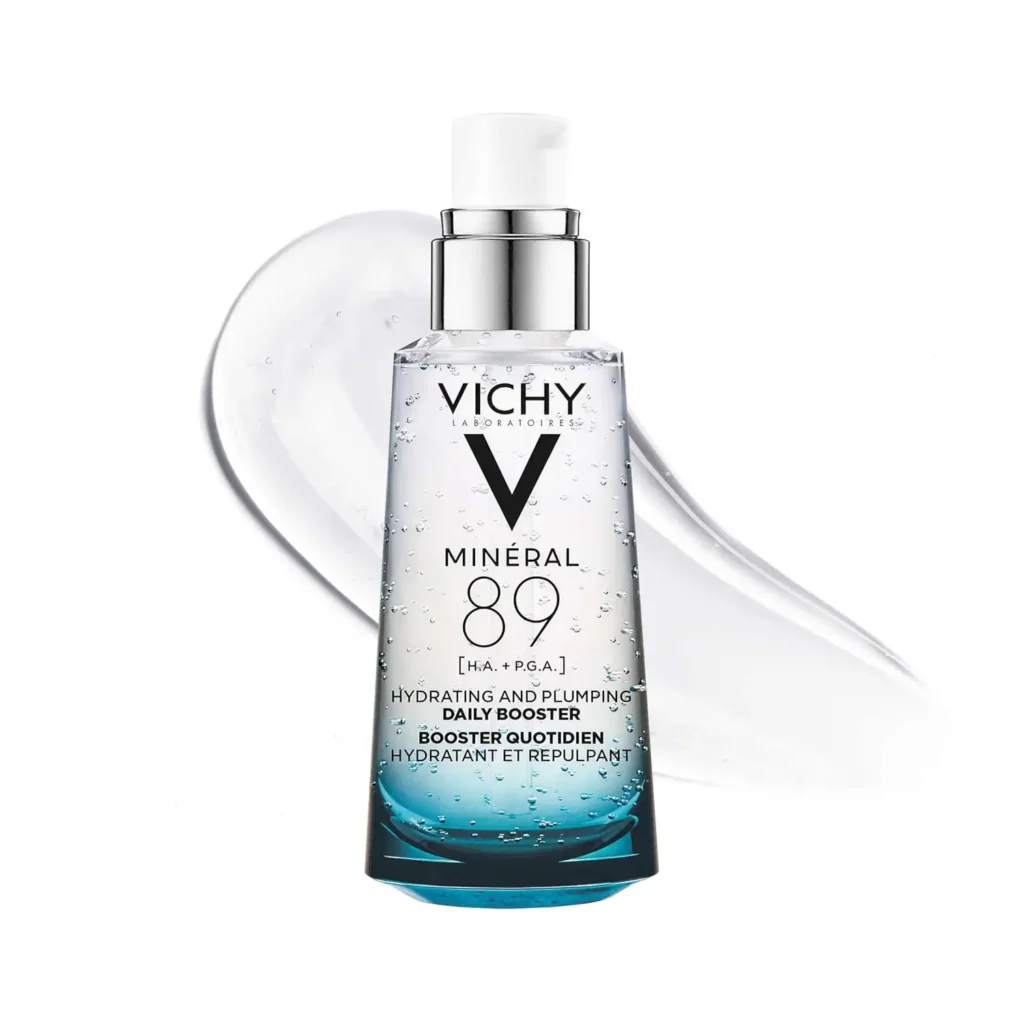
Best for: Hybrid hydrator and barrier support
Vichy’s Minéral 89 combines hyaluronic acid with the brand’s signature mineralizing thermal water, aiming to hydrate while also supporting the skin’s barrier.
What makes it stand out: Its dual focus on hydration and barrier support makes it a popular choice for those who want their serum to do a bit more than hydration alone.
Texture and feel: A gel-like texture with a slightly tacky initial feel that settles into a smooth, hydrated finish.
Who may like it: Those interested in a more skin-barrier-focused approach to hydration, and fans of thermal-water-based skincare.
Skin-type considerations: Suitable for most skin types, including sensitive and reactive skin, given its minimal, fragrance-free formulation.
Pros:
- Combines hydration with barrier support
- Fragrance-free
- Lightweight gel texture
- Versatile, layers well with other products
Cons:
- Slightly tacky initial texture may not suit everyone
- Less concentrated in pure hyaluronic acid than some dedicated HA serums
Verdict: A solid, multitasking option for those who want hydration paired with additional barrier-supporting benefits.
La Roche-Posay Hyalu B5 Serum
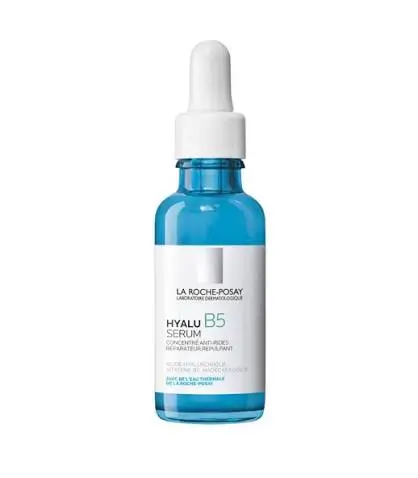
Best for: Sensitive or post-procedure skin
This French pharmacy favorite pairs hyaluronic acid with vitamin B5, positioned as a gentle, soothing option well suited to reactive or recently treated skin.
What makes it stand out: Its minimal, fragrance-free formula is frequently recommended for use after dermatological procedures or for those with generally sensitive, easily irritated skin.
Texture and feel: Lightweight and smooth, absorbing quickly without irritation for most users.
Who may like it: Those with sensitive skin, or anyone recovering from a dermatological procedure who needs a gentle, hydrating serum.
Skin-type considerations: Particularly well suited to sensitive, reactive, or post-procedure skin.
Pros:
- Gentle, soothing formula
- Fragrance-free
- Suitable for post-procedure use
- Reputable, dermatologist-recommended brand
Cons:
- Fewer additional actives compared to more complex formulas
- May require a separate moisturizer for very dry skin
Verdict: A trusted, gentle option for sensitive skin types who want reliable hydration without unnecessary extras.
Peter Thomas Roth Water Drench Hyaluronic Cloud Serum
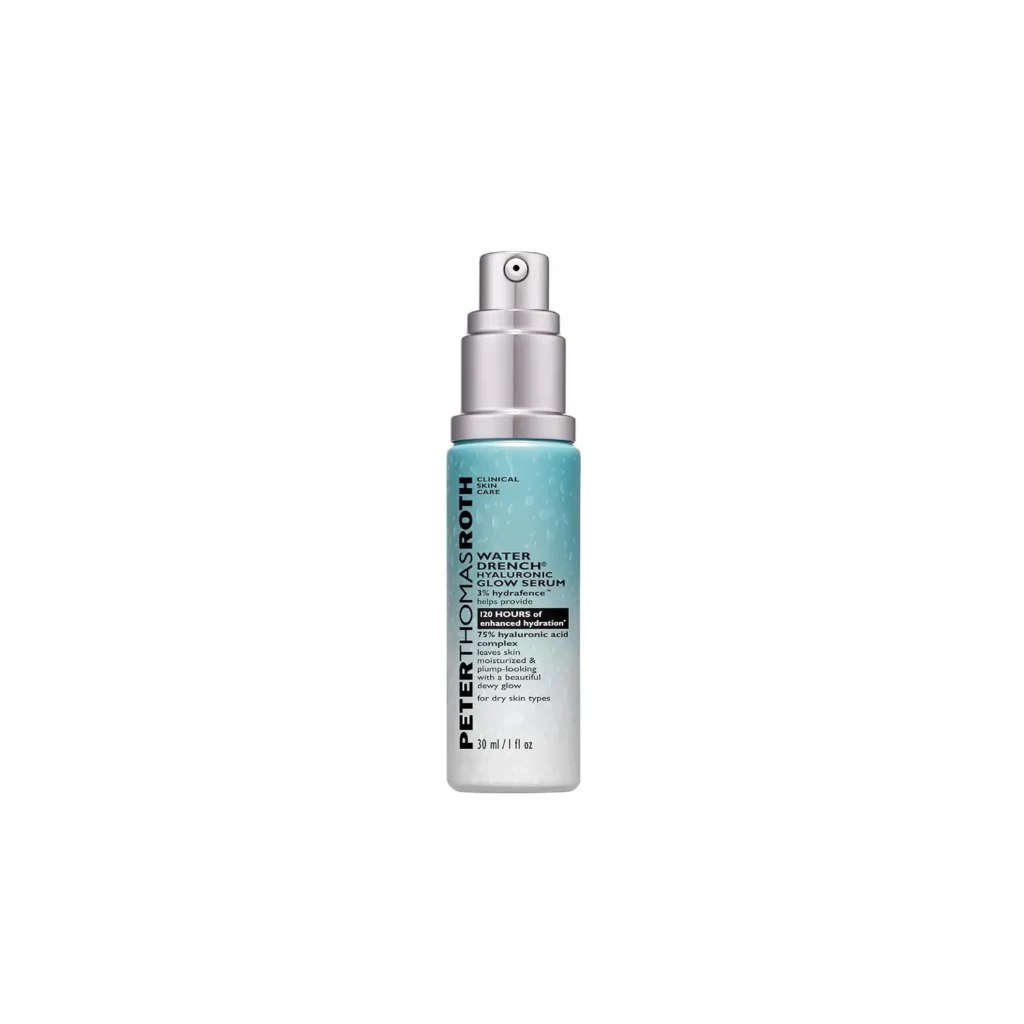
Best for: Rich, all-day hydration
For those who want a more substantial hydration boost, Peter Thomas Roth’s Water Drench Hyaluronic Cloud Serum offers a higher-concentration formula in a slightly richer texture.
What makes it stand out: Its blend of multiple hyaluronic acid types is formulated to deliver a more noticeable, longer-lasting hydration effect than some lighter serums.
Texture and feel: A slightly richer, cushiony texture that still absorbs well without feeling heavy.
Who may like it: Those with very dry or dehydrated skin who want a more substantial hydration boost from their serum alone.
Skin-type considerations: Well suited to dry and normal skin. Very oily skin types may prefer a lighter formula.
Pros:
- High-concentration, multi-type hyaluronic acid blend
- Richer, more cushiony texture
- Long-lasting hydration effect
- Suitable for very dry skin
Cons:
- Higher price point than basic HA serums
- May feel too rich for oily or combination skin
Verdict: A strong pick for those with very dry skin who want a noticeably richer, more substantial hyaluronic acid formula.
How to Choose the Best Hyaluronic Acid Serum for Your Skin
- Budget-conscious shoppers: The Ordinary Hyaluronic Acid 2% + B5 offers reliable hydration at an accessible price.
- Oily or combination skin: Neutrogena Hydro Boost Water Gel provides a lightweight, cooling texture that won’t feel heavy.
- Sensitive or post-procedure skin: La Roche-Posay Hyalu B5 Serum offers a gentle, soothing formula.
- Very dry or dehydrated skin: Peter Thomas Roth Water Drench Hyaluronic Cloud Serum delivers a richer, more substantial hydration boost.
- Those wanting barrier support alongside hydration: Vichy Minéral 89 combines hyaluronic acid with mineralizing thermal water.
- Advanced, longer-term hydration goals: Dr. Dennis Gross Hyaluronic Marine™ Filler Serum offers a more clinically-positioned formula.
How to Apply Hyaluronic Acid Serum for the Best Results
- Apply to damp skin. Hyaluronic acid works by drawing in moisture, so applying it to slightly damp skin (after cleansing or using a hydrating mist) gives it more to work with than applying to completely dry skin.
- Always follow with a moisturizer. Sealing hyaluronic acid serum with a moisturizer helps lock in hydration and prevents the ingredient from potentially pulling moisture from deeper skin layers in very dry environments.
- Layer it early in your routine. Hyaluronic acid serum generally goes on after cleansing and toning, but before heavier creams and oils, following our general guide to layering skincare products in the right order.
- Use both morning and night. Since hyaluronic acid is generally well tolerated, most people can use it in both their AM and PM routines without issue.
- Pair with other hydrating ingredients. Combining hyaluronic acid with ingredients like glycerin or ceramides can further support overall hydration, particularly for very dry or dehydrated skin.
Frequently Asked Questions
What is the best hyaluronic acid serum for plump skin?
Multi-molecular weight formulas like The Ordinary Hyaluronic Acid 2% + B5 or Peter Thomas Roth Water Drench Hyaluronic Cloud Serum are commonly recommended for a noticeably plump, hydrated look.
Should hyaluronic acid be applied to wet or dry skin?
Applying hyaluronic acid to slightly damp skin is generally recommended, since the ingredient works by drawing in available moisture.
Do you need a moisturizer after hyaluronic acid serum?
Yes, following hyaluronic acid with a moisturizer is important, especially in dry climates, to help seal in hydration and prevent moisture loss.
Can hyaluronic acid make skin drier in low humidity?
In very dry environments, hyaluronic acid can potentially draw moisture from deeper skin layers rather than the air if there isn’t enough humidity available, which is why sealing it with a moisturizer is recommended.
Is hyaluronic acid good for oily skin?
Yes, lightweight, gel-based hyaluronic acid formulas like Neutrogena Hydro Boost Water Gel can work well for oily skin, since hyaluronic acid itself isn’t an oil and won’t clog pores.
Can you use hyaluronic acid and retinol together?
Yes, many people use hyaluronic acid alongside retinol, often applying hyaluronic acid to help offset some of the dryness that retinol can cause.
How often should you use hyaluronic acid serum?
Most hyaluronic acid serums are well tolerated for daily use, both morning and night, given their generally gentle, hydrating nature.
Does hyaluronic acid serum work for all skin types?
Generally, yes. Because hyaluronic acid is a humectant rather than an oil or exfoliant, it’s typically well tolerated across oily, dry, combination, and sensitive skin types.
Final Verdict
Hyaluronic acid remains one of the most reliable, well-tolerated ingredients for supporting plump, hydrated-looking skin, and the right serum for you largely comes down to texture preference, budget, and any additional benefits you’re looking for.
For an affordable, no-frills option, The Ordinary Hyaluronic Acid 2% + B5 remains a dependable starting point. Those who prefer a refreshing gel texture may enjoy Neutrogena Hydro Boost Water Gel, while very dry skin types will likely appreciate the richer formula of Peter Thomas Roth Water Drench Hyaluronic Cloud Serum. Sensitive or post-procedure skin has a gentle option in La Roche-Posay Hyalu B5 Serum, and those wanting added barrier support can turn to Vichy Minéral 89. For a more advanced, clinically-positioned formula, Dr. Dennis Gross Hyaluronic Marine™ Filler Serum is worth the investment.
Whichever you choose, remember that hyaluronic acid works best as part of a layered routine, applied to damp skin and sealed with a good moisturizer, rather than as a standalone fix.