Disclosure: This article contains affiliate links. If you purchase a product through one of these links, we may earn a commission at no additional cost to you.

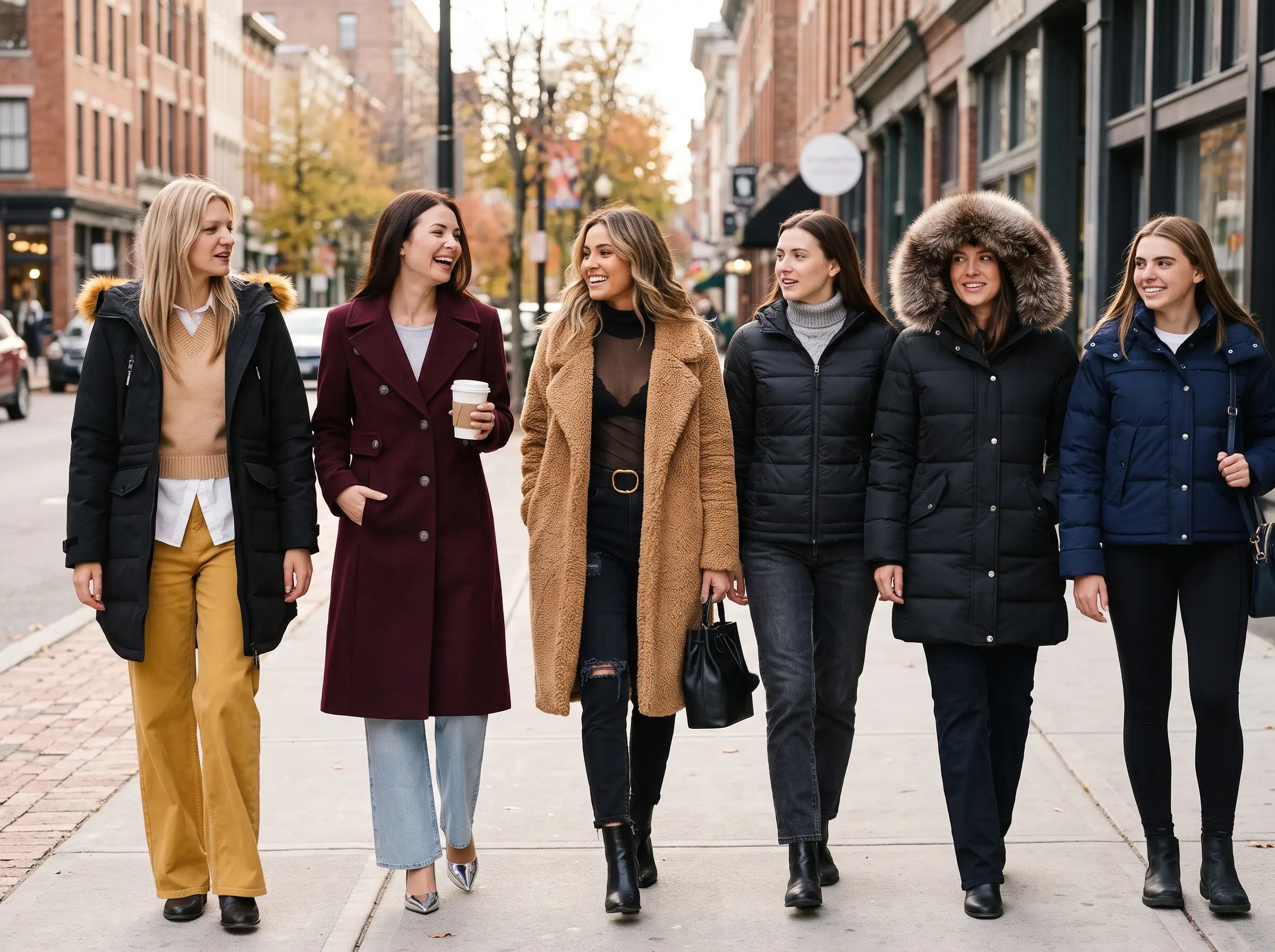
The Best Winter Coats for Women

A good winter coat is the one piece of clothing everyone will see you in for months. It needs to keep you warm, fit over your layers and still look like something you want to wear. That is a lot to ask, and the choices, from puffers to wool coats to long parkas, can be confusing.
This guide explains how to choose a winter coat for your climate and your style, what the technical terms mean, and which types and brands are worth looking at.
Start With Your Climate and Your Day
Before choosing a style, think about how you will actually use the coat.
- Mild winters (above freezing most days). A lighter puffer, a wool blend coat or a lined trench may be enough.
- Cold winters (regular frost and snow). A well-insulated puffer or a long parka with a hood is a safer choice.
- Very cold winters (extended periods below freezing). Look for a heavy-duty parka with high insulation, a hood and a longer length.
- Wet climates. Prioritize a water-resistant or waterproof shell.
- Commuting by foot or public transport. Choose a coat that keeps you warm while standing still and is not too bulky for a crowded train.
- Dressy or office use. A tailored wool coat looks polished over work outfits.
Types of Winter Coats
Puffer jackets. Quilted and filled with down or synthetic insulation, puffers are light for their warmth. They range from short, sporty styles to longer sleeping-bag-style coats.
Parkas. Longer, often hooded and designed for harsh weather. Many have a water-resistant shell and a faux-fur-trimmed hood.
Wool and wool-blend coats. Classic and polished, they suit work and dressier outfits. They are warm and breathable, though usually less waterproof than a technical shell.
Teddy and shearling-style coats. Soft and fashionable, these are very cozy for mild to cold weather, though not always windproof.
Trench coats with warm liners. A good in-between option for mild winters and transitional weather.
Fleece jackets. Warm and comfortable, best as a mid-layer or for mild, dry days.
Down vs. Synthetic Insulation
Down is very warm for its weight, compressible and long-lasting. Its warmth is often described by fill power, such as 600, 700 or 800. A higher number means better insulation for the weight. Down loses warmth when it gets wet unless it has water-resistant treatment, and it usually costs more.
Synthetic insulation, such as PrimaLoft or polyester fill, keeps much of its warmth when damp, dries faster, and is typically more affordable. It can be a little bulkier for the same warmth.
If you live somewhere dry and very cold, down is a great choice. If your winters are wet, synthetic or water-resistant down can be more practical.
What to Look for in a Winter Coat
- A hood, ideally one that can be adjusted or detached.
- Water-resistant or waterproof fabric, if you deal with rain or snow. Check whether the label says water-resistant, which handles light moisture, or waterproof, which should protect in sustained rain.
- Wind protection, because wind makes cold feel much colder.
- Length. Longer coats cover more of your body and keep your legs warmer, while hip-length coats are easier to move in.
- Cuffs and a high collar, which help trap heat at your wrists and neck.
- Pockets that actually work, ideally lined, with at least one zipped pocket for keys or a phone.
- Room for layers. Try the coat with a sweater on, because you will wear it that way.
- Easy-care fabric. Check the care label before you buy.
How to Get the Right Fit
A winter coat should skim your body without squeezing. When you try it on, check:
- Shoulders. The seams should sit at the edge of your shoulders, not drooping or pulling.
- Sleeves. You should be able to reach forward and lift your arms without the coat riding up. Sleeves should cover your wrists when your arms are down.
- Chest and arms. There should be room for a sweater, but no excess fabric.
- Length. Sit down in the coat, if you can. It should not bunch uncomfortably.
- Hood. It should turn when your head turns, so you can see.
If you are between sizes, size up for layering warmth, or choose the size that fits your outfits best.
Best Winter Coats for Women: Types and Brands to Consider
Styles, colors and sizes change each season, so check the current reviews and size chart before buying.
Best Overall Warm Puffer: Columbia or The North Face puffer jackets
Both brands are known for dependable cold-weather gear, with a range of lengths, insulation levels and price points. Look for models with a hood and a water-resistant shell.
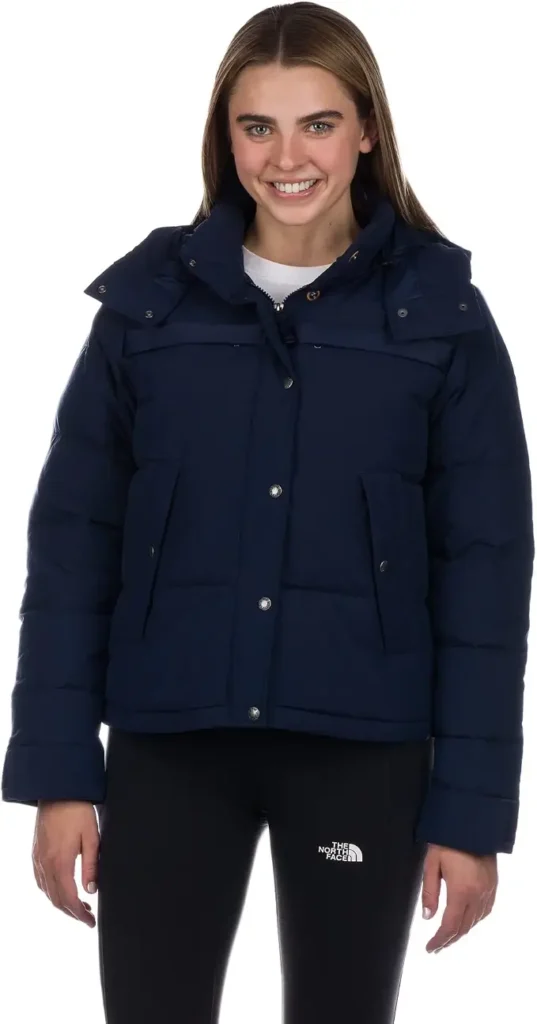
Columbia The North Face women’s puffer jacket
Best Long Puffer for Extreme Cold: Orolay long down-style coat
A popular long, thick coat with a hood that is known for its warmth. It is a go-to for people who need maximum coverage on cold commutes.
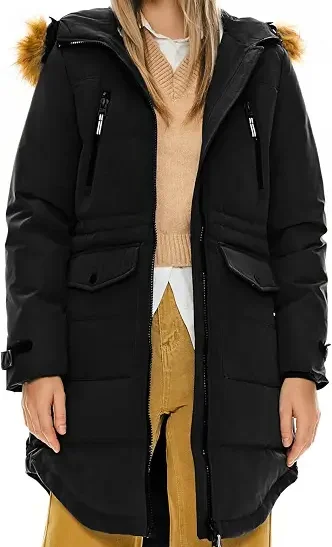
Orolay women’s thickened down jacket
Best Budget Pick: Amazon Essentials puffer or mid-length coat
A simple, affordable option for mild to moderately cold winters. Good value if you want a basic coat without a big investment.

Amazon Essentials women’s mid-length puffer jacket
Best Classic Wool Coat: A wool-blend overcoat in a neutral color
A camel, black or charcoal wool-blend coat looks polished for years. Look for a wool content of at least 50 percent for good warmth, and a lining that feels smooth.
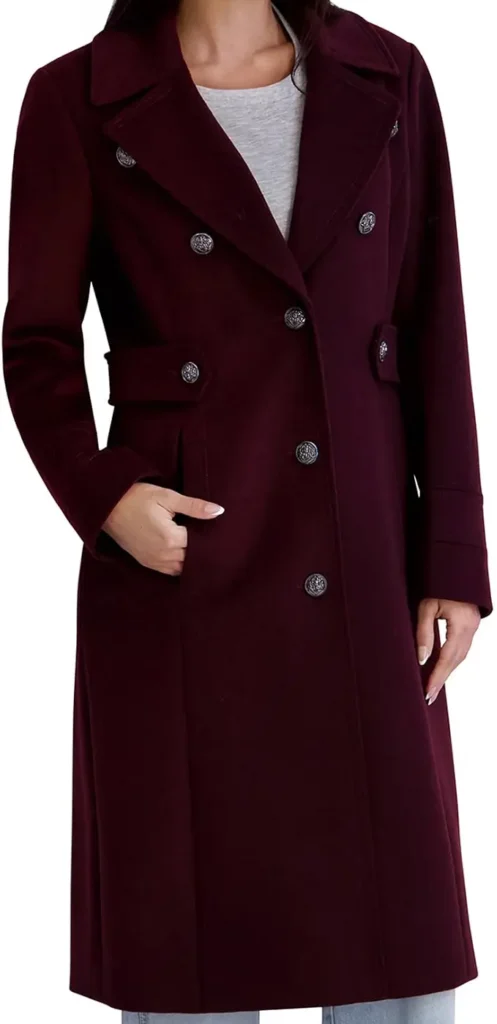
women’s wool blend overcoat
Best Fashion Pick: A teddy or faux-shearling coat
Soft, textured and very cozy, a teddy coat adds personality to a winter wardrobe. Check that the lining is wind-resistant if you plan to wear it in colder weather.

women’s teddy coat faux shearling
Best Waterproof Parka: A hooded waterproof parka with insulation
For wet, snowy winters, choose a parka with taped seams, a waterproof shell and a warm lining.
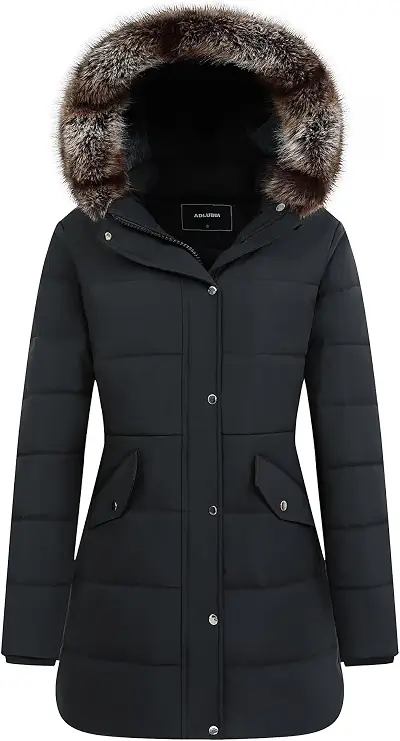
women’s waterproof insulated parka
How to Style a Winter Coat
A coat is the top layer of every winter outfit, so choose one that works with what you already own.
- Neutrals go with everything. Black, camel, gray, navy and cream coats work with most outfits. A bold color can add interest if you wear a lot of neutrals.
- Balance proportions. A long coat looks great over slim pants, leggings or a mini skirt with tall boots. A cropped puffer works well with high-waisted pants.
- Add texture. Pair a smooth coat with a chunky scarf or a knit beanie.
- Belt it. A belted coat gives shape to a boxy silhouette.
- Mind your color palette. A black coat with a bright scarf is an easy way to make an outfit feel intentional.
For your feet, check out our best winter boots for women, and for cozy layers underneath, see our guide to the best sweaters and cardigans for women.
How to Care for Your Winter Coat
- Follow the care label. Many puffers can be machine washed on a gentle cycle, while wool coats usually need dry cleaning.
- Wash down jackets with a down-friendly detergent, and dry them on low heat with clean tennis balls to restore loft.
- Spot clean small stains quickly with a damp cloth.
- Store coats in a breathable garment bag at the end of the season, not in plastic.
- Brush wool coats gently to remove lint and dust.
- Do not compress down jackets for long periods, which can flatten the insulation.
Signs a Coat Is Worth the Money
A more expensive coat is not always better, but certain details suggest quality:
- Even stitching and no loose threads
- Smooth, sturdy zippers
- Reinforced seams at stress points such as shoulders and underarms
- A lining that does not feel scratchy
- A fabric that feels dense and not thin
- Honest labeling of insulation type and fabric content
Common Mistakes When Buying a Winter Coat
- Buying for style only. A coat that looks great but leaves you cold will stay in the closet.
- Ignoring layers. Try it with a sweater on.
- Choosing too short. If you are often cold, a longer coat makes a difference.
- Not checking the weather rating. A coat designed for mild weather will not keep you warm in extreme cold.
- Skipping the return policy. Fit varies by brand, so make sure you can return or exchange.
- Forgetting accessories. A scarf, gloves and a hat can make an ordinary coat feel much warmer.
Frequently Asked Questions
What is the warmest type of winter coat for women?
A long, down-filled parka with a hood and a windproof shell is among the warmest options. Look for a high fill power and a well-sealed design.
Is down or synthetic better for a winter coat?
Down is warmer for its weight and compresses easily, while synthetic insulation performs better when wet and is usually more affordable. Choose based on your climate.
How do I know what size winter coat to buy?
Try it on with a sweater, check that you can move your arms freely, and use the brand’s size chart. If you are between sizes, size up for layering.
What is the difference between water-resistant and waterproof?
Water-resistant fabric repels light rain or snow for a short time. Waterproof fabric, usually with sealed seams, protects in heavier, sustained rain.
Are wool coats warm enough for winter?
Yes, for many climates, especially with layers underneath. In very cold or wet conditions, an insulated parka or puffer may be a better choice.
How long should a winter coat be?
That is personal. Hip-length coats are easier to move in, while thigh or knee-length coats keep you warmer in severe cold.
When is the best time to buy a winter coat?
Buying early in the season gives you the best size and color selection, and end-of-season sales can be a good time to find deals on classic styles.
Final Thoughts
The best winter coat is the one that keeps you warm, fits your life and gets worn all season. Decide how cold your winters get, choose insulation and length to match, try it with layers and care for it well. A great coat is an investment that can last for many winters.