Disclosure: This article contains affiliate links. If you purchase a product through one of these links, we may earn a commission at no additional cost to you.


8 Reasons Your Makeup Is Pilling-and How to Fix It

You’ve carefully curated your skincare routine, invested in a high-end foundation, and set aside time for a flawless application-only to look in the mirror and see it: those frustrating little flakes, rolls, or tiny clumps forming on your skin.
This phenomenon, known as makeup pilling, is one of the most common beauty grievances. It feels as though your expensive products are simply balling up and rolling off your face rather than melting into your skin. It is a frustrating waste of product and time, but here is the good news: pilling doesn’t necessarily mean your products are “bad” or that your skin is failing you. Usually, it is simply a matter of chemistry, timing, or technique.
In this guide, we will break down exactly why your makeup is pilling, how to identify the culprits in your routine, and the practical, expert-backed steps you can take to achieve that smooth, filtered finish every single morning.
Quick Answer: Why does makeup pill?
Makeup pilling typically happens when skincare or makeup products fail to bond with the skin or each other. This is often caused by layering too many products, using incompatible formulas (like heavy oils under silicone), applying products too quickly without letting them settle, or using excessive rubbing motions during application.
What is Makeup Pilling?
Before we dive into the solutions, let’s define the problem. Makeup pilling occurs when products—be it your moisturizer, primer, or foundation-don’t absorb into the skin but instead form tiny, lint-like balls or “pills” on the surface.
You may notice:
- Small flakes that look like skin peeling but are actually product.
- Tiny rolls or grains that appear as you blend your foundation.
- Foundation clumping in specific areas, like the jawline or around the nose.
- Makeup “lifting” or sliding away when you touch your face.
Pilling vs. Separating vs. Flaking
It is important to distinguish pilling from other common issues. Makeup separating usually looks like the foundation is breaking apart into patches, often caused by natural oils or a mismatch in formula bases. Flaking is typically the result of actual dead skin cells shedding due to dryness. Pilling, however, is almost always a result of product-on-product friction or interference.
8 Reasons Your Makeup Is Pilling
Understanding the “why” is the first step toward a smoother complexion. Here are the eight most common reasons your products are balling up.
1. You’re Applying Too Many Skincare Products
In the age of the 10-step routine, it is tempting to layer multiple serums, essences, ampoules, and creams. However, every layer creates a new film on the skin. If you apply five different products before your foundation, the skin simply reaches a “saturation point.” The excess product has nowhere to go, so it sits on top and eventually rolls into clumps when you apply makeup over it.
The Solution: Keep your pre-makeup routine simple. Save your intensive treatments—like heavy oils, exfoliating acids, or thick overnight masks-for your evening routine.
Recommended Pre-Makeup Routine:
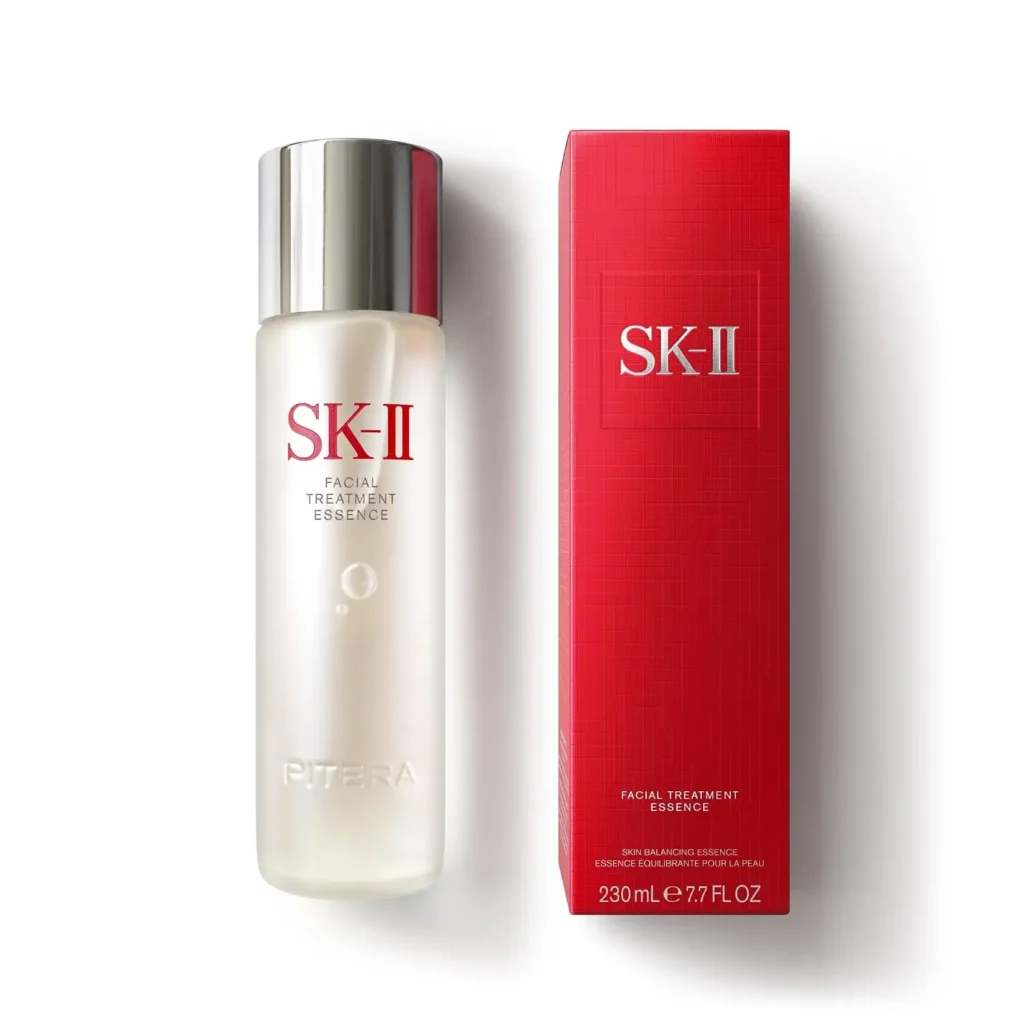
Keep your pre-makeup routine simple.
Editor’s Choice for Weightless Hydration:
If you struggle with your skin reaching a “saturation point” where products start to roll, consider switching to the SK-II Facial Treatment Essence. Unlike thick serums that sit on top of the skin, this cult-favorite “Miracle Water” is composed of 90% Pitera™. It absorbs instantly, providing the hydration of a heavy cream with the weight of water, ensuring your foundation has a smooth, non-slippery base to grip onto.
2. You’re Using Too Much Product
Even the best moisturizer can cause pilling if you use a handful of it. More does not always mean more hydration; often, it just means more waste. When a product is applied too thickly, it can’t dry down properly, creating a slippery, unstable base for your foundation.
The Solution: Use a thin, even layer of every product. A pea-sized amount of serum and a nickel-sized amount of moisturizer is usually enough for the entire face and neck. If you feel your skin needs more hydration, look for more “potent” formulas rather than increasing the volume of your current ones.
3. Your Skincare Products and Makeup Don’t Layer Well Together
This is where beauty meets chemistry. Some ingredients simply don’t play well together. For example, products heavy in silicones (often found in primers and “blurring” foundations) create a smooth barrier on the skin. If you apply a very watery foundation over a heavy silicone primer—or vice versa—they may repel each other, leading to foundation pilling.
The Solution: While the “water-with-water, silicone-with-silicone” rule is a good starting point, formulation matters more than a single ingredient. The best way to troubleshoot is to change one product at a time. Try skipping your primer one day, or swapping your rich cream for a gel-based moisturizer to see if the pilling stops.
4. You’re Rubbing Instead of Pressing
The way you apply your products is just as important as the products themselves. If you aggressively rub your foundation into your skin using your fingers, the friction can disturb the layers of skincare underneath, causing them to “lift” and roll into pills.
The Solution: Change your technique.
- For Skincare: Gently smooth the product over the skin, then use a light “patting” or pressing motion to help it absorb.
- For Makeup: Use a damp makeup sponge or a soft brush. Instead of dragging the tool across your face, use a “stippling” or bouncing motion (often called pouncing) to deposit color without disturbing the base layers.
5. You’re Not Giving Skincare Enough Time to Settle
We’re all in a rush in the morning, but layering foundation immediately after sunscreen is a recipe for a pilling disaster. If the underlying layers are still “wet” or tacky, they will mix with the makeup and lose their integrity.
The Solution: Give your products time to settle. There is no universal rule for how long to wait, as lightweight gels dry faster than rich creams. A good rule of thumb is to wait until your skin feels “set”—not necessarily bone-dry, but no longer slippery to the touch. Try doing your hair or picking out your outfit between your sunscreen and foundation steps.
6. Your Skin Is Very Dry or Flaky
Sometimes, pilling isn’t about the product at all—it’s about the “canvas.” If you have a buildup of dry, dead skin cells, your makeup can catch on these rough patches. As you try to blend the foundation over dry skin, the dead cells can mix with the product, creating tiny rolls that look like pilling.
The Solution: Ensure your skin is properly hydrated and gently exfoliated. Avoid aggressive physical scrubs, which can cause micro-tears and more flaking. Instead, use a gentle chemical exfoliant (like a low-percentage Lactic Acid) once or twice a week at night to keep the skin surface smooth.
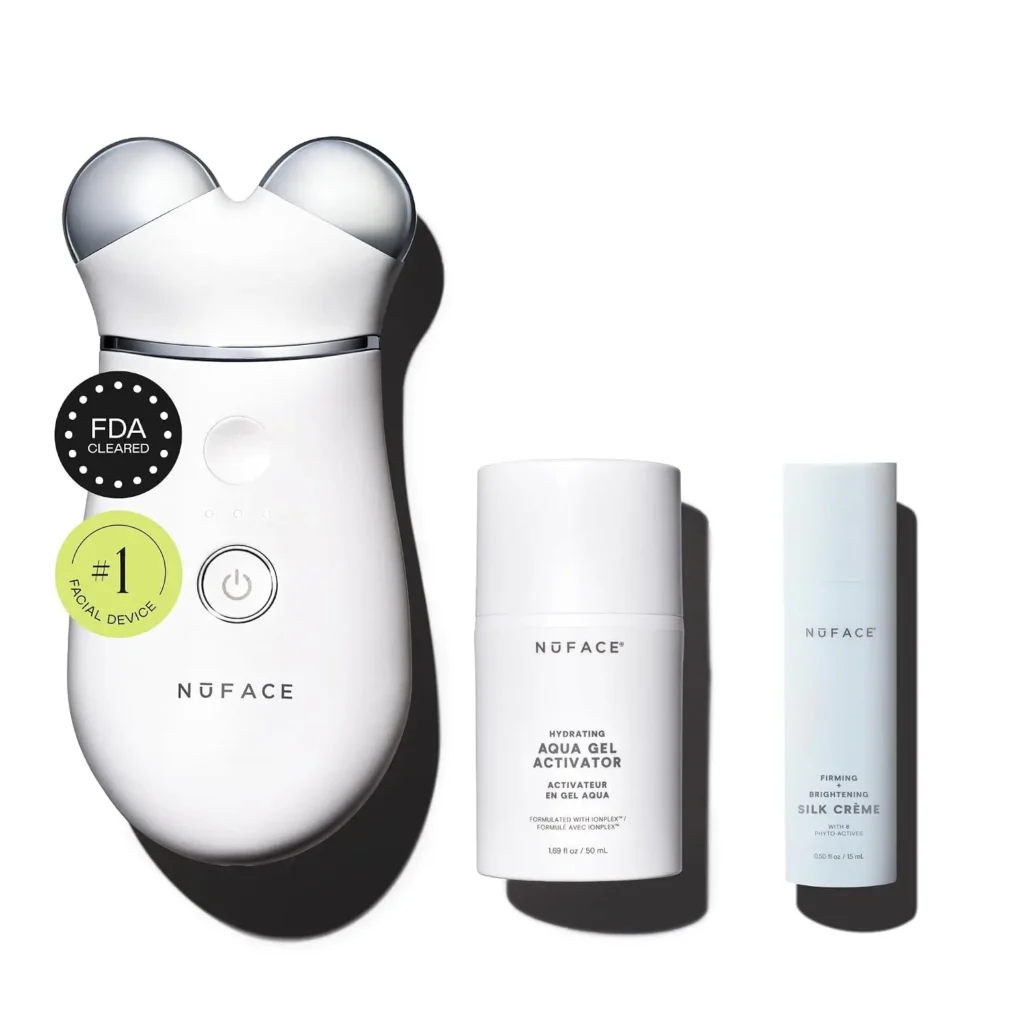
Ensure your skin is properly hydrated and gently exfoliated.
The High-Tech Prep Tool:
Sometimes the best way to prevent pilling is to improve the skin’s surface before you even touch your skincare. The NuFACE Trinity Starter Kit uses microcurrent technology to tone and smooth the facial contours. By refining the skin’s texture and reducing puffiness before application, you create a smoother surface that requires less makeup and fewer blurring products, drastically reducing the risk of pilling.
7. Your Primer May Be Causing the Problem
Primer is designed to be the “glue” between skincare and makeup, but sometimes it acts more like a barrier. Many primers are high in dimethicone (silicone), which is excellent for filling pores but can be prone to pilling if used over a facial oil or under a very thin, water-based skin tint.
The Solution: Test your makeup without the primer. If the pilling disappears, you know the primer was the culprit. You may need a primer with a different base, or you may find that your moisturizer provides enough of a “grip” on its own.
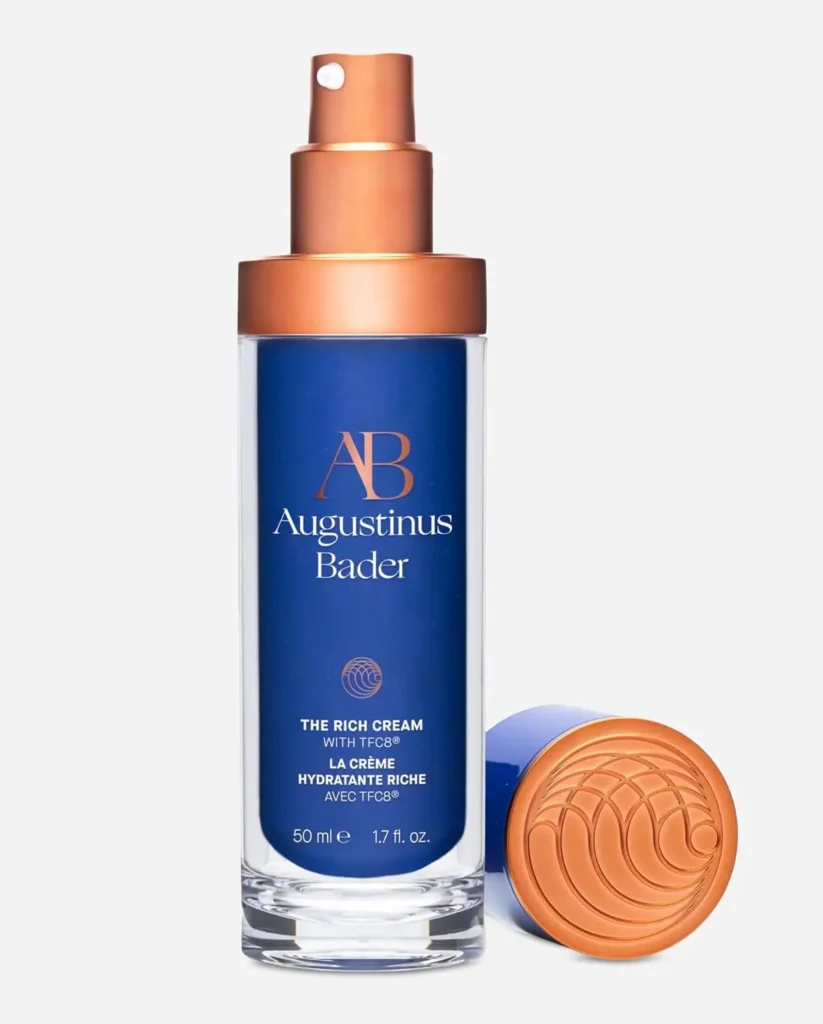
Test your makeup without the primer.
The Ultimate One-Step Base:
For those who want to skip the primer entirely but still need a flawless finish, Augustinus Bader The Rich Cream is an industry game-changer. Its TFC8® technology is engineered to be absorbed by the skin rather than sitting as a film on the surface. It hydrates and primes simultaneously, leaving a plump, radiant “canvas” that is scientifically designed not to clash with your foundation.
8. You’re Applying Too Much Foundation or Powder
Heavy layering, especially with high-coverage formulas, can emphasize skin texture and increase the chance of product movement. If you apply a thick layer of foundation and then go in with a heavy-handed application of powder, the layers can become “cakey” and eventually pill if you continue to blend or brush over the same area.
The Solution: Build coverage gradually. Start with a very thin layer of foundation only where you need it (usually the center of the face). Use concealer for spot coverage, and apply powder selectively—only on the T-zone or areas prone to shine—rather than across the entire face.
How to Stop Makeup From Pilling: A Step-by-Step Routine

Follow this routine to ensure your makeup stays smooth from morning to night.
- Start With Clean Skin: Use a gentle cleanser to remove any evening skincare residue.
- Use Only Necessary Skincare: Don’t overcomplicate it. Use a serum only if you have a specific concern (like Vitamin C for brightening).
- Moisturize Appropriately: Choose a moisturizer that fits your skin type. (e.g., a gel for oily skin, a cream for dry skin).
- Apply Sunscreen Daily: Use a broad-spectrum SPF 30+. This is the final step of skincare.
- Let Products Settle: Wait 2–5 minutes for your SPF to “film” over the skin.
- Apply Primer Only If Needed: If you have large pores or very oily skin, use a small amount of primer in targeted areas.
- Apply Foundation in Thin Layers: Use a damp sponge and a “stippling” motion.
- Finish With Minimal Powder: Use a large, fluffy brush to lightly dust powder over your T-zone.
What to Do If Your Makeup Is Already Pilling
If you look in the mirror and see pilling, don’t panic. You don’t always have to wash your face and start over. Try these troubleshooting steps:
- Stop Rubbing: The more you rub, the worse the pilling will get.
- Use a Large, Clean Brush: Sometimes you can gently “flick” away the little balls of product with a large, dry powder brush without disturbing the makeup underneath.
- Damp Sponge Rescue: Take a clean, slightly damp makeup sponge and gently press it over the pilled area. This can sometimes “re-blend” the product and pick up the excess flakes.
- Spot Removal: If the pilling is concentrated in one area (like the chin), use a makeup wipe to remove just that section, re-moisturize lightly, and re-apply foundation. It’s often easier to fix one small patch than to layer more product over a mess.
Best Skincare Routine Before Makeup
Your AM routine should be focused on protection and hydration, not intensive treatment. Here are general templates:
For Normal Skin
- Cleanser: A gentle, non-foaming wash.
- Moisturizer: A balanced, hydrating lotion.
- SPF: A lightweight daily fluid.
- Makeup: Any formula generally works well.
For Dry Skin
- Cleanser: A hydrating milk or oil cleanser.
- Serum: A Hyaluronic Acid serum on damp skin.
- Moisturizer: A rich, emollient cream.
- SPF: A moisturizing sunscreen.
- Makeup: Cream or liquid-based foundations.
For Oily Skin
- Cleanser: A gentle foaming or gel cleanser.
- Moisturizer: An oil-free gel moisturizer.
- SPF: A “matte” or “dry-touch” sunscreen.
- Makeup: Oil-free or long-wear formulas.
Recommended Products for a Pilling-Free Base
Here are some curated options that are known for their layering compatibility.
Gentle Facial Cleanser
Best for: Creating a clean, residue-free base.
Look for a cleanser that leaves the skin feeling soft, not “squeaky clean.” A pH-balanced formula ensures your skin barrier is ready for the next steps.
- Product Type: Non-stripping Cleanser.
- Key Feature: Fragrance-free and soap-free.
- Compare Available Options →
Lightweight Moisturizer
Best for: Hydrating without the “heft.”
Gel-creams are the gold standard for avoiding pilling. They absorb quickly and don’t leave a thick film.
- Best for: All skin types, especially under makeup.
- Key Feature: High water content, absorbs in seconds.
- Check the Latest Price →
Hydrating Serum
Best for: Adding “bounce” to the skin without oil.
A simple Hyaluronic Acid or Vitamin B5 serum can provide the hydration of a thick cream in a much thinner, makeup-friendly consistency.
- How to Use: Apply to damp skin before moisturizer.
- Shop the Product →
Daily Sunscreen (SPF 30+)
Best for: Broad-spectrum protection that acts like a primer.
Modern sunscreens are formulated to be “cosmetically elegant,” meaning they are designed specifically to sit well under makeup.
- Key Feature: No white cast, non-greasy finish.
- See Current Options →
Makeup Sponge
Best for: Even, thin application.
A damp sponge is the best tool to prevent pilling because it presses the product into the skin rather than dragging it across.
- Key Feature: Soft, latex-free material.
- Shop the Product →
Common Mistakes That Make Pilling Worse
- Adding More Product to “Fix” the Pill: This just adds more material to ball up.
- Scrubbing the Skin: Using a washcloth or scrub to remove pills during makeup application will cause redness and irritation.
- Using High-Strength Actives in the Morning: Ingredients like high-strength Retinol or heavy Vitamin C oils can alter the texture of your skin’s surface temporarily, making makeup sit poorly.
- Applying Foundation Over “Wet” Moisturizer: If you can still see the shine of your moisturizer, it hasn’t settled yet.
- Mixing Brands Without Testing: Just because two products are “cult favorites” doesn’t mean their formulas are compatible.
- Skipping Sunscreen: Sunscreen can actually act as a great “buffer” between skincare and makeup; skipping it may lead to your foundation directly interacting with an incompatible serum.
- Following Every Social Media Trend: Applying “slugging” techniques or 5 different primers because you saw them on TikTok often leads to excessive layering.
Makeup Pilling vs. Makeup Separating
| Problem | What It Looks Like | Possible Cause | What to Try |
|---|---|---|---|
| Pilling | Small rolls or flakes | Layering/product interaction | Simplify layers |
| Separating | Makeup looks patchy or breaks apart | Natural oils, formula mismatch | Adjust prep/formula |
| Flaking | Dry-looking, peeling patches | Surface dryness or dehydration | Gentle hydration |
| Caking | Thick, heavy, “muddy” makeup | Too much product application | Apply thinner layers |
Does Skincare Cause Makeup to Pill?
Yes, skincare is often the primary culprit, but it isn’t necessarily the fault of the product. Pilling is an interaction. A moisturizer might be perfect on its own, but when combined with a specific sunscreen and foundation, it fails.
Ingredients often linked to pilling include:
- Silicones: (Dimethicone, Cyclomethicone)
- Polymers: (Xanthan Gum, Carbomer)
- Talc or Mica: (Often found in powders or “glow” primers)
These aren’t “bad” ingredients—they provide texture and finish—but they can be prone to “clumping” if the application is too heavy or the layers are disturbed.
How Long Should You Wait Between Skincare and Makeup?

There is no magic number. However, the skin typically takes about 60 seconds to 3 minutes to absorb a standard layer of moisturizer. Sunscreen, particularly chemical sunscreens, often needs about 5 to 10 minutes to form a proper protective film.
Pro-Tip: If you are in a rush, use a handheld fan for 30 seconds after your skincare. This helps the volatile ingredients (like water or alcohol) in the formulas evaporate faster, setting the layer more quickly.
When Should You Change Your Products?
If you have tried simplifying your routine, waiting longer between steps, and using a “pressing” technique, and your makeup still pills, it may be time to swap out a single product.
Start by swapping your primer. If that doesn’t work, try a different sunscreen. Sunscreens are notoriously difficult to formulate and are the most common cause of pilling in the daytime.
Note: If a product causes burning, persistent redness, or a rash, stop using it immediately and consult a dermatologist.
FAQ
Why is my makeup pilling?
It happens when products don’t absorb or “clash” with one another. This is usually due to layering too many products, using too much of a single product, or friction from rubbing during application.
How do I stop my makeup from pilling?
Simplify your skincare routine, use thinner layers, let each layer dry before applying the next, and use a damp makeup sponge to “press” foundation into the skin rather than rubbing it in.
Why does my foundation pill over skincare?
This often occurs if your skincare is too heavy or hasn’t had time to absorb. It can also happen if your skincare is oil-based and your foundation is water-based, as the two formulas can repel each other.
Does moisturizer make makeup pill?
It can if you apply too much or if it contains high levels of silicones or carbomers that don’t bond well with your foundation. Try a lighter, gel-based moisturizer for better compatibility.
Should I stop using primer if my makeup pills?
Primer is often a culprit because it adds another layer for things to go wrong. Try skipping it for a few days; if your makeup looks better and doesn’t pill, you likely don’t need it or need a different formula.
How long should I wait between skincare and makeup?
Aim for at least 2–5 minutes. The skin should feel “set” and no longer slippery. If you’re using a rich cream, you may need to wait slightly longer.
Why does my foundation look flaky?
Flakiness is usually caused by dry skin cells. This is different from pilling. To fix this, ensure you are using a hydrating moisturizer and perhaps a gentle chemical exfoliant once or twice a week.
Can dry skin cause makeup to pill?
Yes. When the skin is dehydrated, it can absorb the “liquid” parts of your makeup too quickly, leaving the pigments and waxes to clump and roll on the dry surface.


