Disclosure: This article contains affiliate links. If you purchase a product through one of these links, we may earn a commission at no additional cost to you.

5 Reasons Your Foundation Looks Patchy-and Pro Fixes

You have your favorite foundation, your high-end brushes, and plenty of time to get ready. You apply your makeup carefully, expecting a smooth, even finish. But then you look in the mirror and see it: the dreaded “patchwork” effect. Instead of a seamless glow, your makeup looks uneven, dry in some spots, sliding off in others, or settling into fine lines.
If you have ever asked yourself, “why does my foundation look patchy?” you are definitely not alone.
Achieving a smooth foundation application is less about having “perfect” skin and more about understanding the relationship between your skincare, your products, and your application technique. Patchiness can stem from a variety of factors, ranging from hidden dry patches and incompatible primers to simply using too much product.
In this guide, we will break down the five most common reasons your foundation looks patchy and provide practical, professional-style fixes to help you achieve a more cohesive, reliable makeup look every day.
1. Your Skin Is Too Dry or Dehydrated
One of the most frequent answers to “why does my foundation look patchy” lies in the condition of the skin underneath. Foundation is designed to tint and even out the skin tone, but it cannot change the texture of the skin. If your skin is dry (lacking oil) or dehydrated (lacking water), foundation will often cling to those parched areas.
What This Looks Like
When skin is dry, foundation often looks “flaky” or “crusty.” You might notice that the pigment gathers around the edges of dry skin cells, making the patchiness even more obvious than if you weren’t wearing makeup at all. This is particularly common around the nose, between the eyebrows, and on the chin.
Why It Happens
Skin cells naturally shed, but when the skin is dry, those dead cells don’t fall away as easily. They sit on the surface, creating an uneven “terrain.” When you apply a liquid or cream foundation, it gets trapped under these micro-flakes, creating a texture that looks like it is lifting away from the face.
The Pro Fix: Hydrate and Exfoliate
To prevent foundation looking flaky, you must address the canvas.
- Gentle Exfoliation: Use a mild chemical exfoliant (like lactic acid or a gentle fruit enzyme) once or twice a week to remove dead skin cells. Avoid harsh physical scrubs, which can create micro-tears and lead to more patchiness.
- Layer Your Hydration: Don’t just rely on a heavy cream. Use a lightweight, water-based serum containing hyaluronic acid or glycerin first, followed by a moisturizer suited to your skin type.
- The “Wait” Rule: Allow your moisturizer to sink in for at least 3–5 minutes before moving on to makeup. If your skin is still “wet,” the foundation may slide; if you wait too long and your skin is parched again, it will look patchy.
Product Suggestion: A lightweight moisturizer or a hydrating facial mist can provide an instant boost of moisture that helps foundation glide over the skin rather than catching on dry spots.
2. You’re Skipping or Using the Wrong Primer
Primer acts as the bridge between your skincare and your makeup. However, using the wrong one—or using one incorrectly-is a major reason for makeup looking patchy.
The Primer Mismatch
Many people don’t realize that primers and foundations are formulated with different bases—usually water-based or silicone-based. If you use a silicone-heavy primer with a water-based foundation, the products can repel each other (much like oil and water), leading to foundation separating or “pilling” on the skin.
When to Use Primer
- Hydrating Primers: Best for dry or mature skin. These add a “slip” to the skin, helping foundation move easily without sticking to dry patches.
- Smoothing/Blurring Primers: Ideal for areas with large pores or texture. These are usually silicone-based and fill in “divots” in the skin to create a flat surface.
- When to Skip: If you have found a moisturizer that leaves your skin perfectly balanced, you might not need a primer at all. Sometimes, too many layers lead to foundation not blending properly.
The Pro Fix: Check Your Ingredients
Check the first few ingredients of both your primer and foundation. If your primer lists “dimethicone” or “cyclopentasiloxane” near the top and your foundation is water-based, they may not be compatible. For the smoothest results, try to match water-based primers with water-based foundations.
Product Suggestion: A smoothing/blurring primer can be a game-changer for the T-zone, while a hydrating primer is excellent for the cheeks to prevent that “patchy” look.
3. Your Foundation Formula Doesn’t Suit Your Skin
Not all foundations are created equal. A formula that looks stunning on your friend might be the reason why foundation looks patchy on you.
Understanding Formulas vs. Skin Types
- Dry Skin: Often struggles with heavy matte foundations. Matte formulas are designed to absorb oil; if there is no oil to absorb, the foundation will “grab” onto the skin and look cakey.
- Oily Skin: May find that radiant or “dewy” foundations slide off the face, leading to foundation separating by midday.
- Combination Skin: This is the trickiest type, as you might be oily in the T-zone but dry on the cheeks.
The Finish Matters
If you prefer full coverage but have dry skin, look for “satin” or “natural” finishes rather than “ultra-matte.” If you have oily skin but want a glow, use an oil-control foundation and add “glow” strategically with a highlighter.
The Pro Fix: Customize Your Coverage
You don’t have to use the same foundation all over your face. Many pros suggest using a more hydrating formula on the cheeks and a more matte, long-wear formula on the nose and forehead. Alternatively, you can “sheer out” a heavy foundation by mixing it with a drop of facial oil or moisturizer on the back of your hand before applying.
Product Suggestion: Choosing a foundation suitable for your skin type is the most important step. If you aren’t sure, a “natural finish” or “medium-buildable” liquid foundation is generally the most versatile for preventing a patchy look.
4. You’re Applying Too Much Foundation
If you find that your foundation looks cakey and patchy, the culprit is often “product overload.” We often try to cover redness or blemishes by piling on more foundation, but this usually backfires.
The “Center-Out” Problem
Many people apply a large amount of foundation directly to their cheeks or nose and try to blend it out. These areas often have the most texture or pores, and the excess product settles into those spots, making the makeup look patchy.
Application Techniques: Brush vs. Sponge
- Foundation Brush: Great for coverage, but if you “swipe” too hard, you can micro-exfoliate the skin, kicking up dry flakes and causing patchiness.
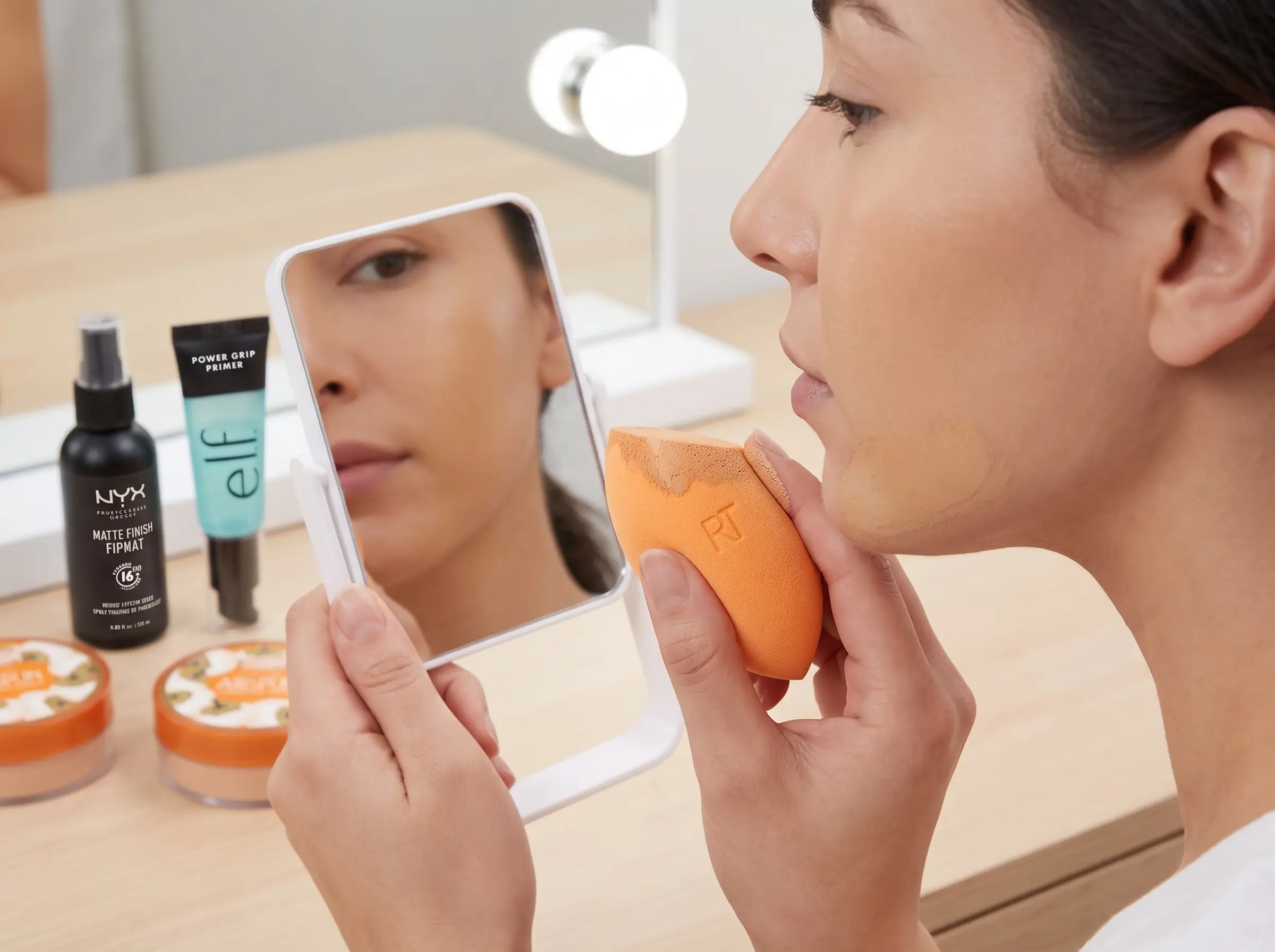
- Damp Makeup Sponge: The gold standard for a smooth finish. The moisture in the sponge helps shear out the product, while the bouncing motion (stippling) presses the foundation into the skin rather than sitting on top of it.
The Pro Fix: Layer, Don’t Pile
Start with a very small amount—about half a pump—and focus it on the center of your face. Blend it outward toward your hairline and jawline. If you still see imperfections, add a second thin layer only to the areas that need it, or switch to a concealer for targeted coverage. This prevents the “heavy” look that leads to patchiness.
Product Suggestion: Using a damp makeup sponge or a high-quality foundation brush can significantly change how the product sits on your skin. A sponge is particularly helpful for those struggling with dry or flaky patches.
5. Your Foundation Is Separating During the Day
Sometimes foundation looks perfect at 8:00 AM, but by noon, it’s a mess. This is often described as foundation separating or “breaking up” on the skin.
Common Culprits for Separation
- Excess Sebum: Your skin’s natural oils can break down the pigments and waxes in foundation.
- Touching Your Face: We often lean our faces on our hands throughout the day, which rubs off the makeup in specific patches.
- Environmental Factors: Humidity, sweat, and even indoor heating can cause the foundation to shift.
- Over-Powdering: It sounds counterintuitive, but too much powder can soak up all the moisture in your foundation, causing it to crack and look patchy.
The Pro Fix: Set It and Forget It (Correctly)
To prevent patchy makeup from developing throughout the day, you need a “locking” step.
- Strategic Powdering: Instead of powdering your whole face, use a translucent setting powder only on areas that get oily (like the T-zone).
- Setting Spray: A good setting spray acts like “hairspray for your face.” It creates a thin, flexible film over your makeup that holds everything in place and prevents separation.
Product Suggestion: A translucent setting powder is essential for oily areas, while a setting spray can help “melt” the makeup layers together for a more natural, non-patchy finish.
The Pro Makeup Artist Method for Smoother Foundation
If you want to know how to make foundation look smooth, follow this professional-inspired routine. It focuses on thin layers and careful preparation.
- Prep the Canvas: Start with a gentle facial cleanser to ensure there is no leftover makeup or dirt. Follow with a lightweight moisturizer while the skin is still slightly damp.
- Wait for Absorption: Give your skincare 60 seconds to “set.” If your skin feels overly greasy, lightly blot the T-zone with a tissue.
- Targeted Priming: Apply a smoothing primer only where you have visible pores or fine lines. If you have dry patches, use a hydrating primer only on those spots.
- The “Less is More” Application: Dispense a small amount of foundation onto the back of your hand. This warms the product, making it easier to blend.
- Stipple, Don’t Swipe: Using a makeup sponge, bounce the product onto your skin. Start at the center and move outward. This “presses” the foundation into the skin for an even look.
- Conceal Strategically: Instead of more foundation, use a creamy concealer on blemishes or under the eyes.
- Set Lightly: Use a fluffy brush to dust a tiny amount of translucent setting powder over your T-zone.
- The Final Seal: Mist your face with a setting spray. This takes away any “powdery” look and helps prevent the foundation from separating later.
Troubleshooting Table: What’s Wrong With My Foundation?
| What You See | Likely Cause | What to Try |
|---|---|---|
| Flaky Foundation | Dry skin or dead skin cell buildup. | Exfoliate gently; use a richer moisturizer or facial oil. |
| Cakey Foundation | Too much product or too much powder. | Use a damp sponge; apply in thinner layers. |
| Foundation Separating | Oil breakthrough or primer/foundation mismatch. | Use an oil-control primer; check for silicone vs. water compatibility. |
| Patchy Around the Nose | Excess oil or dehydration. | Use a pore-blurring primer and set with a small amount of powder. |
| Foundation Disappearing | Skin is “drinking” the foundation (dehydration). | Use a hydrating primer to create a barrier. |
| Patchy on Cheeks | Dryness or rubbing (from phone/hands). | Avoid touching the face; use a creamier foundation formula. |
Makeup Essentials That Can Help Prevent Patchy Foundation
If you are looking to upgrade your routine to avoid the “patchwork” look, these specific products are industry favorites designed to solve the most common foundation struggles.

Hydrating Primer: e.l.f. Power Grip Primer
This gel-based primer is packed with hyaluronic acid to drench your skin in moisture while providing a “grippy” texture that keeps makeup from sliding. It creates a smooth, moisture-rich base so foundation doesn’t cling to dry spots.
- Who it’s for: Dry, dehydrated, or combination skin types.
- Buying Consideration: A little goes a long way; use a pea-sized amount for the whole face.
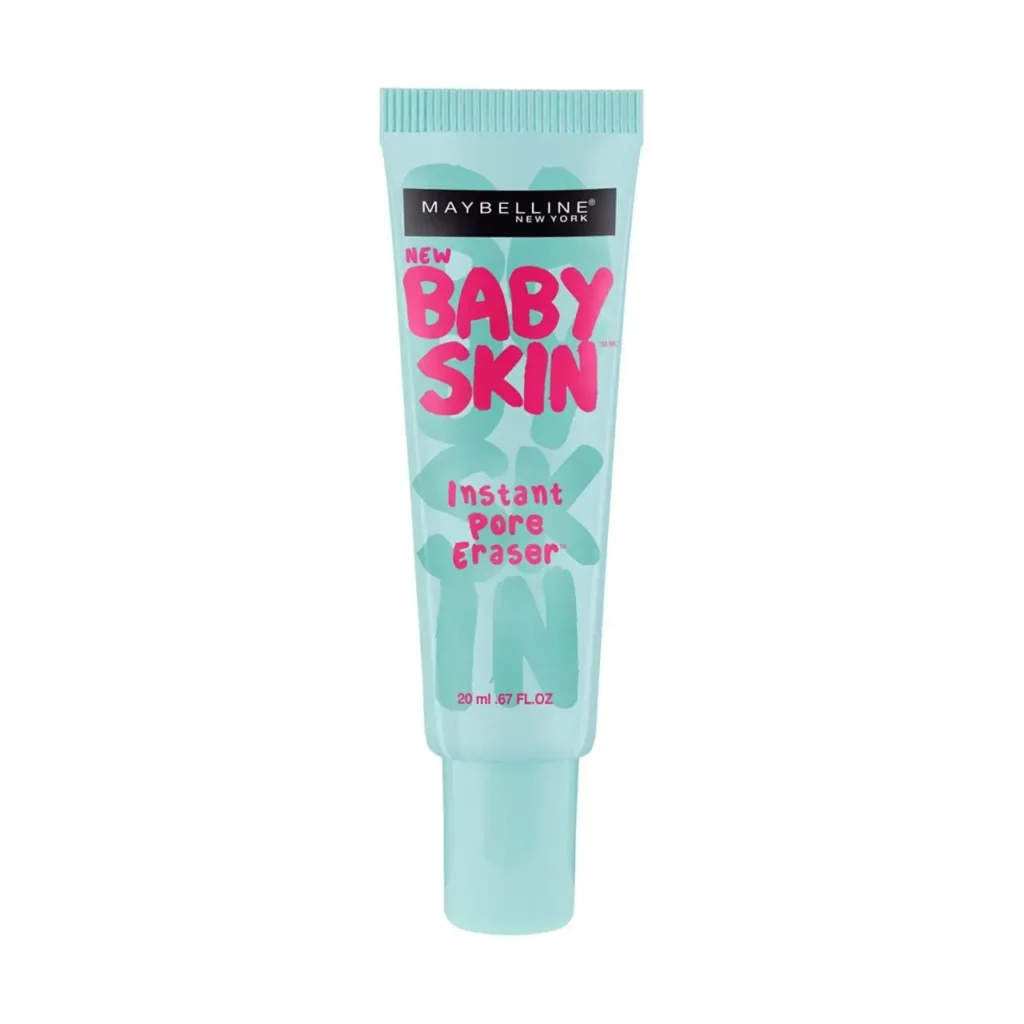
Smoothing/Blurring Primer: Maybelline Baby Skin Instant Pore Eraser
This lightweight, silicone-based formula fills in texture and large pores to create a “soft-focus” finish. It prevents foundation from settling into divots or fine lines, which is a major cause of patchiness around the nose and cheeks.
- Who it’s for: Those with large pores, fine lines, or oily T-zones.
- Buying Consideration: Apply this only to textured areas rather than the whole face.

Damp Makeup Sponge: Real Techniques Miracle Complexion Sponge
An affordable, high-quality tool that provides a seamless, “airbrushed” finish. Using this sponge damp prevents heavy, cakey application by absorbing excess product and pressing the foundation into the skin for a natural look.
- Who it’s for: Everyone, especially those who struggle with streakiness from brushes.
- Buying Consideration: Replace your sponge every 1–3 months for hygiene.

Translucent Setting Powder: Coty Airspun Loose Face Powder
A cult-classic, finely milled powder that locks foundation in place without adding heavy color or texture. It is excellent for preventing foundation separation in oily areas without making the skin look “crusty.”
- Who it’s for: Setting oily areas or preventing concealer from creasing.
- Buying Consideration: Use a fluffy brush to dust it on lightly for the most natural finish.

Setting Spray: NYX Professional Makeup Setting Spray
This mist acts as the final “seal” for your makeup. It helps “melt” the powder and liquid layers together, removing any powdery look and preventing the foundation from breaking up or becoming patchy during the day.
- Who it’s for: Anyone who needs their makeup to last 12+ hours.
- Buying Consideration: Available in “Matte” for oily skin or “Dewy” for dry skin.
Frequently Asked Questions
Why does my foundation look patchy?
Patchiness is usually caused by a combination of improper skin preparation (like dry skin or unexfoliated texture) and product incompatibility. If your skin is dry, the foundation clings to flakes; if it’s too oily, the foundation slides and separates. Using the wrong application tools can also leave “streaks” that look patchy.
How do I fix patchy foundation without removing it?
If you’re already out, don’t keep adding more foundation. Instead, use a facial mist to rehydrate the area, then gently blend the existing product with your finger or a clean sponge. If the area is oily, use a blotting paper to remove excess sebum before lightly tapping on a tiny bit of concealer.
Why does my foundation look patchy around my nose?
The nose is a high-friction area with many sebaceous (oil) glands. It is also prone to redness and dryness. To fix this, use a very thin layer of primer, apply the absolute minimum amount of foundation, and “press” it into the skin rather than rubbing. Setting this specific area with a small amount of powder is crucial.
Why does my foundation look cakey and dry?
Cakiness often happens when there is too much pigment and not enough moisture. This can be caused by using a full-coverage matte foundation on dry skin or over-applying setting powder. To fix, try mixing your foundation with a bit of moisturizer and switch to a damp sponge for application.
Should I use primer if my foundation looks patchy?
Yes, but you must choose the right primer. If your patchiness is due to dryness, a hydrating primer is essential. If it’s due to oil or texture, a smoothing, mattifying primer is better. If you use a primer that doesn’t match your skin’s needs, it can actually make the patchiness worse.
Is a makeup sponge or brush better for foundation?
For most people struggling with patchiness, a makeup sponge is better. Brushes can sometimes tug at the skin and emphasize texture. A damp sponge adds a tiny bit of moisture and ensures the product is evenly distributed and pressed into the skin for a more natural look.
Conclusion
Understanding why does my foundation look patchy is the first step toward a more confident makeup routine. In most cases, the solution isn’t to buy a more expensive foundation, but to adjust how you prepare your skin and apply the product.
Remember the golden rule of a smooth finish: Prep the skin → use compatible products → apply thin layers → blend gently → set strategically.
By focusing on hydration, choosing the right formula for your skin type, and using a “less is more” approach, you can achieve a finish that looks like skin, only more even. If you continue to experience severe skin irritation or persistent flaking despite a good routine, it may be worth consulting a dermatologist to rule out underlying skin conditions like eczema or seborrheic dermatitis.
Ready to transform your routine? Start with a clean canvas and a damp sponge, and see the difference a few “pro fixes” can make.


