Disclosure: This article contains affiliate links. If you purchase a product through one of these links, we may earn a commission at no additional cost to you.

Why Is My Hair So Flat? Fixes Limp Hair

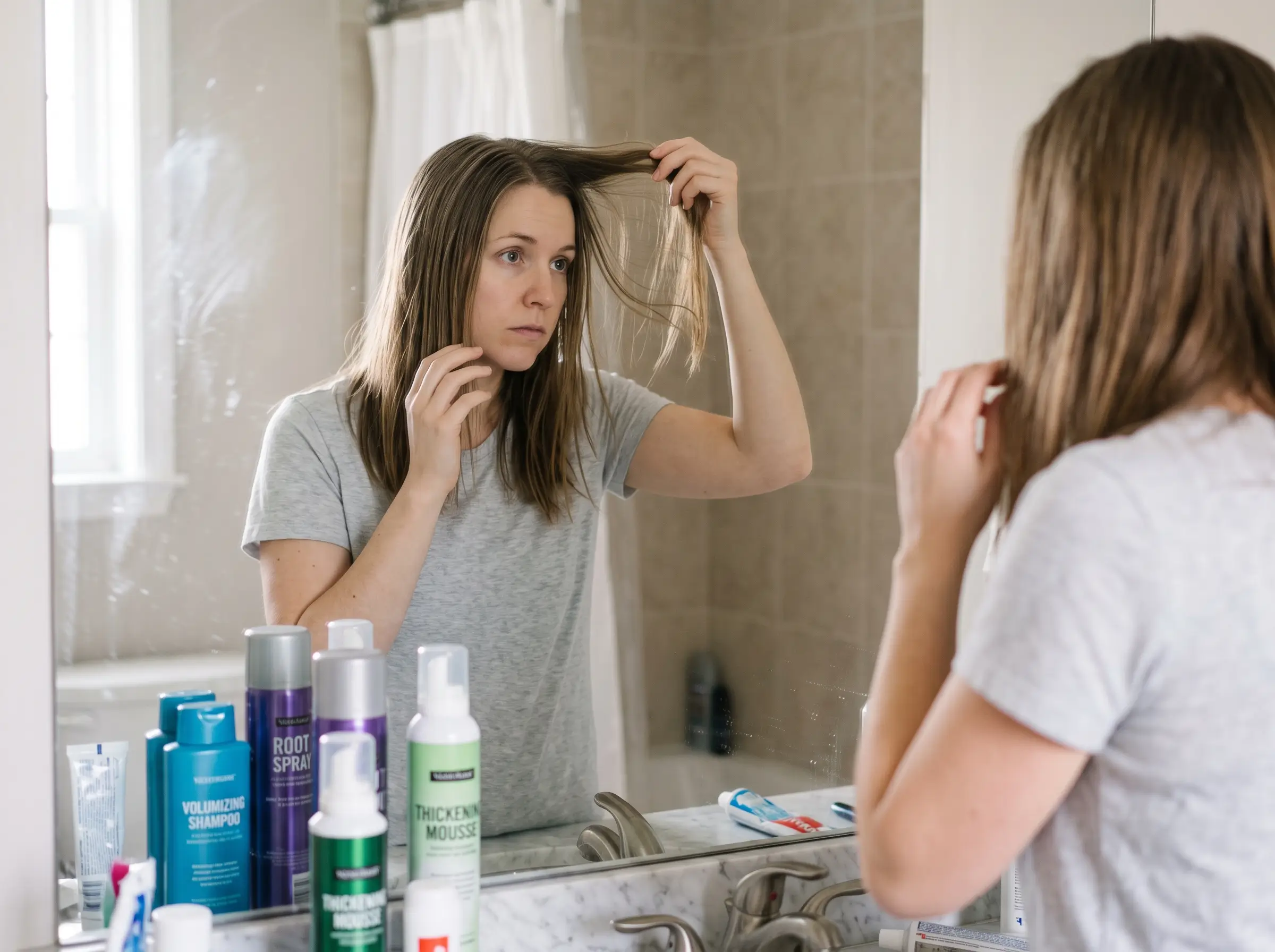
You wash your hair, style it, and for a few hours it looks great. Then, seemingly out of nowhere, it goes flat. No volume at the roots, no movement, just limp strands clinging to your scalp by midday. If this sounds familiar, you’re far from alone, and the good news is that flat hair almost always has an identifiable cause, or a combination of a few.
Unlike some hair concerns, flatness isn’t usually about hair health in the traditional sense. It’s more often a matter of hair type, product buildup, or styling habits working against you rather than for you.
This guide breaks down the most common reasons hair goes flat, along with practical, targeted fixes for each.
What Causes Flat, Limp Hair?
Flat hair is rarely just “bad luck.” Here are the most common underlying causes.
Fine or Thin Hair Strands
Naturally fine hair has a smaller diameter than coarse or thick hair, which means each individual strand has less structural support to hold volume on its own. This is often the single biggest factor behind chronic flatness.
Product Buildup
Heavy conditioners, styling products, or dry shampoo residue can accumulate on the scalp and hair shaft over time, weighing hair down and making it harder for volumizing products to do their job.
Overwashing or Underwashing
Washing too frequently can strip natural oils, prompting the scalp to overcompensate with oil production, which can flatten hair faster. On the other end, going too long between washes allows oil to build up at the roots, which also contributes to flatness.
Using Heavy, Overly Moisturizing Products
Rich conditioners and moisturizing masks are great for dry or damaged hair, but for those already prone to flatness, overly emollient products can weigh strands down rather than support them.
Incorrect Product Application
Applying conditioner, oil, or serum too close to the roots, rather than focusing on mid-lengths and ends, is one of the most common and easily fixed causes of flat-looking hair.
Styling Habits That Work Against Volume
Brushing hair flat against the scalp repeatedly, or air-drying without any lift, can train hair to lie flat rather than encouraging natural body. If you’re regularly using hot tools without proper prep, our guide to the best heat protectant sprays is worth a read, since some heavier protectant formulas can also contribute to flatness if overapplied at the roots.
Hormonal or Seasonal Changes
Hormonal shifts, including those related to pregnancy, menopause, or thyroid changes, can affect hair texture and thickness over time, sometimes contributing to a flatter appearance. Humidity and seasonal changes can also affect how hair holds volume day to day.
Hard Water
Mineral buildup from hard water can leave a residue on hair that makes it feel weighed down, dull, and harder to style with volume.
How to Fix Flat Hair, Based on the Cause
Since flatness can come from several different sources, the right fix depends on identifying which factors apply to you.
If Fine or Thin Hair Is the Main Factor
- Use lightweight, volumizing formulas. Look for shampoos and conditioners specifically labeled for fine or thin hair, which tend to avoid heavy, weighing-down ingredients.
- Apply products strategically. Focus richer products on the mid-lengths and ends, keeping roots as product-free as possible.
- Consider a root-lifting spray or mousse. These are specifically designed to add lift at the root without weighing down the rest of the hair.
- Blow-dry upside down. Directing airflow against the direction hair naturally falls can create a noticeable volume boost at the roots.
If Product Buildup Is the Cause
- Use a clarifying shampoo periodically. Once every one to two weeks can help remove buildup without over-stripping hair between uses.
- Reassess your product lineup. If you’re using multiple heavy products (conditioner, oil, serum, styling cream) in a single routine, consider simplifying to just one or two.
- Rinse conditioner thoroughly. Leftover conditioner residue is a common, often overlooked cause of ongoing flatness.
If Wash Frequency Is a Factor
- Find your personal wash-frequency sweet spot. This varies by individual, but many people with fine or oily-prone hair benefit from washing every one to two days, while those with thicker or drier hair can often go longer. If your roots tend to look greasy soon after washing, our guide to the best shampoos for oily hair can help you find a formula that cleanses without triggering more oil production.
- Use dry shampoo strategically. A light dusting at the roots on non-wash days can absorb oil and add texture, though heavy application can contribute to buildup over time.
If Overly Rich Products Are the Culprit
- Switch to lightweight, water-based formulas. Avoid heavy oils, butters, or silicone-rich conditioners if volume is your priority.
- Reserve richer products for the ends only. This allows you to address dryness where it’s needed most without flattening the roots.
If Application Technique Is the Issue
- Apply conditioner starting at the ears down, avoiding the scalp and roots entirely.
- Apply volumizing products to damp roots before blow-drying, rather than to already-dry hair.
- Use a light hand. More product isn’t always better when it comes to volume; a small amount, well-distributed, tends to outperform an overapplied heavy layer.
If Hormonal or Seasonal Changes Are Involved
- Be patient with fluctuations. Hair texture changes related to hormones or seasons often resolve or stabilize over time.
- Adjust your routine seasonally. What works in humid summer months may need to shift for drier winter air, and vice versa.
- Consult a doctor or dermatologist if changes are significant or sudden. Persistent, unexplained changes in hair thickness or texture are worth discussing with a professional.
If Hard Water Is a Suspect
- Try a hard water shampoo or chelating treatment. These are formulated specifically to help remove mineral buildup that regular shampoo doesn’t fully address. Our roundup of the best shampoos for hard water breaks down which formulas actually help.
- Consider a shower filter. For those in areas with notably hard water, a filter can reduce ongoing mineral deposits on hair over time.
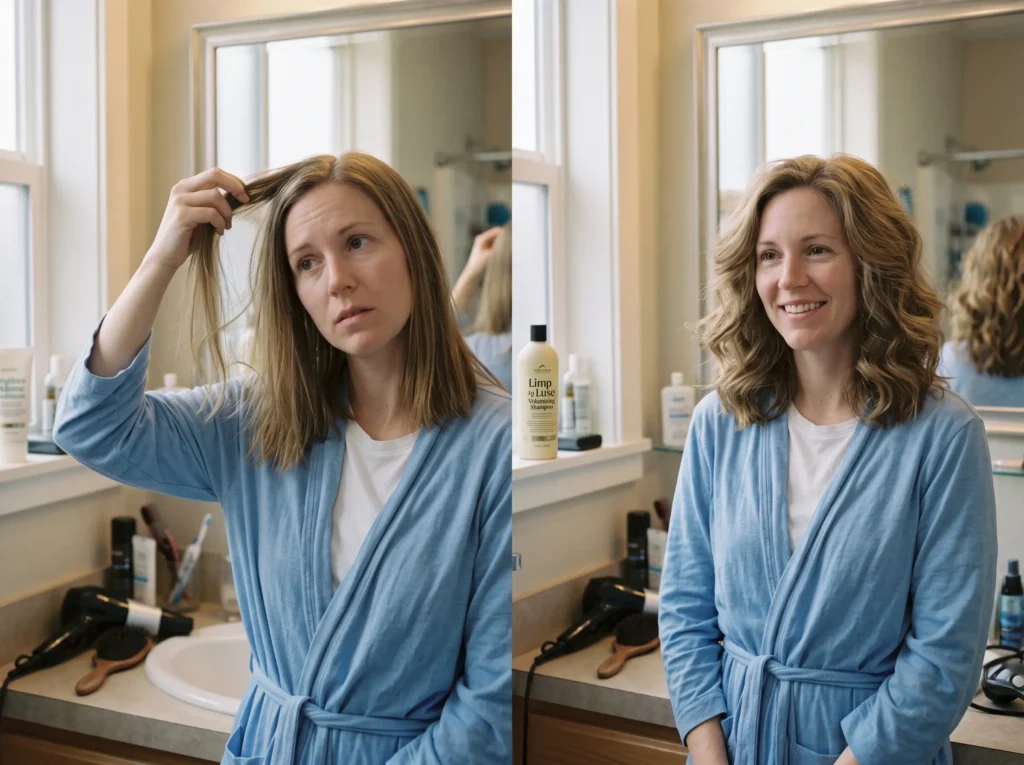
Product Recommendations for Volume and Lift
Living Proof Full Volume Blowout Spray is a frequently recommended option for those wanting lightweight, buildable volume without stickiness or heaviness.
Bumble and bumble Thickening Dryspun Finish offers a texturizing, volumizing spray that works well for fine hair needing a bit of grip and lift.
Ouai Fine Hair Shampoo and Conditioner is formulated specifically to cleanse and condition fine hair without weighing it down.
Verb Ghost Weightless Dry Shampoo offers a lightweight option for absorbing oil at the roots without the chalky residue some dry shampoos leave behind.
Malibu C Hard Water Wellness Shampoo is commonly recommended for those dealing with mineral buildup from hard water contributing to dull, flat-feeling hair.
A Sample Routine for Combating Flat Hair
This is a general framework meant to be adjusted based on your specific hair type and the underlying cause of your flatness.
- Wash day: Use a lightweight, volumizing shampoo and conditioner, applying conditioner only from mid-length to ends.
- Styling: Apply a root-lifting spray or mousse to damp roots, then blow-dry upside down or with a round brush lifting at the roots.
- Non-wash days: Use a lightweight dry shampoo at the roots, focusing on absorbing oil rather than adding heavy texture product.
- Weekly: Use a clarifying shampoo once every one to two weeks if you notice ongoing buildup or flatness despite a consistent routine.
Frequently Asked Questions
Why does my hair go flat so fast after washing?
This is often related to fine hair texture, product buildup, or overly rich products weighing hair down at the roots shortly after styling.
What causes limp, lifeless hair?
Common causes include fine or thin hair strands, product buildup, overly moisturizing formulas, incorrect product application near the roots, and in some cases, hormonal or seasonal changes.
Does washing hair less often help with volume?
It depends on your hair type. For those with oilier roots, frequent washing can actually help prevent flatness caused by oil buildup, while others may find less frequent washing helps preserve natural texture and volume.
Can conditioner make hair flat?
Yes, particularly if it’s applied too close to the roots or if the formula is too rich for your hair type. Applying conditioner from mid-length to ends only can help prevent this.
What ingredients should you avoid if you want more volume?
Heavy oils, butters, and silicone-rich formulas can weigh hair down, so lightweight, water-based products are generally better suited for those prioritizing volume.
Does hard water make hair flat?
Mineral buildup from hard water can leave hair feeling weighed down and dull, which may contribute to an overall flatter appearance over time.
How can you add volume to fine hair without damaging it?
Lightweight volumizing products, strategic application (avoiding the roots with heavier products), and gentle styling techniques like blow-drying upside down can all help add volume without relying on damaging heat or chemical treatments.
Is flat hair a sign of hair damage?
Not necessarily. Flat hair is often more related to hair type, product choice, and styling habits than to underlying damage, though damage can sometimes contribute to limpness as well.
Final Thoughts
Flat, limp hair is frustrating, but it’s rarely a mystery once you identify what’s actually driving it. Whether the cause is fine hair texture, product buildup, overly rich formulas, or something else entirely, small adjustments to your product lineup and application technique can make a noticeable difference.
The key is matching your routine to your specific hair type and cause, rather than assuming a single “volumizing” product will fix everything on its own. If dryness is compounding your flatness, our full breakdown of haircare products for dry, frizzy hair can help you build out the rest of your routine.


